
Potential glyphosate ban: Calculating economic consequences if Europe’s most widely used pesticide is banned 

Alternatives to glyphosate include backbreaking labor to remove weeds. Credit: National Archives at College Park via CC0-1.0

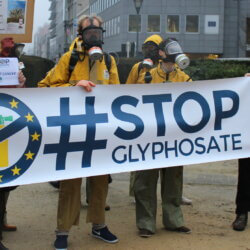
Glyphosate is the most widely used pesticide in Europe. However, due to its potential effects on human health, its renewal is currently under discussion in European policy. Here, we synthesize the existing evidence on potential farm-level economic impacts of a potential glyphosate ban in European agriculture using a literature review. We identified 19 studies published until 2022. We find that where glyphosate is currently used (30% and 50% of the acreage with annual and perennial tree crops respectively), such a ban can have large economic impacts. However, the range of impacts reported in the literature is substantial.

Mis- and disinformation are distorting science and public policy. Subscribe to our Daily and Weekly Digests for incisive coverage of ‘disruptive’ innovations in AI, agricultural biotechnology, food, chemicals, nuclear energy, vaccines, and other disruptive innovations.

Economic losses arising from a glyphosate ban estimated in peer reviewed studies range from 3 Euro/hectare in silage maize to up to 553 Euro/hectare in grapevine production. While potential losses are largest, in absolute terms (in Euro/hectare), for high-value perennial crops such as fruits and grapevines losses are similar in perennial and arable crops if expressed in relative terms (i.e. in % of per hectare profits). We currently lack assessments of economic implications of a glyphosate ban for most countries and farming systems. Thus, the overall economic implications at the European level are largely unknown.
This is an excerpt. Read the original post here

Related Articles

Infographic: Global regulatory and health research agencies on whether glyphosate causes cancer

Infographic: Global regulatory and health research agencies on whether glyphosate causes cancer

Does glyphosate—the world's most heavily-used herbicide—pose serious harm to humans? Is it carcinogenic? Those issues are of both legal and ...

Most Popular

ChatGPT-Image-Sep-17-2026-12_28_43-PM
Vitamin D, omega-3 fish oil and glucosamine supplements could cause brain damage 
ChatGPT-Image-Mar-10-2026-01_39_01-PM
Viewpoint—“Miracle molecule” debunked: Why acemannan supplements don’t work
ChatGPT-Image-Sep-17-2026-10_17_15-AM
Viewpoint: Why are the less intelligent more likely to be conservative—and smarter people more socially liberal?
Screenshot-2026-09-10-at-12.20.19-PM
'Jet fuel didn't melt the steel': 9/11 conspiracy theories debunked
Screenshot 2026-07-29 at 10.40
The COVID vaccine turbo cancer scare is back. Science still proves it’s wrong.
Screenshot-2026-09-10-at-11.50.46-AM
Did COVID vaccines kill 2,500 service members? RFK Jr. hires an investigator who compares vaccine promoters to Nazi doctors
ChatGPT-Image-Aug-28-2026-03_33_46-PM
Viewpoint: Bad science—Five bogus Trump administration claims about vaccines and autism
Screenshot-2026-09-16-at-12.07.47-PM
The heated debate over trans athletes in the WNBA
glp menu logo outlined

Get news on human & agricultural genetics and biotechnology delivered to your inbox.