Viewpoint: In a world of dysfunctional food systems, is it realistic to hope for CRISPR gene editing to save agriculture?

ee d b fc b
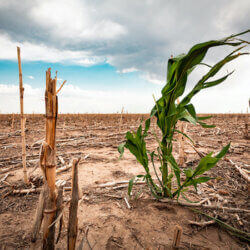
Credit: CIAT/NeilPalmer (CC BY-SA 2.0)

Considering that farmers already lose 20-40 percent of their crop yields to pests, which costs them $200 million per year, they can’t afford to surpass this amount.

Especially not when 920 million people already live with food insecurity at a severe level – around 11 percent of the human population.

Mis- and disinformation are distorting science and public policy. Subscribe to our Daily and Weekly Digests for incisive coverage of ‘disruptive’ innovations in AI, agricultural biotechnology, food, chemicals, nuclear energy, vaccines, and other disruptive innovations.

CRISPR-strengthened foods could become a major lifeline for humanity (and all its farmers), as climate scientists have warned that crop-destroying fungi, bacteria, and insects will become far more difficult to avoid in a hotter world.

Combine these issues with a growing number of climate refugees, never-ending urbanisation, the loss of arable land, and overuse of pesticides and fertilisers – we’ve got a clusterfuck of issues to deal with.

Luckily, we’ve already got a bit of a leg up.

Those working in agriculture have identified various positive traits in certain crops, thanks to selective breeding. This has enabled farmers to fend off larger losses by favouring plants that produce bacterial proteins capable of killing or repelling pests.

Because many viruses need plant proteins to grow, multiply, and spread, it is possible that researchers can utilise CRISPR to eliminate or alter plant proteins a particular virus likes to take advantage of.

This would allow the plant to resist being hijacked by a foreign organism.

This is an excerpt. Read the original post here

Related Articles

Infographic: Global regulatory and health research agencies on whether glyphosate causes cancer

Infographic: Global regulatory and health research agencies on whether glyphosate causes cancer

Does glyphosate—the world's most heavily-used herbicide—pose serious harm to humans? Is it carcinogenic? Those issues are of both legal and ...

Most Popular

ChatGPT-Image-Mar-10-2026-01_39_01-PM
Viewpoint—“Miracle molecule” debunked: Why acemannan supplements don’t work
Screenshot-2026-09-17-at-1.07.08-PM
'We are dangerously addicted to antidepressants': Should we heed RFK Jr.’s sobering warning?
ChatGPT-Image-Sep-2-2026-02_03_32-PM
How much of a problem is AI’s water use?
Screenshot-2026-09-03-at-10.51.20-AM
Viewpoint: Why do online health lies outlive the evidence that debunks them? Read "Everyone Else Is Lying to You"
Screenshot-2026-09-10-at-12.20.19-PM
'Jet fuel didn't melt the steel': 9/11 conspiracy theories debunked
ChatGPT-Image-Sep-22-2026-10_32_46-AM
There has been a slew of recent reports of food recalls and foodborne outbreaks. Do we face an escalating problem?
Screenshot-2026-09-22-at-11.40.28-AM
After Idaho criminalized abortion providers in 2022, one-third of obstetricians fled. Health care advocates are making rural health the case for repealing the ban
Screenshot-2026-09-23-at-3.15.09-PM
Anti-GMO activists in Pakistan rev up their campaign of dire warnings
glp menu logo outlined

Get news on human & agricultural genetics and biotechnology delivered to your inbox.