Study: Organic farming produces less food than conventional. How huge is this yield gap?

chjpdmf zs sci pbwfnzxmvd vic l zs ymdizltazl zsnte njcwmdq njitaw hz uuanbn
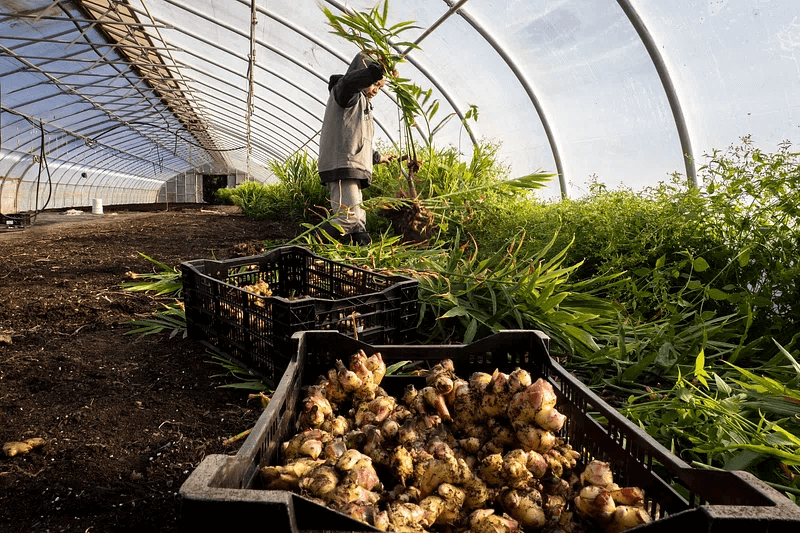
Credit: Rawpixel (Public Domain)

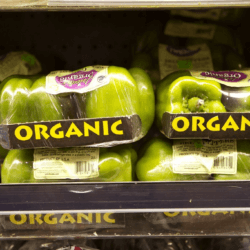
The productivity of organic farming systems and their capacity to address the global food demand of a rapidly increasing population has been debated. Its popularity has amplified among consumers and the progressive global market (Badgley, 2007; Halberg et al., 2005; Trewavas, 2001; Stanhill, 1990). Incidentally, the claimed benefits of organic farming have been contested by Stanhill (1990) and Trewavas (2001), who criticized that organic farming produces lower yield and requires more production area to generate the same amount of food as conventional farms, further exacerbating deforestation and biodiversity loss, thus diminishing its environmental benefits.

Mis- and disinformation are distorting science and public policy. Subscribe to our Daily and Weekly Digests for incisive coverage of ‘disruptive’ innovations in AI, agricultural biotechnology, food, chemicals, nuclear energy, vaccines, and other disruptive innovations.

In one of the early meta-analyses that compared the yields of the two farming systems, Seufert et al. (2012) reported lower yields from organic farming than those from conventional farming. Furthermore, it emphasized that differences in yield are highly contextual to system and site characteristics. Notably, they reported 5% lower yields in organic compared to conventional systems in rain-fed legumes and perennials on weak-acidic to weak-alkaline soils, 13% lower yields when best organic practices were applied, and 34% lower yields when the two farming systems were most comparable. They also observed that nitrogen (N) availability was a major yield-limiting factor in organic systems. This comparative study on yield was subsequently followed by a meta-analysis conducted by Knapp and van der Heijden (2018), who reported a 15% reduction in temporal yield stability in organic farming compared to that of conventional farming.
This is an excerpt. Read the original post here

Related Articles

Infographic: Global regulatory and health research agencies on whether glyphosate causes cancer

Infographic: Global regulatory and health research agencies on whether glyphosate causes cancer

Does glyphosate—the world's most heavily-used herbicide—pose serious harm to humans? Is it carcinogenic? Those issues are of both legal and ...

Most Popular

ChatGPT-Image-Sep-23-2026-02_36_39-PM
Viewpoint: After firing the entire National Science Board, Trump reshapes funding initiatives. Here’s the good and the bad.
ChatGPT-Image-Sep-10-2026-10_36_07-AM
Viewpoint: Even lousy scientific articles can shield authors when they hype dubious health claims and products
ChatGPT-Image-Mar-10-2026-01_39_01-PM
Viewpoint—“Miracle molecule” debunked: Why acemannan supplements don’t work
sorghum farmers in kenya FARMERS TREND
Here are all the ways CRISPR gene editing is transforming Africa’s staple crops—and there’s a lot more innovation to come
Screenshot-2026-10-01-at-11.21.27-AM
Vaccine hesitancy, like malaria, surges globally, topping 35% in some countries
ChatGPT-Image-Sep-30-2026-01_25_34-PM
Blood tests for Alzheimer’s? The latest grifter, social media scam.
ChatGPT-Image-Sep-30-2026-01_38_36-PM
Viewpoint: Died “with measles” vs. died “from measles”: RFK, Jr.’s dangerously subversive word games
ChatGPT-Image-Sep-30-2026-01_11_07-PM
How U.S. teamed with Russia to block global human AI weapons oversight
ChatGPT-Image-Sep-21-2026-03_15_09-PM
Viewpoint: Chipotle-inspired lesson: 10,000 sick customers suggest that processed foods can be safer than fresh ones
Screenshot-2026-09-28-at-1.16.38-PM
Defying public perceptions, U.S. cancer deaths plunged 35% since 1991
glp menu logo outlined

Get news on human & agricultural genetics and biotechnology delivered to your inbox.