Viewpoint: Can AI chatbots understand the words they’re processing?

Viewpoint: Can AI chatbots understand the words they’re processing?
Credit: Unsplash/ Julien Tromeur

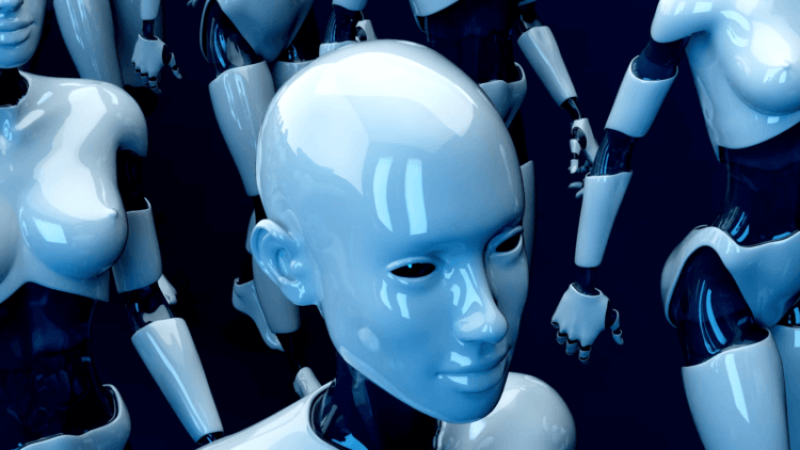
Artificial intelligence seems more powerful than ever, with chatbots like Bard and ChatGPT capable of producing uncannily humanlike text. But for all their talents, these bots still leave researchers wondering: Do such models actually understand what they are saying? “Clearly, some people believe they do,” said the AI pioneer Geoff Hinton in a recent conversation with Andrew Ng.

Follow the latest news and policy debates on sustainable agriculture, biomedicine, and other ‘disruptive’ innovations. Subscribe to our newsletter.

A theory developed by Sanjeev Arora of Princeton University and Anirudh Goyal, a research scientist at Google DeepMind, suggests that the largest of today’s LLMs are not stochastic parrots. The authors argue that as these models get bigger and are trained on more data, they improve on individual language-related abilities and also develop new ones by combining skills in a manner that hints at understanding — combinations that were unlikely to exist in the training data.

“It’s not Hemingway or Shakespeare,” Arora said, but the team is confident that it proves their point: The model can generate text that it couldn’t possibly have seen in the training data, displaying skills that add up to what some would argue is understanding.


Image courtesy of ClaudeAI.uk

This is an excerpt. Read the full article here

{{ reviewsTotal }}{{ options.labels.singularReviewCountLabel }}
{{ reviewsTotal }}{{ options.labels.pluralReviewCountLabel }}
{{ options.labels.newReviewButton }}
{{ userData.canReview.message }}

Related Articles

Infographic: Global regulatory and health research agencies on whether glyphosate causes cancer

Infographic: Global regulatory and health research agencies on whether glyphosate causes cancer

Does glyphosate—the world's most heavily-used herbicide—pose serious harm to humans? Is it carcinogenic? Those issues are of both legal and ...

Most Popular

ChatGPT-Image-Jun-11-2026-01_15_03-PM
Selective Pressure, Selective Silence
ChatGPT Image Jun 3, 2026, 03_14_43 PM
Viewpoint: How Earthjustice became the poster child for the abuse of special interest activist funding
ChatGPT Image Jun 3, 2026, 03_54_37 PM
Viewpoint: “Turn on, tune in, drop out”—Kennedy embraces the Timothy Leary psychedelic revolution
ChatGPT-Image-Mar-10-2026-01_39_01-PM
Viewpoint—“Miracle molecule” debunked: Why acemannan supplements don’t work
Screenshot-2026-06-05-at-2.12.30-PM
Some plants can poison you. So how did humans figure out what is safe to eat?
Screenshot 2026-05-26 at 10.15
Viewpoint: Double standard—Why does the wellness industry get a free pass while Big Healthcare is treated as morally suspect?
drug look like ozempic
Six key health insights from taking weight-loss drugs
ChatGPT-Image-Jun-13-2026-11_51_39-AM
Viewpoint: COVID lab leak? Misguided backers of the lab leak theory refused to give up
ChatGPT-Image-May-26-2026-07_51_21-AM-2
Viewpoint: There are more than 1,000 chemicals in a cup of coffee—including many substances that can cause cancer. Why isn’t it banned?
Screenshot-2026-06-14-at-9.53.54-AM
Is the World Cup a perfect storm for the spread of infectious diseases?
ChatGPT Image May 26, 2026, 08_42_17 AM (1)
Viewpoint: Greenpeace and poison: How environmental advocacy groups rely on compliant (and often ignorant) journalists to spread disinformation and spark litigation
glp menu logo outlined

Get news on human & agricultural genetics and biotechnology delivered to your inbox.