You know the rule about headlines – if there is a question in a headline the answer is almost always “no”. This article is no exception.
But the lay media seems to want you to worry (presumably because it’s better for clicks), such as this headline from CBS news, “Pesticide linked to reproductive issues found in Cheerios, Quaker Oats and other oat-based foods.”
The study which is getting all the media attention is by the Environmental Working Group, a group that I think is better describes as an advocacy group rather than an objective scientific group. I have long had a problem with how they present data, and this latest study fits right in with their history. The study is described in the title as a “pilot” study and is rather small, involving only 96 subjects.
…
Even though it is a small pilot study, let’s assume their results are accurate. As far at they go, they are not surprising since the US started importing grains grown with the use of chlormequat in 2018. They also tested oat-based products and found:
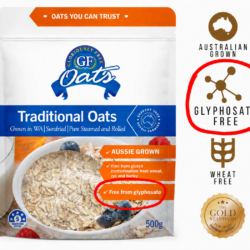
Food samples purchased in the U.S. from 2022 and 2023 show detectable levels of chlormequat in all but two of 25 conventional oat-based products, with concentrations ranging from non-detectable to 291 µg/kg, indicating a high prevalence of chlormequat in oats. Median levels were similar between samples collected in 2022 and 2023, at 90 and 114 µg/kg respectively. Only one sample out of eight organic oat-based products at detectable chlormequat at 17 µg/kg.
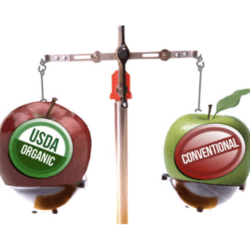
Again, not surprising. The real story here is the way in which this study is being reported to the public, which, in my opinion, reveals the true purpose of the study – to create another round of fearmongering about toxins in our food and shill for the organic food industry.



What’s missing from almost all of the reporting is a couple of important pieces of information. From the study itself, what I consider to be the money quote:
Current chlormequat concentrations in urine from this study and others suggest that individual sample donors were exposed to chlormequat at levels several orders of magnitude below the reference dose (RfD) published by the U.S. EPA (0.05 mg/kg bw/day) and the acceptable daily intake (ADI) value published by the European Food Safety Authority (0.04 mg/kg bw/day).
Several orders of magnitude below accepted safety limits – you notice the safety limits are in the mg (milligrams) and the chlormequat levels are in µg (micrograms). For a 70 kg person, they would need to consume (using the US numbers) 3.5 mg per day of chlormequat. Using the highest concentration above and rounding up to 300 µg/kg, you would need to consume 85,714 kg of oats every day to reach the lower limit of the safety range.
…
It almost makes it seem like this pilot study, with highly predictable results, was done so that the EWG could raise fears about our food and argue that, in order to be safe, just buy organic. The lay media fell for it.