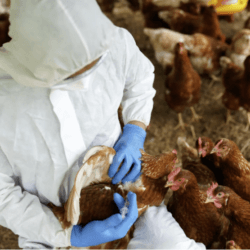
Since the beginning of the year, the highly pathogenic H5N1 bird flu strain that previously had killed tens of millions of birds and a few species of mammals has been reported in goats and at least 58 herds of dairy cows in nine states.
But the outbreak is more problematic than that: Last Friday, the US Department of Agriculture announced that bird flu was detected in an ill dairy cow. The agency warned against a panic, saying the virus would be killed if meat from cattle was cooked.
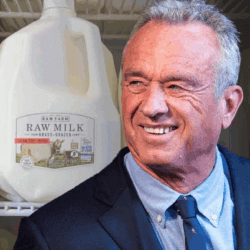
It also announced it had detected fragments of (non-infectious) bird flu virus genomic RNA in more than 20 percent of retail milk samples tested in a nationally representative study. The virus was inactive, however, presumably due to pasteurization. That is important, because it is estimated that about 1.5% of U.S. adults often consume unpasteurized milk or other raw milk products, which are still on sale across the country.
Research has thus far indicated that the pathogenic strain is inactive in raw milk, but two reports released late last week raise doubts. A New England Journal of Medicine study found that raw milk could rapidly sicken mice, and H5N1 in refrigerated raw milk can remain infectious for several weeks. Moreover, at least a half dozen cats have died after consuming infected raw milk, according to the Centers for Disease Control.

Also, there has been no testing of dairy workers, who are likely most at risk if it turns out that humans are vulnerable. And most raw milk farmers have refused government recommendations that they submit their milk for testing. No law compels that.
“[The farms] are aware of what a nonnegative test would do to their business,” Brandon Dominguez, the Veterinary Services Section Head at the Texas A&M Veterinary Medical Diagnostic laboratory in College Station, Texas, told NPR. “They asked that we do not run the test.”
Tracing the outbreak
Recently released viral sequences from animal infections provided by USDA indicate that the outbreak likely began in December 2023, with a single spillover incident from birds into cows.
Most worrisome of all is the unexpected jump of the avian flu virus to humans. The first known case was a man working on a Texas dairy farm, considered ground zero, and the second, another farm worker in Michigan, both cases presumably from contact with an infected cow.
There’s an axiom in epidemiology that “if you don’t test, you don’t know,” so actual number is likely much higher.
Bird flu epidemic started with a spillover from birds into cows in Texas, and then spread to other states with cattle. Each color represents a different outbreak.

That’s ominous, as H5N1 is known to be quite dangerous for humans, and as flu virus causes more infections, it mutates. Since 2003, outbreaks of bird flu among poultry have resulted in 880 documented cases worldwide of presumed transmission from birds to humans, with about 50% of cases causing death. These cases have occurred mostly among people in close proximity to birds, such as those with small backyard flocks and poultry farm workers.
The outbreak has raised concerns among virologists and epidemiologists that the current spread in mammals may allow the bird flu virus to mutate in a way that it confers on it the ability to cause sustained human-to-human spread among humans, which could result in a pandemic.



The Centers for Disease Control called last week for vigilance. “It is possible that influenza A(H5N1) viruses could change in ways that allow them to easily infect people and to efficiently spread between people, potentially causing a pandemic,” the CDC said on May 24, even as it assured the public that the risk is “currently low.”
Monitoring the outbreak
There is an urgent need to develop the capacity to monitor for and rapidly detect additional spillover of H5N1 into humans, especially any indication of sustained human-to-human transmission. This would rely primarily on traditional public health surveillance approaches such as testing people with symptoms.
But that won’t be enough. Cattle and people working on dairy farms should be tested both for the presence of viral RNA, which would indicate an active infection, and also for antibodies against H5N1, which circulate in the body for longer following an infection. That could help public health officials determine how many people and cattle have been exposed to the virus and had infections that went unnoticed, possibly because they did not exhibit symptoms or were not tested.
Wastewater surveillance will also be important. It showed great potential during the COVID-19 pandemic for monitoring and early detection of surges of the SARS-CoV-2 virus, the etiologic agent.
The CDC revealed last week that it had found bird flu in sewage samples collected before the virus was identified in U.S. cows. They’re also seeing signs in sewage in cities that are far from infected cattle herds. The significance of this is uncertain, however, because of the nature of wastewater. In many areas of the U.S., human waste flows from toilets through sewers into central municipal wastewater-treatment facilities where it can be sampled and tested for the presence and levels of pathogens. However, pathogens excreted by animals are also present in residential sewers because of runoff and other inflows, the presence of animals such as rats in sewers, or disposal into the sewer system of large volumes of contaminated milk from H5N1-infected dairy cows.
Most wastewater monitoring systems throughout the country are part of the National Wastewater Surveillance System, which is supported by the CDC. This system is critical for national pandemic preparedness and response. Although it has been used primarily for monitoring COVID-19, it can also be useful to detect other infectious disease threats like H5N1.
Going forward, it will be essential to rapidly detect spillover into the human population. However, since community-based wastewater contains waste from both humans and animals, surveillance of community-based wastewater alone cannot differentiate human outbreaks of H5N1 from concurrent animal outbreaks. Another limitation of monitoring is that early in an outbreak, relatively few people are infected, so the concentration of the pathogen in community-based wastewater may be below detection levels.
To address these limitations and in order to distinguish between animal outbreaks and spillovers into humans, a useful approach would be to monitor waste collected directly from facilities such as hospitals, nursing homes, large-scale emergency departments and outpatient health care providers, and schools and universities.
Wastewater surveillance is a vital tool in pandemic preparedness, offering cost-effective, population-wide monitoring for early detection of infectious disease threats. To gauge the ongoing threat to humans from highly pathogenic H5N1 avian flu, wastewater surveillance should be both expanded and more narrowly focused.
Finally, in order to implement the necessary policies and strategies to manage the H5N1 avian flu outbreak, someone needs to be in charge. Currently, that is not the case.
Henry I. Miller, a physician and molecular biologist, is the Glenn Swogger Distinguished Fellow at the American Council on Science and Health. He was the founding director of the FDA’s Office of Biotechnology. Find Henry on X @HenryIMiller