It was three months ago when we wrote about the surge of the H5N1 bird flu strain that had by then already killed tens of millions of birds in various parts of the U.S. and land and marine animals in other countries. Surprising experts, the flu jumped to cows and goats last month. And now it has been detected very high concentrations in raw milk from infected animals, the World Health Organization announced late last week.
Although the finding surprised health officials, they say there is at present little concern that the infected raw milk will make it into the food supply. Dairies must destroy milk from sick cows, and it’s believed that pasteurization would kill the virus in milk from cows that have not yet been identified as ill. Federal officials are advising not to drink raw milk or eat raw milk-based cheese.
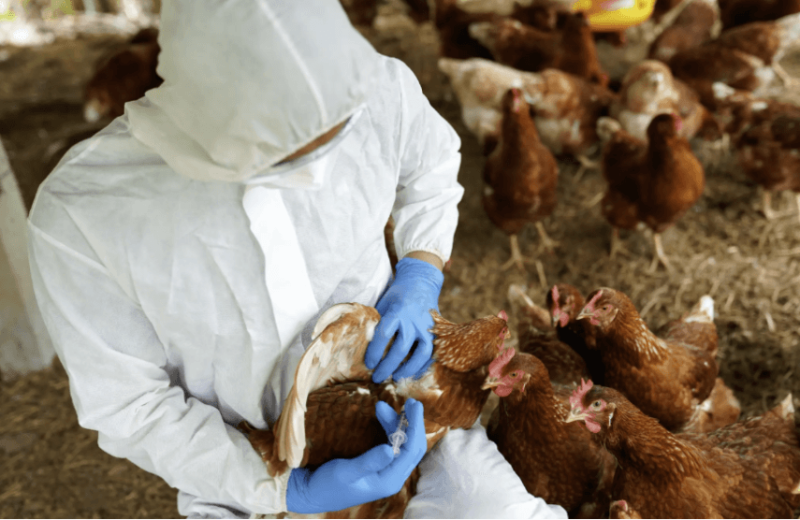
Just a few days before, a man working on a Texas dairy farm was diagnosed with illness from the avian flu strain, “The case in Texas is the first case of a human infected by avian influenza by a cow,” said Wenqing Zhang, head of the global influenza program at the WHO. It’s only the second known case in the U.S. of a human contracting the disease.
Spread of H5N1 surprises disease experts
Infections by the current virus strain have been increasing since the 1990s as the world poultry population soared to meet escalating food demand. H5N1 avian flu claimed its first known human victims in 1996-97, in China and Hong Kong, spread to Cambodia in 2003, and then reappeared with a vengeance a decade ago.
According to the WHO, it has killed nearly 60% of the more than 800 people infected between 2003 and 2016. The majority of human H5N1 infections and deaths occurred in Egypt, Vietnam, and Indonesia.
We wrote in January:
Despite limited examples of person-to-person transmission, there are no known examples of widespread, sustained transmission among humans or any mammals for that matter. However, virus evolution called “antigenic shift” could give rise to the emergence of novel viral subtypes able to target mammals.
As often happens in the infectious disease world, circumstances have changed dramatically in just a few months. The discovery of H5N1 bird flu in dozens of herds of dairy cows across the U.S. has sparked worry and a call for more transparency from the government — specifically, the USDA. This strain of bird flu, while not new, had never before been found in cattle. It has now affected herds in eight states, with some cows showing reduced milk production and discolored, viscous milk.
Scientists and public health experts are particularly concerned about two things: the risk of the virus spreading between cows and potentially mutating to readily infect humans (only one case has thus far been found in a dairy worker in Texas); and the paucity of detailed, timely information from the USDA regarding the outbreak.
Transparency concerns
Many experts have criticized the USDA for not being forthcoming with information about the outbreak. Concerns include:
- How the virus is spreading between cow herds — through cattle movement, contaminated feed or milking machines, or wild birds?
- Whether the outbreaks in different herds are connected. Are they all linked to a single source in Texas, or are there independent outbreaks happening – perhaps via a new strain of H5N1 in wild birds?
- The effect of pasteurization on H5N1. Currently, farmers are being told to discard milk from infected cows, although the USDA, the FDA, and the CDC all say they believe pasteurization would kill the viruses. However, that is based on work previously done on other pathogens.
This lack of transparency is hindering the science community’s efforts to understand the outbreak and develop effective control measures. Michael Osterholm, an expert in infectious diseases, argues that clear communication is crucial for managing outbreaks successfully.
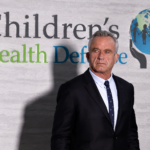
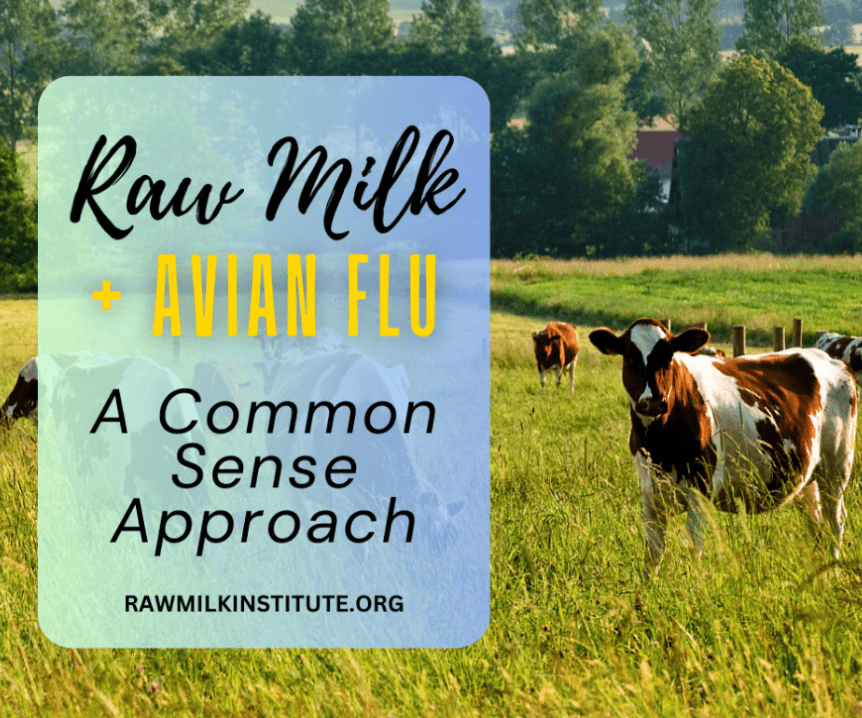
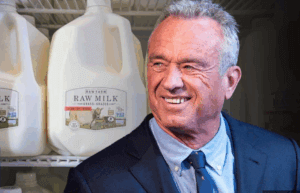 Viewpoint: Got milk? Robert F. Kennedy, Jr. drinks the raw, unpasteurized version. Does he know something about its benefits that scientists don’t?
 Part II: The Clean 18 — USDA finds almost no pesticide-related health concerns from fruits and vegetables grown on American farms, while data on organic food is lacking



“They are creating the perception that something is happening or not happening that would not meet with the public’s approval,” Osterholm said. “And this is really unfortunate. There’s no evidence here that there’s some kind of a smoking gun, that somebody did something wrong. Just tell us what you’re doing. And that’s not happening.”
Risk of spread
There is reason for grave concern if not (yet) panic. As we related in our January article:
The deadliest recent twist is the spread of H5N1 to mammals. Brazil recently reported the deaths of more than 900 seals and sea lions, and thousands more were found dead last summer in Chile and Peru.
Washington State is on alert after dozens of seals showed up dead off the Olympic peninsula, alarming scientists. H5N1 has also infected large numbers of foxes, raccoons, skunks, grizzly bears and dolphins. Local authorities in all of these areas are scrambling to contain its spread, and warning humans not to touch the dead animals.
The H5N1 virus has the potential to mutate and increase its host range. Also, during the past few months, Texas reported its detection in cats from several dairy farms experiencing H5N1 outbreaks in dairy cows. It is unknown whether the virus spread to the cats from affected dairy cows, raw cow milk, or wild birds associated with those farms.
Public health authorities are concerned that the virus could mutate and become capable of human-to-human transmission, which would be disastrous since it has a case-fatality rate of over 50% in humans.
Another concern is that pigs, which can be infected by both avian and human flu, could be infected simultaneously (coinfected) by pig and human viruses. That could lead to reassortment of portions of the viruses’ genomes, which could give rise to a new strain more transmissible to people.
Looking for answers
USDA’s frequently asked questions document, posted on its website, offers much information about what is currently known, recommended, or underway.
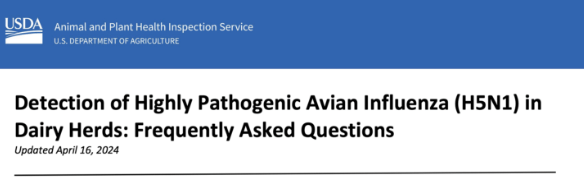
- Tests so far indicate that the virus detected in dairy cows is …the same clade [i.e., variant] that has been affecting wild birds and commercial poultry flocks and has caused sporadic infections in several species of wild mammals, and neonatal goats in one herd in the United States.”
- The spread of the H5N1 virus within and among herds indicates that bovine to bovine spread occurs, likely through mechanical means. As a result, we are encouraging producers and veterinarians to minimize dairy cattle movement.”
- Unlike in poultry flocks where H5N1 is fatal, among the dairies whose herds are exhibiting symptoms, the affected animals have recovered with little to no associated mortality reported.”
- Based on information available at this point [April 16], we do not anticipate that this [outbreak] will impact the availability or the price of milk or other dairy products for consumers.”
- Recent detections of H5N1 in poultry have slowed. As of April 15, 2024, there have been 26 detections of H5N1 in commercial poultry facilities in 2024, which is like the number in January-April of 2023 (19 detections). Both years are showing significant decreases in the number of detections compared to 2022, when we saw 165 detections in the January-April period.”
- At this stage, we do not anticipate the need to depopulate [i.e., cull] dairy herds. Unlike HPAI (H5N1) in birds which is typically fatal, little to no mortality has been reported and the animals are reportedly recovering. The affected cows on the dairy farms are currently being isolated from other animals.”
- It is noteworthy that avian flu has been detected only in dairy herds but not beef cow herds.
- FDA’s longstanding position is that unpasteurized, raw milk can harbor dangerous microorganisms that can pose serious health risks to consumers, and FDA is reminding consumers of the risks associated with raw milk consumption in light of the H5N1 detections.”
The current, precarious situation highlights the importance of the rapid accumulation and promulgation of information – that is, transparency — in the management of outbreaks. USDA’s sharing information freely and quickly will allow scientists, public health officials, and farmers to work together to assess and reduce risks.
Henry I. Miller, a physician and molecular biologist, is the Glenn Swogger Distinguished Fellow at the American Council on Science and Health. He was the founding director of the FDA’s Office of Biotechnology. Find Henry on X @HenryIMiller
Kathleen L. Hefferon is an instructor in microbiology at Cornell University. Find her on X @KHefferon