A futurist says our species evolves in 3 phases: With 1 down, here’s what may come next

h_evo-scaled-1200x900

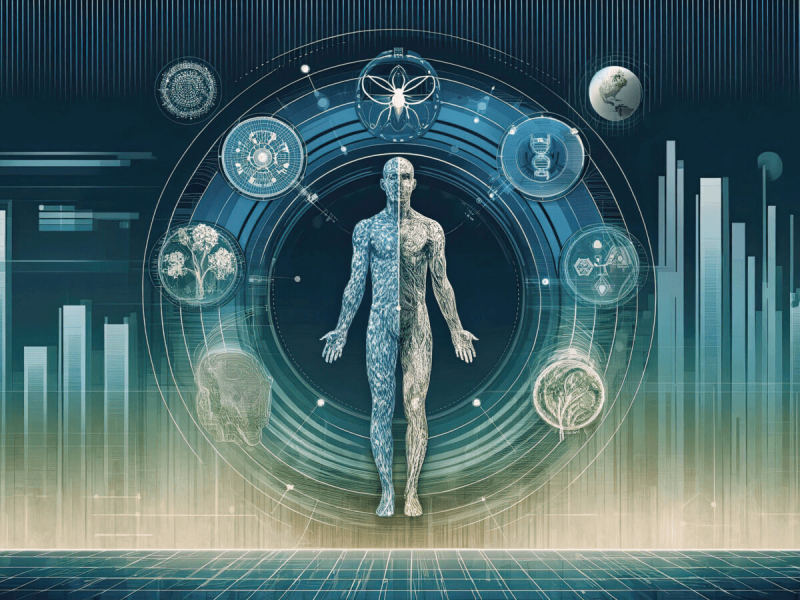
Jeffrey Charles Hardy introduces a three-tiered model of human evolution—the “First, Suspended, and Second Human Evolution.” Standing back and viewing the human trajectory from its pre-historic origin to today and then well into a sustainable future demands an innovative framework for considering how society tackles monumental global challenges, such as climate change, environmental degradation, and overpopulation.

Mis- and disinformation are distorting science and public policy. Subscribe to our Daily and Weekly Digests for incisive coverage of ‘disruptive’ innovations in AI, agricultural biotechnology, food, chemicals, nuclear energy, vaccines, and other disruptive innovations.

This framework begins with the “First Human Evolution,” which began roughly two and a half million years ago. Characterized by humanity’s persistent efforts to conquer nature, it saw its decline in the mid-1950s when humans acquired the capability to obliterate all life on Earth through nuclear destruction. Humanity’s complete domination over nature and each other signified the end of the First Human Evolution.

Hardy believes that recognizing that the First Human Evolution is over will change the game entirely and redirect our focus from dominating nature to examining our own nature and behaviors. This shift ushered humanity into what Hardy calls the “Suspended Human Evolution.” “In this phase, we find ourselves reassessing and moving away from the unsustainable practices of unlimited growth and waste that we inherited from the First Human Evolution. We are in a state of searching for a new path forward,” he remarks.

The phase of human evolution we are in now is suspended because we don’t have a plan for the Second Human Evolution. “It’s yet to be determined and is ours to imagine, discuss, plan, design, and implement,” he adds.


This is an excerpt. Read the original post here

Related Articles

Infographic: Global regulatory and health research agencies on whether glyphosate causes cancer

Infographic: Global regulatory and health research agencies on whether glyphosate causes cancer

Does glyphosate—the world's most heavily-used herbicide—pose serious harm to humans? Is it carcinogenic? Those issues are of both legal and ...

Most Popular

ChatGPT-Image-Sep-23-2026-02_36_39-PM
Viewpoint: After firing the entire National Science Board, Trump reshapes funding initiatives. Here’s the good and the bad.
ChatGPT-Image-Mar-10-2026-01_39_01-PM
Viewpoint—“Miracle molecule” debunked: Why acemannan supplements don’t work
ChatGPT-Image-Sep-10-2026-10_36_07-AM
Viewpoint: Even lousy scientific articles can shield authors when they hype dubious health claims and products
sorghum farmers in kenya FARMERS TREND
Here are all the ways CRISPR gene editing is transforming Africa’s staple crops—and there’s a lot more innovation to come
Screenshot-2026-10-01-at-11.21.27-AM
Vaccine hesitancy, like malaria, surges globally, topping 35% in some countries
ChatGPT-Image-Sep-30-2026-01_25_34-PM
Blood tests for Alzheimer’s? The latest grifter, social media scam.
ChatGPT-Image-Sep-30-2026-01_38_36-PM
Viewpoint: Died “with measles” vs. died “from measles”: RFK, Jr.’s dangerously subversive word games
ChatGPT-Image-Sep-21-2026-03_15_09-PM
Viewpoint: Chipotle-inspired lesson: 10,000 sick customers suggest that processed foods can be safer than fresh ones
ChatGPT-Image-Sep-30-2026-01_11_07-PM
How U.S. teamed with Russia to block global human AI weapons oversight
Screenshot-2026-09-28-at-1.16.38-PM
Defying public perceptions, U.S. cancer deaths plunged 35% since 1991
glp menu logo outlined

Get news on human & agricultural genetics and biotechnology delivered to your inbox.