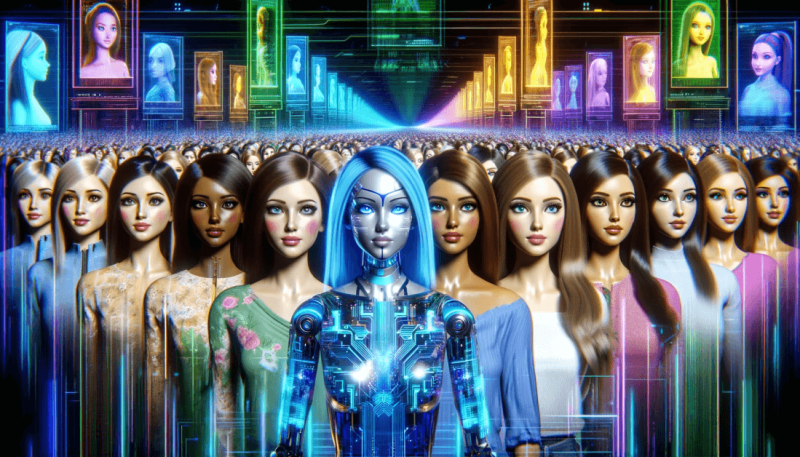
AI companionship is no longer theoretical—our analysis of a million ChatGPT interaction logs reveals that the second most popular use of AI is sexual role-playing. We are already starting to invite AIs into our lives as friends, lovers, mentors, therapists, and teachers.
Will it be easier to retreat to a replicant of a deceased partner than to navigate the confusing and painful realities of human relationships? Indeed, the AI companionship provider Replika was born from an attempt to resurrect a deceased best friend and now provides companions to millions of users. Even the CTO of OpenAI warns that AI has the potential to be “extremely addictive.”
We’re seeing a giant, real-world experiment unfold, uncertain what impact these AI companions will have either on us individually or on society as a whole. Will Grandma spend her final neglected days chatting with her grandson’s digital double, while her real grandson is mentored by an edgy simulated elder? AI wields the collective charm of all human history and culture with infinite seductive mimicry. These systems are simultaneously superior and submissive, with a new form of allure that may make consent to these interactions illusory. In the face of this power imbalance, can we meaningfully consent to engaging in an AI relationship, especially when for many the alternative is nothing at all?

As AI researchers working closely with policymakers, we are struck by the lack of interest lawmakers have shown in the harms arising from this future. We are still unprepared to respond to these risks because we do not fully understand them. What’s needed is a new scientific inquiry at the intersection of technology, psychology, and law—and perhaps new approaches to AI regulation.