
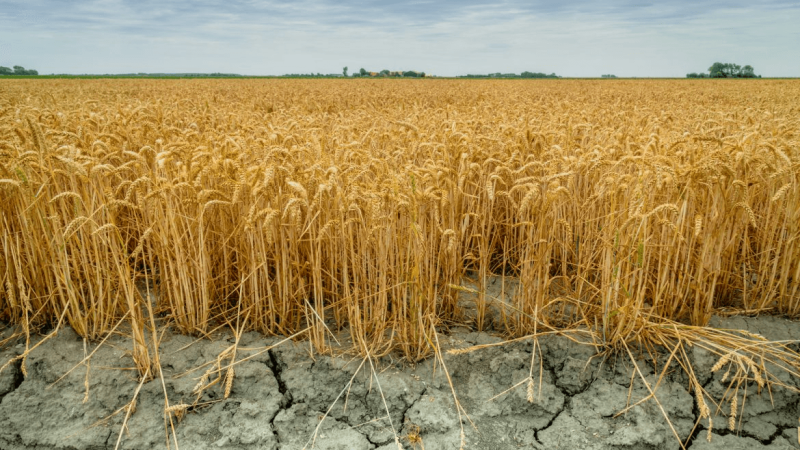
Wild wheat: Genetically-tweaked varieties that are not just climate-resilient, but also environmentally regenerative or in the wings

Credit: Eco-Nai+
Credit: Eco-Nai+

Modern wheat can thank its “wild relatives” — grassy cousins millions of years old and tested through extremes of earth’s climate — for most of its resistance genes. Today, wheat is the most widely grown crop on Earth, providing 20% of all human protein and calories and serving as the primary staple food for 1.5 billion people in the Global South.

However, with its future under threat, standard breeding approaches can no longer keep up with the pace of climate change. Research shows that climate shifts from 1980-2008 reduced wheat harvests by 5.5%, and global wheat production falls 6% for every degree-centigrade increase in temperature.

Despite such remarkable achievements in wheat breeding, we’ve only scratched the surface of the genetic potential in wheat’s wild relatives. With climate change intensifying and the rapid evolution and spread of pathogens — a new strain of fungus can circulate in the jet stream—it’s imperative that we increase investment in researching this largely untapped genetic diversity. Doing so could revolutionize wheat production, ensuring food security while dramatically reducing agriculture’s environmental footprint.
Mis- and disinformation are distorting science and public policy. Subscribe to our Daily and Weekly Digests for incisive coverage of ‘disruptive’ innovations in AI, agricultural biotechnology, food, chemicals, nuclear energy, vaccines, and other disruptive innovations.

Wheat science urgently requires enhanced investments to scale up genetic studies of wild relatives, utilizing next-generation breeding tools. These tools include gene sequencing technologies, big-data analytics, and remote sensing technologies. Satellite imagery makes the planet a laboratory, allowing researchers to monitor traits like plant growth or disease resistance globally. Artificial intelligence can super-charge breeding simulations and quickly identify promising genes that enhance climate-resilience.


This is an excerpt. Read the original post here

Related Articles

Infographic: Global regulatory and health research agencies on whether glyphosate causes cancer

Infographic: Global regulatory and health research agencies on whether glyphosate causes cancer

Does glyphosate—the world's most heavily-used herbicide—pose serious harm to humans? Is it carcinogenic? Those issues are of both legal and ...

Most Popular

ChatGPT-Image-Mar-10-2026-01_39_01-PM
Viewpoint—“Miracle molecule” debunked: Why acemannan supplements don’t work
Screenshot-2026-10-08-at-10.41.33-AM
Viewpoint: Wellness patches: Most vitamin supplements are useless and sometimes even dangerous, but this craze is even worse
newborn baby spit up gerd
Vaccine-preventable congenital infections are a leading driver of autism
Screenshot-2026-10-14-at-11.45.36-AM
Viewpoint: RFK Jr.’s stacked FDA advisory council endorses multicancer screening test from ethically- questionable company that would increase false positives and waste billions of dollars
Misinformation-Shatters-the-Clockwork-Mind
Viewpoint: The price Americans pay for science denialism
Screenshot-2026-10-15-at-12.13.33-PM
Ahead of the midterms, Meta has paid at least 29 anti-LGBTQ accounts for their posts
Pride and Patriotism in the Breeze
Retreat from identity labels: Does the sharply declining number of young teens identifying as gay and bisexual reflect an ideological shift?
Screenshot-2026-10-14-at-12.47.21-PM
Viewpoint: Are these Trump-conservative GOP doctor-politicians violating their medical oath?
Crossed-Out-Calendar-with-Milk-Carton
Viewpoint: The shocking consequences after a year of Robert F. Kennedy Jr.'s distortions, deceptions, and flat-out falsehoods
Open-Menthol-Cigarette-Pack
How the tobacco industry conspired with conservative activists to kill the Biden administration’s proposed ban on menthol cigarettes 
glp menu logo outlined

Get news on human & agricultural genetics and biotechnology delivered to your inbox.


















