Historically, many thought that humans were the only animals that could recognize an external beat and synchronously move to it. But in 2007, Snowball the cockatoo went viral for dancing to the rhythm of the Backstreet Boys. Then, in 2013, Ronan the sea lion similarly acquired world fame for moving her head rhythmically to the beat of music.
These two case studies are part of a growing field of research set on trying to understand which animals have the capacity to be musical, providing clues on how and why music evolved in humans.
…
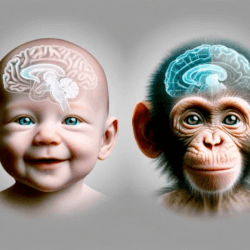
Looking at similarities and differences between our closest living relatives, primates, can provide clues into whether music shares a common ancestral origin. In humans, if we are walking or typing and listening to music, we naturally sync up to the rhythm. In studies conducted by Yuko Hattori, an assistant professor at Kyoto University’s Primate Research Institute, chimpanzees were able to synchronize their movement to a variety of rhythms.




…
Movements from primates in these studies are not as precise as humans, but one hypothesis used to explain the origins of music could help explain the differences. It suggests that in humans, our ability to move in time with a beat stems from vocal learning.