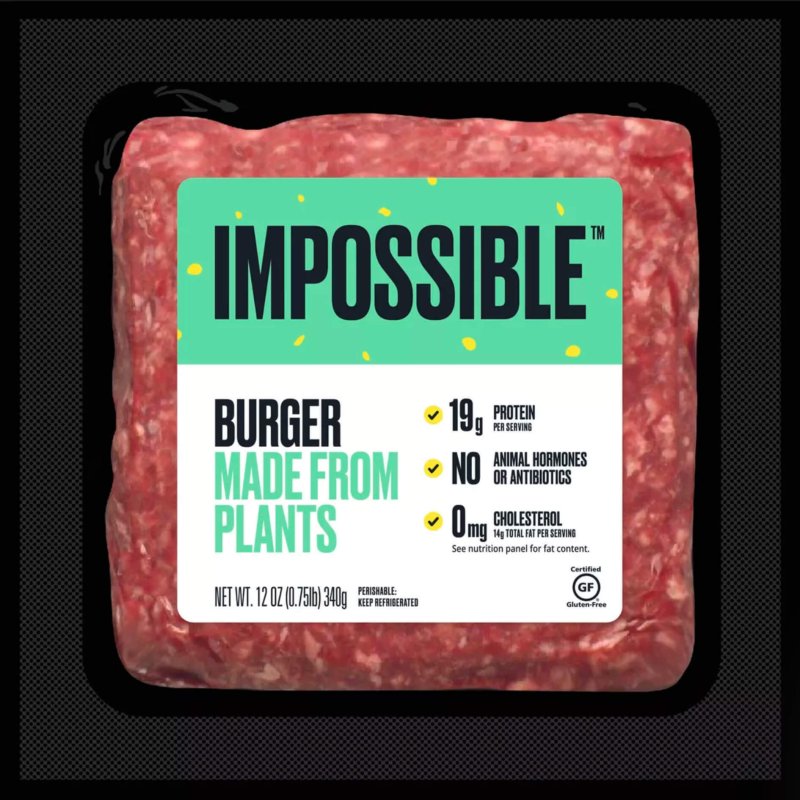

I ate some Quorn sausages last night. I wasn’t confused when I bought them. I didn’t buy them because I thought they were meat and I was tricked by Quorn. I bought them because I wanted meat alternatives – knowing these are better for the climate and for my health than actual meat.
The product said ‘sausages’ on the packet (and ‘bangers’ in bigger text, perhaps a uniquely British term!). I’ve also recently bought Beyond Burgers, This Isn’t Chicken and so on. Now, if the EU gets its way, all these terms will be banned – and in Europe we’ll be back with ridiculous notions such as ‘plant-based protein tubes’ and ‘alternative protein discs’ instead of bangers and burgers.
Specifically, the European Commission plans to prohibit the use of 29 words like “bacon”, “chicken” or “beef” for plant-based alternatives and the European Parliament is currently discussing adding common-useage words like “burger”, “sausage” and “steak” to the banned list. The latter proposal is due to be considered by MEPs on 7 October. They’ve also said that ‘meat’ means ‘exclusively the edible parts of an animal’, “including blood”. Yummy. (See Amendment 645 here.)
Why is this happening? Nobody has asked for it – except, perhaps, the powerful meat and livestock lobby, skulking somewhere behind the scenes in Brussels. There’s no evidence that consumers are confused by the use of common meaty terms on non-meat items. On the contrary, terms like “plant-based burger”, “vegan sausage” or “plant based bacon” help people understand how to cook and enjoy sustainable alternatives. I find it useful to have both ‘sausage’ and ‘vegan’ on the same packet, thankyou very much.
Fortunately the alternative proteins sector is beginning to find its collective voice. A fightback called ‘No Confusion’ has just been launched. It’s headed by an Open Letter – led by WePlanet and the EVU – and signed by everyone from Greenpeace to the Vegetarian Butcher to Birdlife, 190 organisations at the last count. This also includes the European Alliance for Plant-Based Foods, which includes big-hitters like Nestle, Oatly, Impossible and Flora. The plant-based market is a substantial part of the economy, worth $3.17 billion in Europe in 2024.
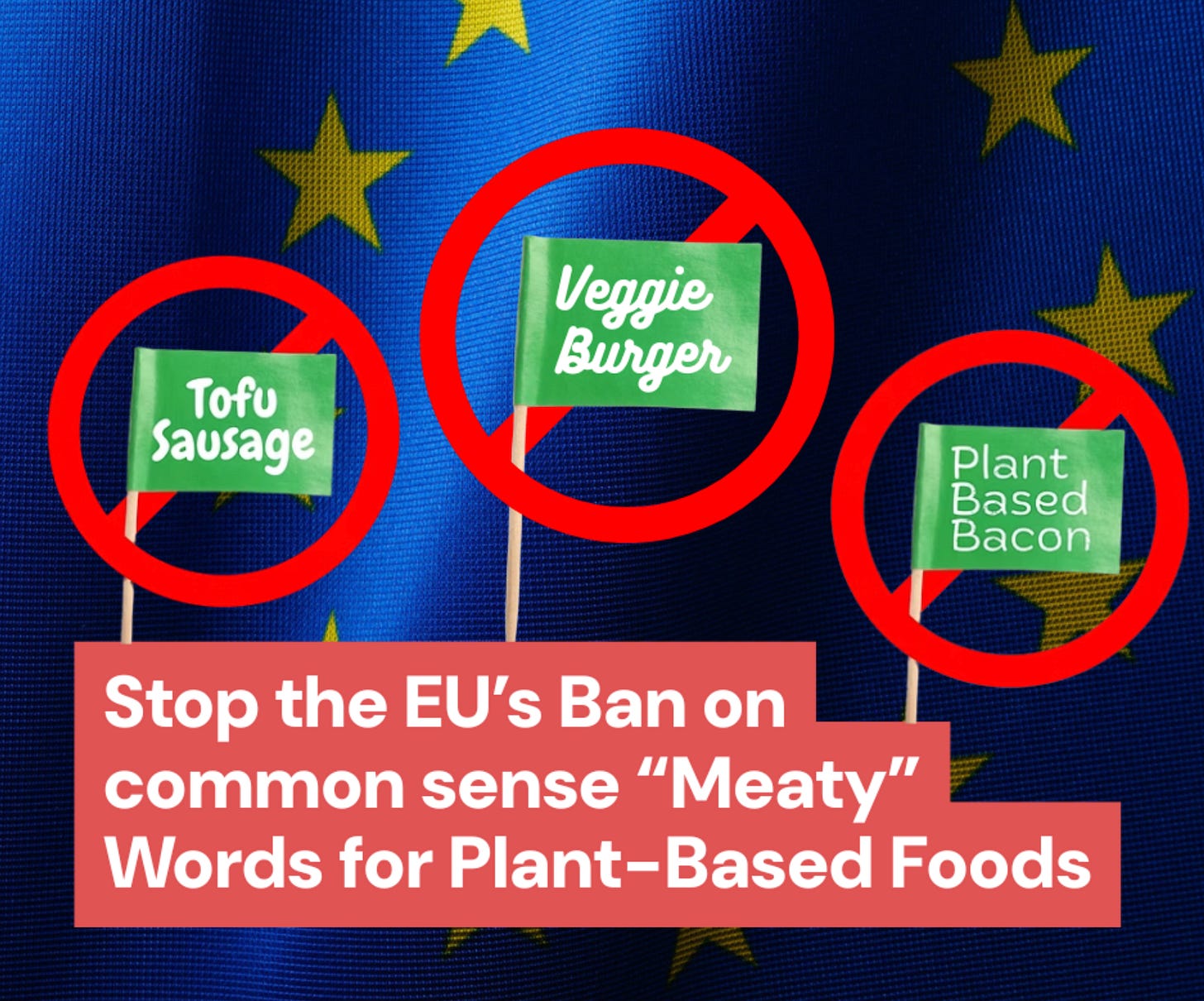
If you think we’ve been here before, you’re right. Meat-heavy France already tried to ban to ban 21 terms like ‘steak’, ‘beef’, ‘ham’ and ‘grilled’ from plant-based meat labelling back in 2023 – only to lose the case in the European Court of Justice. In 2020 the European Parliament voted not to prohibit the use of meat-related names for plant-based meat subsitutes such as “veggie burgers” and “vegan sausages.”
This new regulatory proposal is of course exactly backwards. At the very moment we need to accelerate the protein transition for both health and environmental reasons, European policymakers are throwing up barriers that will slow it down. As is so often sadly the case in Brussels, they are punishing innovators, confusing consumers, and protecting vested interests – all while the clock on the climate crisis keeps ticking.




Europe should be proud of its food innovators, not punishing them. By embracing plant-based foods, we can cut emissions, free up land for nature, and give people more choices. Livestock farming and ranching is by far the biggest use of land on the planet. According to Our World in Data’s Hannah Ritchie, “it takes 50 to 100 times as much land to produce a kilocalorie of beef or lamb versus plant-based alternatives”.
So if you want to see any kind of ecological restoration and large-scale rewilding, we’ve got to reduce meat consumption. Red meat also releases far more greenhouse gases than plant-based alternatives, again according to OWID. And then there’s the small matter of the hundreds of millions of animals killed each day for meat. At the very least, consumers should be given a choice – and those choosing plant-based meat alternatives should not be penalised by dumb new regulatory roadblocks designed to please the livestock lobby.
A version of this article was originally posted at Substack and is reposted here with permission. Any reposting should credit both the GLP and original article. Follow Mark Lynas on X @mark_lynas