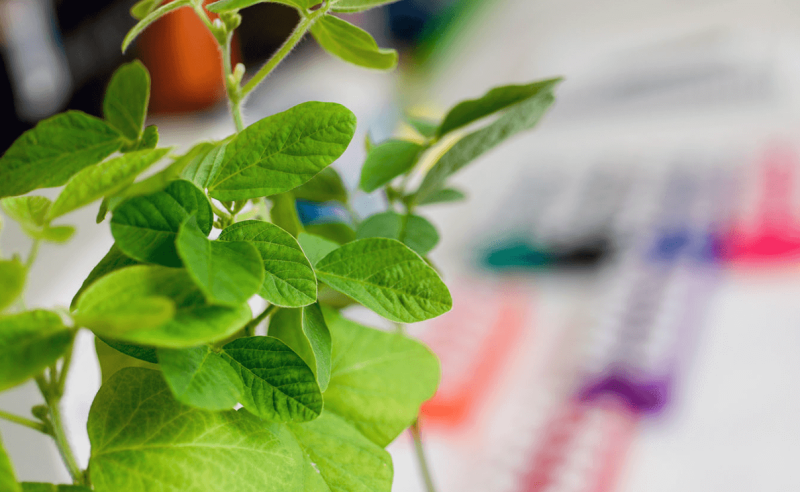
Corporate control, ecological challenges and food safety: Challenges await expansion of the gene-editing crop revolution

Credit: North Carolina State University

Ethical considerations surrounding genome editing are as complex as the science itself. As the debate rages on about the safety and long-term impacts of genetically modified organisms (GMOs), genome editing presents a unique paradigm. Proponents argue that because genome editing is a more precise tool, it poses fewer risks for unpredictable changes compared to conventional genetic modification techniques. Nonetheless, apprehensions about potential ecological impacts, food safety, and corporate control over agricultural resources persist and require a multifaceted dialogue among scientists, policymakers, and the public.

Follow the latest news and policy debates on sustainable agriculture, biomedicine, and other ‘disruptive’ innovations. Subscribe to our newsletter.

The regulatory landscape is evolving to accommodate these new technologies. Various countries have begun to formulate guidelines that distinguish between traditional GMOs and crops developed through genome editing. The nuances in these regulations can determine the pace at which genome-edited crops are brought to market, influencing research funding and industry interest. As nations navigate these uncharted waters, a common goal should be to ensure the safe adoption of genome editing while fostering innovation.

This is an excerpt. Read the original post here


{{ reviewsTotal }}{{ options.labels.singularReviewCountLabel }}
{{ reviewsTotal }}{{ options.labels.pluralReviewCountLabel }}
{{ options.labels.newReviewButton }}
{{ userData.canReview.message }}

Related Articles

Infographic: Global regulatory and health research agencies on whether glyphosate causes cancer

Infographic: Global regulatory and health research agencies on whether glyphosate causes cancer

Does glyphosate—the world's most heavily-used herbicide—pose serious harm to humans? Is it carcinogenic? Those issues are of both legal and ...

Most Popular

ChatGPT-Image-Jun-15-2026-11_00_13-AM-2
Glucosamine alert: Alzheimer’s progresses faster among those taking the popular supplement
Screen Shot at AM
Facts & Fallacies Podcast: Right-wing politics bad for your health? Separating speculation from science
ChatGPT-Image-Jun-9-2026-01_11_37-PM
Turmeric supplements: More risks than benefits
ChatGPT-Image-Jun-15-2026-12_13_41-PM
Viewpoint: Behind the effort to re-purpose the tobacco attack strategy to fight ultra-processed foods
ChatGPT-Image-Jun-3-2026-04_29_13-PM
Viewpoint: While unvaccinated children are dying overseas, Congress challenges Trump and Kennedy’s block on aid
Screenshot-2026-06-12-at-2.10.55-PM
Physician warns online statin myths delay care and raise heart risk
Screenshot-2026-06-14-at-9.14.26-AM
‘Humanitarian catastrophe’: Trump’s USAID shutdown could help drive nearly 23 million deaths — including 5.4 million children — by 2030, Lancet study warns
ChatGPT-Image-Mar-10-2026-01_39_01-PM
Viewpoint—“Miracle molecule” debunked: Why acemannan supplements don’t work
Screenshot-2026-06-05-at-2.12.30-PM
Some plants can poison you. So how did humans figure out what is safe to eat?
ChatGPT-Image-Jun-14-2026-09_41_44-AM-2
Viewpoint—‘The gleeful efficiency of an arsonist’: Administration’s health and science research cuts are ‘sabotaging’ America’s future
ChatGPT-Image-Jun-15-2026-10_42_06-AM
Viewpoint: ‘Steroid Olympics’ marketing stunt: ‘It seemed less like a sporting event and more like a loss leader to peddle testosterone injections, GLP-1s, and peptides’
glp menu logo outlined

Get news on human & agricultural genetics and biotechnology delivered to your inbox.