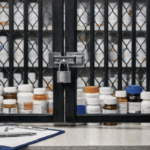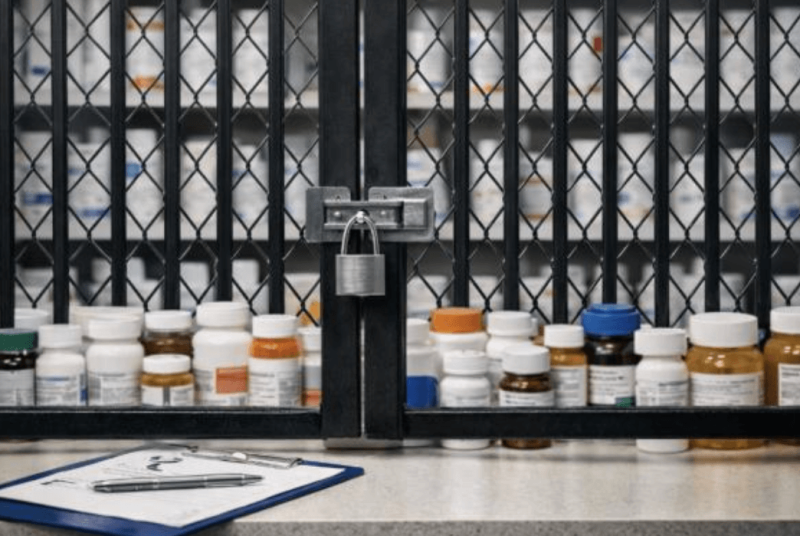
Evidence suggests prescription requirements don’t just restrict access—they also feed directly into the third-party payment system that drives drug prices upward. When a drug requires a prescription, it typically becomes eligible for insurance coverage. That shifts the transaction from a price-sensitive cash purchase to a subsidized one. Patients pay a copay, not the full price, and insurers often absorb the rest rather than provoke backlash. The predictable result is third-party inflation: When someone else pays most of the bill, prices rise.
You can see the contrast when drugs cross the prescription-to-OTC boundary. Once loratadine (Claritin) and omeprazole (Prilosec) moved over the counter, insurance coverage largely disappeared, patients paid cash, and prices fell sharply. The same dynamic helps explain why per-milligram prices for prescription ibuprofen and naproxen run far higher than their OTC equivalents, even at identical or dose-equivalent strengths. In the prescription market, prices emerge from negotiations among manufacturers, pharmacy benefit managers, and insurers—not cash competition.
Consider the opioid overdose antidote naloxone, which has been used by doctors, nurses, and first responders since 1971. As early as 2016, the FDA started encouraging the makers of the nasal spray version, Narcan, to request reclassification as OTC. When the manufacturer, Emergent Biosolutions, showed no interest, the FDA made significant efforts, bending over backwards, to encourage their request.
However, the FDA doesn’t need to wait for manufacturers—who often lack the incentive—to request an OTC switch. The agency can initiate reclassification on its own or at the request of any interested party, including states. If the agency still fails to act, Congress has the authority to mandate the switch. Unfortunately, the FDA often defers to pharmaceutical manufacturers.
Finally, after indicating it might approve OTC access to a competing generic, the makers of Narcan submitted the request. Naloxone nasal spray became available over the counter in mid-2023. Sadly, the much cheaper generic injectable form still requires a prescription, even though people in Australia and Italy do not need one.
Or take oral contraceptives. Leading medical groups—from obstetrics-gynecologists to family physicians to the American Medical Association—have spent years urging the FDA to drop the prescription mandate. In other words, the professionals positioned as gatekeepers have been saying that the gatekeeping adds little value. Women in more than 100 countries have long had over-the-counter access, yet the FDA didn’t permit nonprescription sales in the United States until 2023—and even then, only for one product, a progestin-only pill, with use constraints that still limit practicality for many women.
Other candidates include albuterol asthma inhalers. The FDA permits patients to buy Primatene Mist without a prescription. This epinephrine-based product can stimulate the heart and blood vessels and raise blood pressure. However, the government requires a prescription for albuterol, which targets bronchial airways more specifically and produces fewer systemic effects. In many countries—including Australia, South Africa, and much of Latin America—patients can get albuterol directly from a pharmacy without needing a prescription.

Pre- and post-exposure HIV prophylaxis should also be included among the “low-hanging fruit” ripe for OTC status. Perhaps a bit higher on the tree are GLP-1s, which show emerging potential to manage compulsive behaviors and substance use.
Makary can’t depend on pharmaceutical companies to take the lead here. But there are reforms Congress can enact that would give patients over-the-counter access to many drugs without waiting for manufacturers to request it. One option, suggested by economist Sam Peltzman, is to invert the evidentiary standard. If large populations have used a medication for years and it has compiled a safety profile comparable to established OTC drugs like ibuprofen, it should presumptively qualify for nonprescription status. In that framework, the FDA would bear the responsibility of demonstrating why continued prescription control is necessary, rather than manufacturers having to seek permission to liberalize access.
Lawmakers can also enact international reciprocity—permitting OTC sales in the United States for medicines already available without prescriptions in trusted regulatory jurisdictions such as Australia, Canada, and the United Kingdom. The FDA would still play a role; products could carry a disclosure noting the agency has not formally approved the switch. But it would strip the agency of its exclusive chokehold over these decisions, bringing competitive pressure to bear—pressure that would move drugs OTC faster and ground safety oversight in real-world use.
If Makary wants to expand over-the-counter access, he’ll have to confront not just bureaucracy but regulatory capture. A system that allows drug makers to profit from restricted access will never liberalize on its own—and patients will continue to bear the cost.
Jeffrey Singer practices general surgery in Phoenix, Arizona, and is a senior fellow at the Cato Institute. He is the author of Your Body, Your Health Care (Cato Institute). Find Jeffrey on X @dr4liberty
A version of this article was originally posted at Reason and has been reposted here with permission. Any reposting should credit the original author and provide links to both the GLP and the original article. Find Reason on X @reason