Singularity crisis ahead? Can super babies save us from rogue AI geniuses?

Credit: Columbia University

Mathematician Tsvi Benson-Tilsen once worked at the Peter Thiel–funded Machine Intelligence Research Institute, where he was one of many experts tasked with figuring out how to ensure AI doesn’t eventually destroy humankind. After seven years, he concluded that he’s not smart enough to figure it out. As of today, he doesn’t think anybody is.

The 33-year-old is racing against a threat known as “the singularity,” the moment when superintelligent machines, having surpassed the feeble cognitive abilities of humans, begin to act in ways contrary to the interests of humanity. “If it’s smarter than you, you cannot tell what’s dangerous necessarily, and you cannot tell what it’s thinking, because it could hide its thoughts,” Benson-Tilsen explains.

Even the sector’s leading thinkers don’t really comprehend how their systems work and thus cannot guarantee their models won’t try to deceive, overthrow, or even kill us.

Follow the latest news and policy debates on sustainable agriculture, biomedicine, and other ‘disruptive’ innovations. Subscribe to our newsletter.

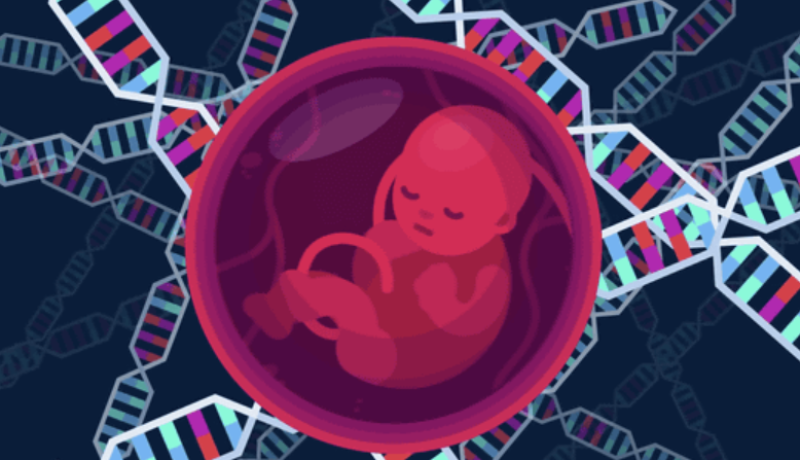
In Benson-Tilsen’s ideal tomorrow, … some of the wunderkinds optimized for superior intelligence will have quashed the threat of advanced AI, and the technology needed to have healthier and smarter babies will be widely accessible and affordable. 

This is an excerpt. Read the original post here

{{ reviewsTotal }}{{ options.labels.singularReviewCountLabel }}
{{ reviewsTotal }}{{ options.labels.pluralReviewCountLabel }}
{{ options.labels.newReviewButton }}
{{ userData.canReview.message }}

Related Articles

Infographic: Global regulatory and health research agencies on whether glyphosate causes cancer

Infographic: Global regulatory and health research agencies on whether glyphosate causes cancer

Does glyphosate—the world's most heavily-used herbicide—pose serious harm to humans? Is it carcinogenic? Those issues are of both legal and ...

Most Popular

Picture1-5
Science Disinformation Gap: The transatlantic battle over social media and censorship
ChatGPT Image May 10, 2026, 08_16_59 PM 2
Overmedicalization? RFK Jr.’s antidepressant crackdown raises conflict questions over his fee stake in Wisner Baum, the tort firm built on suing drug makers
Picture1-1
Cooling the planet with balloons: Could a geoengineering gamble slow global warming?
Screenshot-2026-05-12-at-9.58.31-PM
'He seems fine': Marty Makary out as FDA commissioner
ChatGPT-Image-May-12-2026-08_39_41-PM
GLP podcast: Big Pharma, Big Ag, Big Food—health harming industries or life-saving innovators?
Screenshot 2026-05-11 at 11.30
Despite politicized disinformation, Midwest AI data centers are fueling a solar energy boom
Screenshot-2026-04-23-at-11.00.36-AM
Regulators' dilemma: Thalidomide, Metformin, and the cost of getting drug approvals wrong
Screenshot-2026-05-11-104424
Hantavirus outbreak research: Trump administration shut down study last year on rodent-to-human transmission
Picture1-14
When superbugs threaten vulnerable children: Can AI help solve antibiotic resistance?
Screenshot-2026-04-12-135256
Bixonimania: The fake disease scam that AI swallowed whole
Screenshot-2026-05-12-at-10.05.11-AM
Pro-vaccine “hero” vs. an anti-vax “villain”: ‘Bad Vaxx’ video stirs MAHA backlash
glp menu logo outlined

Get news on human & agricultural genetics and biotechnology delivered to your inbox.