Junk science alert: Does a recent ballyhooed study really prove that artificial sweeteners are worse for your brain than sugar? 

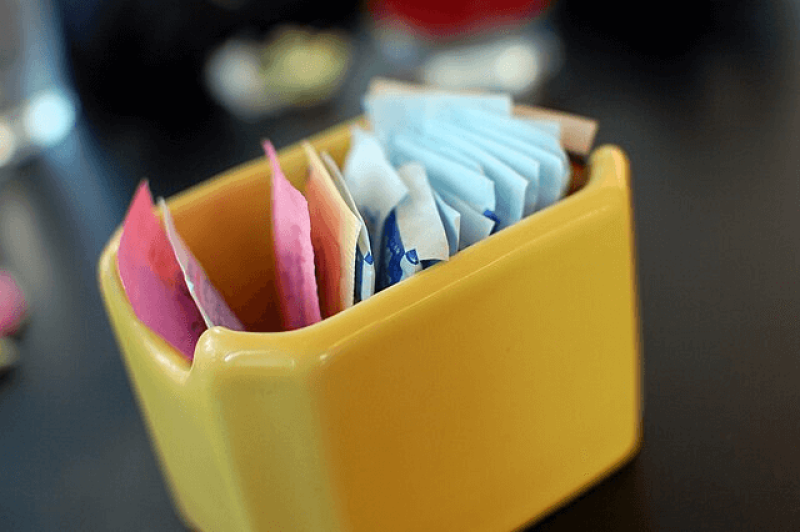
Credit: Steve Snodgrass via CC-BY-2.0

Artificial sweeteners are in the news almost constantly.

If you believe the headlines, they are terrible blights on our health that are far worse than the sugar they replace.

This isn’t always supported by the evidence, but it’s something that we love to hear, and so it gets reported on almost weekly regardless of what the data actually shows.

The most recent furor over artificial sweeteners is a perfect example. The headlines have been claiming for months that artificial sweeteners speed up cognitive decline.

According to a recent study, there are six of these ‘dangerous chemicals’, including common ones like xylitol and aspartame, that may be causing our brains to rot more quickly.

The study has been covered by hundreds of media outlets ….

Follow the latest news and policy debates on sustainable agriculture, biomedicine, and other ‘disruptive’ innovations. Subscribe to our newsletter.

This is all made especially remarkable given that it doesn’t really show any issues from artificial sweeteners at all.

The study itself is a very simple piece of observational research.

One big thing is that food frequency questionnaires don’t really measure intake of food. They measure what people THINK they eat, but we know that we are often unreliable historians.

Most of these questionnaires ask about the last 12 months of eating, and people rarely remember their food intake for that long with any degree of accuracy.

As letters to the journal have noted, there are also serious questions about the biological plausibility of the claim.

Some of the sweeteners are natural substances, one is actually a very rare form of sugar, and all of them are very different molecules. It would be extremely unlikely for all of these different chemicals to have the same impact on the brain.

There’s also the problem of reverse causality – that is, people who were already experiencing brain declines due to diseases like diabetes or heart disease may have been more likely to eat and drink artificial sweeteners at the start of the study.

This is an issue that’s hard to correct with the sort of analysis that we see in this paper.

Despite decades of fearmongering when it comes to artificial sweeteners, the reality is that they are very well-tested and generally not harmful.


This is an excerpt. Read the original post here

Related Articles

Infographic: Global regulatory and health research agencies on whether glyphosate causes cancer

Infographic: Global regulatory and health research agencies on whether glyphosate causes cancer

Does glyphosate—the world's most heavily-used herbicide—pose serious harm to humans? Is it carcinogenic? Those issues are of both legal and ...

Most Popular

ChatGPT-Image-Aug-4-2026-10_15_14-AM
Viewpoint—A hard look at the Fauci diaries: Do they change what we know about COVID’s origins?
ChatGPT-Image-Mar-10-2026-01_39_01-PM
Viewpoint—“Miracle molecule” debunked: Why acemannan supplements don’t work
png-food-sweetener-nutri
Junk science alert: Does a recent ballyhooed study really prove that artificial sweeteners are worse for your brain than sugar? 
Screenshot-2026-08-05-at-7.37.27-PM-1
Facts & Fallacies podcast: 'Zombie apocalypse'? Cities move toward drug legalization, flirt with disaster
Screenshot-2026-08-05-at-8.51.10-AM
Viewpoint: ‘ICUs were empty in NYC and across the US’: RFK, Jr. accuses pro-vaccine liberals of exaggerating the number of COVID deaths
ChatGPT-Image-Aug-4-2026-11_19_30-AM
41-state Cyclospora outbreak exposes widespread state-to-state communication failures
ChatGPT-Image-Aug-4-2026-12_42_58-PM
Viewpoint: Fact-checking CNN interview with RFK, Jr. underscores the depth of his disinformation delusions
ChatGPT-Image-Aug-5-2026-09_54_10-AM
Viewpoint: Data center rejections hit 275 in 2026. Opponents are not the Luddites portrayed by the media
ChatGPT-Image-Aug-4-2026-07_52_00-PM
No liability for scientific due diligence: California Supreme Court rejects bizarre lawsuit faulting Gilead for fully evaluating HIV drug before release
ChatGPT-Image-Aug-4-2026-10_56_29-AM
Viewpoint: Viral social media misinformation drives cancer patients toward ‘wellness grifters’ and dangerous, unregulated supplements
Picture1
Hiroshima at 81: America’s new nuclear bomb, a buried Iranian target, and a question no one wants to ask
ChatGPT-Image-Jul-17-2026-09_50_27-AM
Viewpoint: How disease tracking and prevention has cratered under the Kennedy-Trump administration
ChatGPT Image Jul 29, 2026, 06_26_01 PM 2
Facts & Fallacies podcast: Organic food myths make a comeback on Instagram, with Dr. Kevin Folta
glp menu logo outlined

Get news on human & agricultural genetics and biotechnology delivered to your inbox.