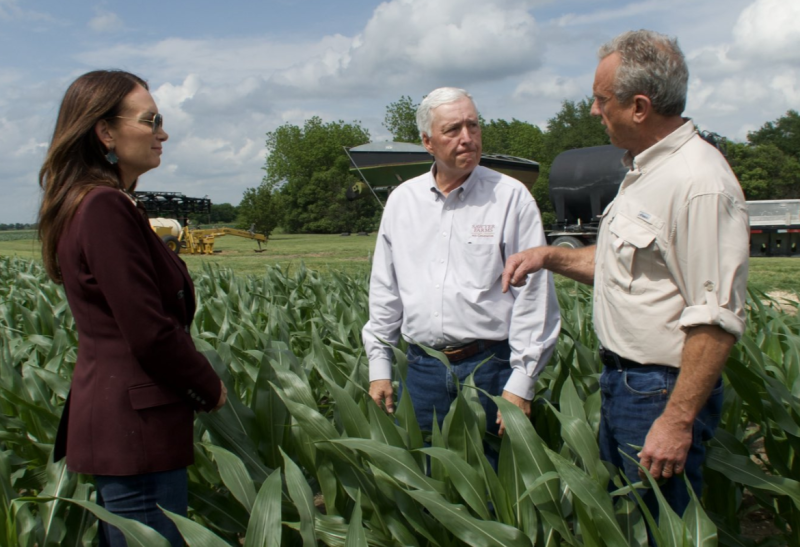

Americans have been subjected to a decades-long misinformation campaign about agriculture. Instead of the truth—conventional farmers grow ever-increasing amounts of food with relatively fewer pesticides—the public is told that regenerative agriculture is a safer path to sustainable nutrition, as HHS Secretary Robert F. Kennedy Jr. recently declared on X.

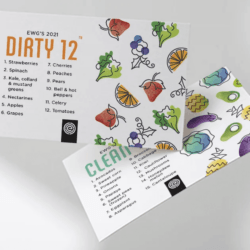
These kinds of claims, that synthetic pesticides could harm families, circulate continuously online, amplified by health influencers with millions of followers. They also power the Environmental Working Group’s (EWG) annual “Dirty Dozen,” a list of fruits and vegetables ranked by pesticide residues.
Many media outlets dutifully report the results of the Dirty Dozen. Parents are erroneously told to buy more expensive organic strawberries, spinach and apples or risk exposing their families to harm.
This annual ritual is effective public relations, but it’s not good science. The simple truth is that pesticides on produce don’t pose a meaningful risk to consumers. Telling them otherwise discourages consumption of fruits and vegetables—one of the best decisions Americans can make for themselves and their families.
It’s an unfortunate fact in the age of virality that the loudest voices aren’t always the most honest ones. Nowhere is this clearer than with the Environmental Working Group, an activist organization rather than a regulatory agency. Its Shopper’s Guide analyzes government testing data and ranks produce by how often residues are found, how many different pesticides turn up and how much total residue is present.
Detection itself is treated as the problem. Little attention is paid to how much of any residue is actually there—often 0.01% of the legal limit—how much food people eat or the large safety cushions built into federal pesticide regulations.
That is the critical omission. Before a pesticide is allowed on food, federal regulators determine that even the highest expected residues from legal use will remain far below levels shown to cause harm in animal studies—after applying large safety margins of 100 to 1,000 designed to protect children and other sensitive groups.
In contrast, the Dirty Dozen never actually measures how much pesticide consumers are exposed to. It therefore cannot tell anyone whether conventional strawberries or spinach, say, pose a meaningful risk. Independent reviews and ongoing monitoring by the USDA and FDA consistently show that the overwhelming majority of samples fall far below the legal safety standards.
This distinction matters because the messaging does not stay confined to one springtime report. Popular health communicators amplify the same narrative year-round, recommending organic versions of certain fruits and vegetables.



The predictable result is unnecessary anxiety among parents who already face a constant stream of competing claims about what is safe for their children. Fruits and vegetables remain among the healthiest foods available. Encouraging families to avoid affordable conventional options, or to stretch limited budgets for organic alternatives on the basis of bad science, does them no favors. Choosing organic is a legitimate personal preference. It’s not a public-health necessity justified by the Dirty Dozen rankings.
Responsibly used, pesticides themselves deliver real benefits that rarely appear in these discussions. They protect crops from insects, weeds and fungi that would otherwise reduce yields and drive up prices. They help control disease-carrying pests and natural toxins that used to kill unsuspecting consumers.
The alternative to responsible pesticide use is not a chemical-free paradise; it’s lower productivity, higher food costs and, in some cases, greater exposure to hazards that nature produces on its own.
|
Related on the SLP
Facts & Fallacies podcast: ‘Regenerative farming’? RFK Jr.’s federal push romanticizes the past and risks food security
|

None of this requires trusting industry. It requires recognizing that federal regulators review extensive safety evidence before approving a pesticide or setting residue limits, and that those limits already include large protective margins. The system is not perfect and is subject to ongoing review. But it’s far more rigorous than a ranking that treats any detectable residue as cause for alarm.
Americans should eat more fruits and vegetables, not fewer. They should wash produce as a matter of basic hygiene. They should feel free to choose organic if they prefer it. What they should not do is treat the Dirty Dozen as a reliable guide to safety.
The amount of a substance, not its mere presence, determines risk. Until that basic fact drives the conversation, the annual list will continue to generate headlines while obscuring a more important truth: conventional produce is safe, nutritious and an essential part of a healthy diet.
Cameron English is the Executive Vice President of the American Council on Science and Health. Find him on X @camjenglish
A version of this article was originally posted at Orange County Register and has been reposted here with permission. Any reposting should credit the original author and provide links to both the GLP and the original article. Find Orange County Register on X @ocregister