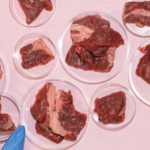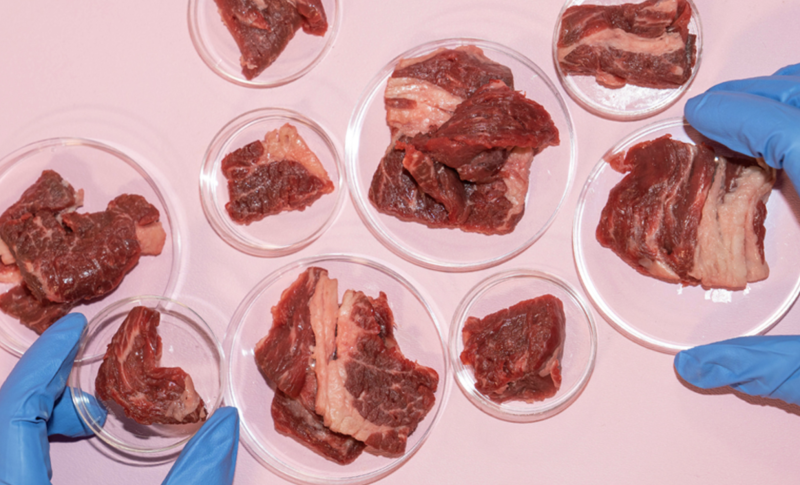

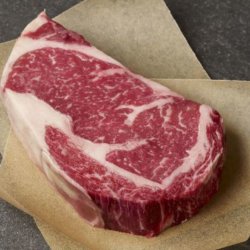
Lab-grown, or cultivated, meat options are already a reality in select restaurants worldwide. For example, the omakase restaurant Robin in San Francisco sells cultivated salmon as part of a tasting menu. But while cultivated meats like Robin’s cellular salmon may bypass the cruelties of intensive farming, they also still struggle to recreate the texture and consistency of more traditional meat options. That’s because cultivated meat is often made from adult stem cells, which can only differentiate into a certain tissue type and lose this ability over time. Scientists then stitch together these tissues, but it’s difficult to recreate the complex mix of fat and muscle that makes up, for example, a marbled wagyu steak.

Now, researchers have developed a new technique to create meat-like tissue using cow embryonic stem cells, which can differentiate into a wide range of tissue types indefinitely, and have shown that these cells can be directed to form complex tissues.1 These contained nerve, blood vessel, and muscle cells. The discovery, the authors write in their paper in Nature Communications, is a “milestone toward self-organizing beef steaks.”
A Meaty Problem
Marina Sanaki-Matsumiya, a cell biologist at the University of Tsukuba and coauthor of the new study, said in a statement that the team’s approach was fundamentally different from existing techniques. “Instead of growing each cell type separately and assembling them afterward, we showed that embryonic stem cells can develop together and self-organize, mimicking real tissue development,” she said.
The team began their protocol by exposing embryonic stem cells to a cocktail of chemicals that caused them to change into an embryonic tissue type called presomitic mesoderm. Then, they induced this developmental tissue to become muscle tissue using different chemicals. The process took just 15 days, and the resulting structures were around 0.6mm in diameter. Despite their small size, the structures held deep complexity. The tissues contained nerve cells that produced chemical fluctuations that mimicked those found in the body. A separate induction protocol combined the previous chemical combination with additional compounds known to produce endothelial cells, which are required for blood vessel formation. This new protocol induced vessel-like networks of endothelium that encased sections of skeletal muscle and neurons. The team produced both 2D and 3D structures that contained this critical cell combination.
A Step Toward Steak
Miki Ebisuya, a cell biologist at Dresden University of Technology and coauthor of the new study, said in the statement that the new structures were more of a steppingstone than a finished product. “The tissue we generated is still very small…To produce something resembling a steak, we will need much larger tissues with more mature blood vessel networks that can support continued growth,” she said.




The new techniques are also not cheap, requiring expensive lab-based experimentation and development. But the new findings represent an essential step toward cheaper, bulk production of lab-grown meat. Soon, a bite of lab-grown meat may be more accessible than a seat at Robin’s $119 omakase table.
RJ Mackenzie is a freelance science writer based in Glasgow, covering biological and biomedical science. Find RJ on X @rjmsci
A version of this article was originally posted at The Scientist and has been reposted here with permission. Any reposting should credit the original author and provide links to both the GLP and the original article. Find The Scientist on X @TheScientistLLC