


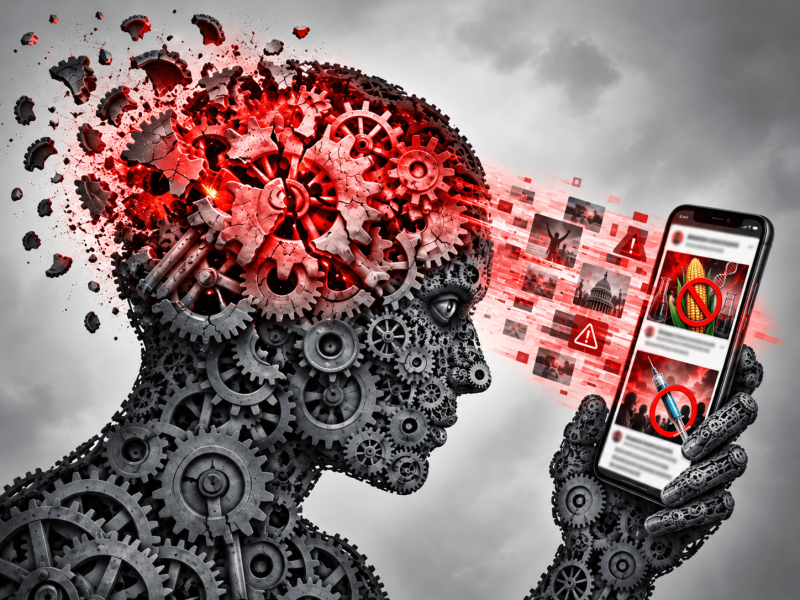

Science denialism is quietly undoing centuries of hard-won progress against disease, and Americans are already paying for it with their lives, argues Steven Salzberg in his Substack newsletter, Science and Skepticism.
The progress has been staggering. In 1800, life expectancy in Europe and the Americas was just 35 years; today it tops 80 in the U.S. and Europe. Salzberg credits humanity’s unique ability to write things down, so no one has to reinvent a life-saving advance. “We’ve got it forever,” he writes. “Unless, that is, we collectively ‘forget’ what we’ve learned.”
Most of those extra years come from simply not dying of infections. Vaccines eradicated smallpox, which killed an estimated 300 million people in the 20th century alone, and pushed polio to the brink. Even low-tech clean water and sanitation may have prevented more deaths than any other modern advance.
Ironically, that success is part of the problem. Most physicians have never seen polio, and few U.S. doctors had seen measles before this year, so young parents don’t view these diseases as threats. When Robert F. Kennedy Jr. makes false claims about vaccine dangers, which Salzberg says he does “in virtually every public speech,” some parents conclude the shots are riskier than the diseases they prevent.
The consequences are deadly. A measles outbreak in Pennsylvania has killed at least five people, and 99% of those infected were unvaccinated. The U.S. eliminated measles in 2000, yet has logged 3,400 confirmed cases this year, likely 50,000 or more in reality, Salzberg estimates. “Correcting this misinformation might take decades,” he warns.




Raw milk offers another example. Louis Pasteur’s 1862 heating process has saved millions of lives, yet a movement touting raw milk’s supposed health benefits is pushing state legislatures to expand access. What raw milk actually delivers, Salzberg notes, is “cow poop,” sometimes carrying dangerous bacteria like E. coli O157:H7, which left one 3-year-old with kidney failure and a stroke.
Social media turbocharges it all, forcing society to spend money, time and intellectual effort “convincing people of something that ‘we’ as a species already know.” Why do denialists do it? Often for money, power or influence, Salzberg says. “People believe what they see in their social media feeds, and so far, no one has figured out an effective way to stop it.”






























