Mapping evolutionary history with genes for smell

Animals have been smelling for hundreds of millions of years, but the evolution of that sense is difficult to trace. You can’t ask an elephant to describe the fragrance of an acacia tree, for example, nor can you ask a lion if it gets the same feeling from a whiff of the same plant.

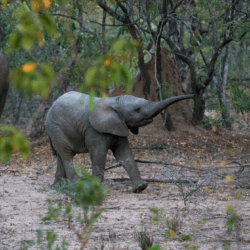
So scientists have to gather indirect clues to how different species use their noses. One way is to run simple tests on animals, seeing if they show an ability to tell different odors apart. Elephants, for example, can tell the difference between the smells of as many as 30 different members of their extended family.

Recently, scientists at the University of Tokyo compared 20,000 olfactory receptor genes from 13 species of mammals. In some cases, such as elephants, they were the first to make such a catalog. In other cases, such as cows and mice, they identified olfactory receptor genes that had gone overlooked till now.

What’s most interesting about the new study from Tokyo is that the scientists were able to reconstruct 100 million years of smell evolution in a single tree. They could recognize related versions of the same gene in different species, and use that information to trace when new genes arose and when they disappeared.

Read the full, original story: The tree of smells

 

Related Articles

Infographic: Global regulatory and health research agencies on whether glyphosate causes cancer

Infographic: Global regulatory and health research agencies on whether glyphosate causes cancer

Does glyphosate—the world's most heavily-used herbicide—pose serious harm to humans? Is it carcinogenic? Those issues are of both legal and ...

Most Popular

Bayer Crop Circle in Golden Wheat
Making fertilizer from thin air: Bayer’s gene-editing innovation could dramatically cut chemical fertilizer use in growing food
Glossy Plastic Bag of Tokens and Labels
Viewpoint: How CNN got played by environmental activists pushing a plastics scare and litigation agenda
Screenshot-2026-10-21-at-11.30.51-AM
Viewpoint: Yes, our food system stinks, but the attack of ultra-processed foods is often misplaced
Screenshot-2026-10-30-at-10.55.54-AM
Longevity scandal: The huckster who validates the ‘oldest people in the world’ claims
Picture1
Viewpoint: How badly is the U.S. food-safety net fraying? FDA’s bungled handling of the tainted lettuce crisis deepens concerns over cuts to disease tracking and response
Red and Green Embroidered Campaign Caps
Viewpoint: The fragile (and often bizarre) MAHA-MAGA-far left health-and-chemicals coalition is fracturing. Here’s why
Screenshot-2026-10-28-at-3.00.44-PM
Viewpoint: Activist attacks on corporations increasingly depend on "attribution" science to target oil companies for global climate change
Screenshot-2026-06-18-at-2.52.05-PM
Trump is “terminating” Biden-era rule aimed at cutting climate-warming methane emissions from oil and gas drilling
Screenshot-2026-10-30-at-11.36.40-AM
An Earth-saving benefit of global warming?: How fossil fuel-burning humans stopped the looming Ice Age
ChatGPT-Image-Mar-10-2026-01_39_01-PM
Viewpoint—“Miracle molecule” debunked: Why acemannan supplements don’t work
Reaching Through the Woven Sky
Challenging genetic modification rejectionists: Our evolving food system has relied on science for thousands of years
Robots in a Futuristic Conference Meeting
Helpful until we’re helpless? Researchers warn AI is gradually eroding human control
Screenshot 2026-07-29 at 10.40
The COVID vaccine turbo cancer scare is back. Science still proves it’s wrong.
Patriotic Flag in a Glass Flask
Viewpoint: America Last: From the Pentagon to universities, Trump’s corruption of science could inflict lasting, irreversible damage on U.S. research
glp menu logo outlined

Get news on human & agricultural genetics and biotechnology delivered to your inbox.