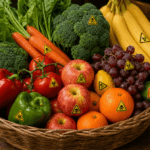
Reviewing food labels: What do they really tell us?

The debate over the safety of genetically modified foods came into the spotlight when Chipotle, the popular Mexican food chain, announced it was working to remove ingredients that contain genetically modified organisms, or GMOs, from its menu.

GMO-free is just one of the latest in a long list of food labels that includes gluten-free and organic items. Often they come at quite a markup, despite a shortage of health studies showing a clear benefit.

Just as concerning is that some of these labels can be slapped on packaging with little regulation by the U.S. Food and Drug Administration.

GMO or no

The good news for consumers who are troubled by genetic engineering is that, at least from a human health perspective, they seem safe so far. “From the data that are available, there doesn’t seem to be any concern with respect to human health and GMOs,” said Alice Lichtenstein, the Stanley N. Gershoff professor of nutrition science and policy at Tufts University.

The FDA has reviewed 96 GMO-free plants, as of 2013, as part of the agency’s process to ensure that new products, whether genetically modified or not, are safe.

‘Natural,’ ‘nutritious’ and ‘wholesome,’ whatever they mean

Who doesn’t want foods with these good-for-you-sounding labels? Just about everybody looks for these labels, which adorn cereal boxes, juice drink bottles and syrup jars. But almost nobody knows what they actually mean. A 2010 report by the Center for Science in the Public Interest described how consumers think foods with these labels are healthier when, in fact, they often are not.

The GLP aggregated and excerpted this blog/article to reflect the diversity of news, opinion and analysis. Read full, original post:ย ‘Natural’ and other food labels that sound legitimate but may not be

{{ reviewsTotal }}{{ options.labels.singularReviewCountLabel }}
{{ reviewsTotal }}{{ options.labels.pluralReviewCountLabel }}
{{ options.labels.newReviewButton }}
{{ userData.canReview.message }}

Related Articles

Infographic: Global regulatory and health research agencies on whether glyphosate causes cancer

Infographic: Global regulatory and health research agencies on whether glyphosate causes cancer

Does glyphosateโ€”the world's most heavily-used herbicideโ€”pose serious harm to humans? Is it carcinogenic? Those issues are of both legal and ...

Most Popular

wuhan institute of virology main entrance
โ€‹โ€‹COVID lab leak? Making a case that the Wuhan market origins theory is wrong
Screenshot-2026-06-17-at-9.44.03-AM
Viewpoint: Embryos are becoming the newest battleground of love, loss, and legal uncertainty
Screenshot-2026-06-18-at-11.41.51-AM
Viewpointโ€”Protecting baloney science: Far right senators move to protect the phony homeopathy industry
ChatGPT-Image-Mar-10-2026-01_39_01-PM
Viewpointโ€”โ€œMiracle moleculeโ€ debunked: Why acemannan supplements donโ€™t work
Screenshot-2026-06-17-at-11.57.12-AM
Viewpoint: Raw milk and the myth of safetyโ€”ProPublica exposes the growing anti-homogenization movement
ChatGPT-Image-Jun-9-2026-01_11_37-PM
Turmeric supplements: More risks than benefits
ChatGPT-Image-Jun-16-2026-10_01_45-AM-2
Viewpointโ€”Recursive self-improvement: AI leader Anthropic calls for AI slowdown
Screenshot-2026-06-18-at-2.52.05-PM
Activist organization accuses Trump of protecting methane-generating stripper wells to benefit billionaire and donor Jeffrey Hildebrandย 
Screenshot-2026-06-16-at-10.02.22-PM
Viewpoint: โ€˜Industrial foodโ€™ primerโ€”Challenging the dangerous delusions of the alternative food movement
ChatGPT-Image-Jun-18-2026-02_32_04-PM
Can illegal social media content be stopped before it goes viral? UK is going to try.
ChatGPT-Image-Jun-4-2026-03_07_27-PM
AAP v. Kennedy: While a court challenge grinds on, RFK Jr. quietly advances his anti-vaccine conspiracy agenda
ChatGPT-Image-Jun-16-2026-10_29_11-AM
Whatโ€™s behind Anthropicโ€™s warning about the accelerating development of AI
glp menu logo outlined

Get news on human & agricultural genetics and biotechnology delivered to your inbox.