Organic not healthier than other foods: Organic junk food still junk

Demand for organic foods keeping growing, and big box retailers and mainstream grocery chains, from Walmart to Costco, have jumped in.

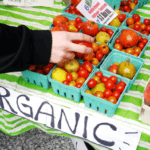
Consumer demands for organic foods in the U.S. continue to explode. Sales of organic food and non-food products totaled $39.1 billion in 2014, up 11.3 percent from the previous year—with sales of organic food alone accounting for $35.9 billion, according to the Organic Trade Association.

But controversy has dogged the organic food industry. Just what does it mean to be organic and are they really better for you than conventional foods?

With more and more organic products flying off the shelves, most consumers believe they are getting a healthier product, regardless of price. But is that true? That depends on who you believe.

Nova Scotia Organics’ Nancy Smithers said that research compiled from 50 studies comparing traditionally produced food to organic showed that organics have a higher nutritional value 40 percent of the time where nonorganic foods have a higher nutritional value only 15 percent of the time. And, a study released last year by Great Britain’s Newcastle University said that organic crops are up to 60 percent higher in a number of key antioxidants than conventionally-grown ones.

But not all agree.

“Organic junk food is still junk food. And conventional fresh, health food is still healthy,” said Rene Ficek, a registered dietician and lead nutrition expert at Seattle Sutton’s Healthy Eating, an Illinois based firm that sells dietary meal programs.

Even the famed Mayo Clinic on its website says that organic products may not be as nutritious as believed.

The GLP aggregated and excerpted this blog/article to reflect the diversity of news, opinion and analysis. Read full, original post: Organic foods: Why they’re so expensive, and who owns your favorite brands

{{ reviewsTotal }}{{ options.labels.singularReviewCountLabel }}
{{ reviewsTotal }}{{ options.labels.pluralReviewCountLabel }}
{{ options.labels.newReviewButton }}
{{ userData.canReview.message }}

Related Articles

Infographic: Global regulatory and health research agencies on whether glyphosate causes cancer

Infographic: Global regulatory and health research agencies on whether glyphosate causes cancer

Does glyphosate—the world's most heavily-used herbicide—pose serious harm to humans? Is it carcinogenic? Those issues are of both legal and ...

Most Popular

Credit: ACSH
Viewpoint: Who and what’s to blame for the surge in vaccine-preventable diseases?
ChatGPT-Image-May-28-2026-12_56_54-PM
Viewpoint: Vaccines' non-specific effects? The ‘shoddy’ Danish couple whose 'research’ inspires RFK, Jr.’s health delusion
Organic-Produce
Viewpoint: Why you should ignore organic food advocates’ advice to avoid ‘pesticide soaked’ conventional fruits and vegetables
Screenshot-2026-06-05-at-2.12.30-PM
Some plants can poison you. So how did humans figure out what is safe to eat?
ChatGPT Image Jun 3, 2026, 03_14_43 PM
Viewpoint: How Earthjustice became the poster child for the abuse of special interest activist funding
Screenshot-2026-06-08-at-11.05.51-AM
Can vaping lead to cancer? New ‘association study’ raises questions of “links"
Screenshot-2026-06-05-at-3.30.20-PM
Republican lawmakers spread misinformation claiming solar farms permanently destroy potato farms
ChatGPT-Image-Jun-5-2026-01_17_48-PM
GLP-1 weight-loss drugs may reshape our desires and emotions
Screenshot-2026-06-08-at-10.19.30-AM
‘Natural’ wellness supplements linked to liver injury
edb7f6d7-2370-418f-9578-74e29678e35c
Facts & Fallacies Podcast: Nicotine vaping—public health miracle, or risk to children? Professor Cliff Douglas
ChatGPT-Image-Mar-10-2026-01_39_01-PM
Viewpoint—“Miracle molecule” debunked: Why acemannan supplements don’t work
Screenshot 2025-07-30 at 10.48
Can gene editing eliminate Down syndrome? Scientists have done it in lab-grown cells
glp menu logo outlined

Get news on human & agricultural genetics and biotechnology delivered to your inbox.