Project aims to develop biotech disease-resistant potato to pass both US and EU regulations

Spuds are a staple diet for many people on Earth. While potatoes seem like robust vegetables, they’re actually pretty susceptible to diseases. Enter the researchers from the TSL Potato Partnership Project, who want to use genetic modification to turn the lowly potato into a disease and bruise-resistant super spud.

The five-year super-spud project launched earlier this week, and is headed up by Jonathan Jones, a world leading expert on the genetics of plant diseases at Sainsbury Lab in the UK. The project is set to receive £841,000 ($129,0000) from the Horticulture and Potato Initiative (HAP), funded by the Biotechnology and Biological Sciences Research Council. The overall aim is to create a new variety of potato that can pass through regulatory approval and eventually enter the U.S. and EU market.

Jones said in a release that the team is still far from completing its mission (they just got started!), but he did point out the benefits that a genetically modified spud could have. “If [the potato] passes those tests and if it is approved for planting, this potato could prevent many tonnes of pesticides and fungicides being sprayed on our land, increase yields and make a healthier crisp or chip,” he said.

According to an MIT report, the potato will contain three genes from Jones’ research lab that are known to “confer resistance to late blight”, and two additional genes designed to “block infestation by a tiny worm called the potato cyst nematode.”
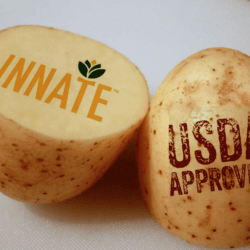

The spud will also contain DNA used by the American company Simplot to genetically engineer a potato that recently received approval from the US Food and Drug Administration (FDA).

The GLP aggregated and excerpted this blog/article to reflect the diversity of news, opinion and analysis. Read full, original post:  Here Comes the Genetically Modified, Disease-Resilient Super Spud

 

Related Articles

Infographic: Global regulatory and health research agencies on whether glyphosate causes cancer

Infographic: Global regulatory and health research agencies on whether glyphosate causes cancer

Does glyphosate—the world's most heavily-used herbicide—pose serious harm to humans? Is it carcinogenic? Those issues are of both legal and ...

Most Popular

ChatGPT-Image-Sep-17-2026-12_28_43-PM
Vitamin D, omega-3 fish oil and glucosamine supplements could cause brain damage 
ChatGPT-Image-Mar-10-2026-01_39_01-PM
Viewpoint—“Miracle molecule” debunked: Why acemannan supplements don’t work
ChatGPT-Image-Sep-17-2026-10_17_15-AM
Viewpoint: Why are the less intelligent more likely to be conservative—and smarter people more socially liberal?
Screenshot-2026-09-10-at-12.20.19-PM
'Jet fuel didn't melt the steel': 9/11 conspiracy theories debunked
Screenshot-2026-08-12-at-11.31.46-AM
AI is helping develop new vaccines
Screenshot-2026-09-16-at-12.07.47-PM
The heated debate over trans athletes in the WNBA
Screenshot-2026-09-17-at-10.24.54-AM
Viewpoint: Dubious environmental fears: Why the AI buildout is critical to America’s ecological future
Screenshot 2026-09-11 at 12.39
Child-monitoring apps: When the cure is worse than the harm—and how the technology could be tweaked
ChatGPT-Image-Sep-9-2026-02_48_24-PM
Viewpoint: Trump-RFK Jr. report on “Gender Ideology & Left-wing Ideology’ targets LGBTQ community—and science
ChatGPT-Image-Sep-15-2026-12_15_00-PM
Viewpoint: Women, depression and empathy: Explaining the gender gap in views about child-murderer Lindsay Clancy
Screenshot-2026-09-11-at-2.26.23-PM
Newly approved GMO chestnut trees planted across from the White House are stirring debate
Screenshot-2026-09-10-at-11.50.46-AM
Did COVID vaccines kill 2,500 service members? RFK Jr. hires an investigator who compares vaccine promoters to Nazi doctors
glp menu logo outlined

Get news on human & agricultural genetics and biotechnology delivered to your inbox.