Early farmers brought light skin, height to northern Europeans

earlyeuropeans

The GLP aggregated and excerpted this blog/article to reflect the diversity of news, opinion and analysis.

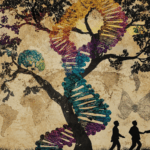
When agriculture arrived in Europe some 8,500 years ago, humans didn’t simply adapt their lifestyles and eating habits, but also their genes.

Researchers, led by geneticist David Reich at Harvard Medical School, analyzed the DNA of 230 ancient humans who lived between 3,000 and 8,500 years ago and found 12 positions on the human genome where natural selection seems to have occurred with the advent of farming. The scientists were also able to trace which genes were passed down from various prehistoric ancestors.

In a paper published in Nature, the researchers show that northern Europeans seem to have a stronger genetic link to a particularly tall nomadic population from the Eurasian steppe who came to Europe around 4,500 years ago. Because of these genes, northern Europeans are still tall compared to others on the continent.

Southern Europeans became shorter as they turned to farming, as genes connected to reduced height were passed down through the generations. These shorter genes were inherited from Neolithic and Chalcolithic populations on from the Iberian peninsula, though it’s not clear why this happened in the south but not the north.

After they began farming, ancient Europeans also evolved to have lighter skin pigmentation, which is better able to capture vitamin D from the sun. Reich hypothesizes that earlier prehistoric hunter-gatherers didn’t need lighter skin, as the meat they caught provided enough Vitamin D, according to the New York Times.

Read full, original post: How Europeans became tall and fair-skinned 8,500 years ago

{{ reviewsTotal }}{{ options.labels.singularReviewCountLabel }}
{{ reviewsTotal }}{{ options.labels.pluralReviewCountLabel }}
{{ options.labels.newReviewButton }}
{{ userData.canReview.message }}

Related Articles

Infographic: Global regulatory and health research agencies on whether glyphosate causes cancer

Infographic: Global regulatory and health research agencies on whether glyphosate causes cancer

Does glyphosate—the world's most heavily-used herbicide—pose serious harm to humans? Is it carcinogenic? Those issues are of both legal and ...

Most Popular

Screen Shot at AM
Facts & Fallacies Podcast: Right-wing politics bad for your health? Separating speculation from science
ChatGPT-Image-Jun-13-2026-11_51_39-AM
Viewpoint: COVID lab leak? Misguided backers of the lab leak theory refuse to give up
drug look like ozempic
Six key health insights from taking weight-loss drugs
ChatGPT Image Jun 3, 2026, 03_54_37 PM
Viewpoint: “Turn on, tune in, drop out”—Kennedy embraces the Timothy Leary psychedelic revolution
ChatGPT-Image-Jun-11-2026-01_15_03-PM
Selective Pressure, Selective Silence
Screenshot-2026-06-14-at-9.14.26-AM
‘Humanitarian catastrophe’: Trump’s USAID shutdown could help drive nearly 23 million deaths — including 5.4 million children — by 2030, Lancet study warns
ChatGPT-Image-Jun-14-2026-09_41_44-AM-2
Viewpoint—‘The gleeful efficiency of an arsonist’: Administration’s health and science research cuts are ‘sabotaging’ America’s future
ChatGPT-Image-Mar-10-2026-01_39_01-PM
Viewpoint—“Miracle molecule” debunked: Why acemannan supplements don’t work
ChatGPT Image Jun 3, 2026, 03_14_43 PM
Viewpoint: How Earthjustice became the poster child for the abuse of special interest activist funding
Screenshot-2026-06-14-at-9.53.54-AM
Is the World Cup a perfect storm for the spread of infectious diseases?
ChatGPT Image Jun 12, 2026, 02_32_14 PM
‘Have you asked your doctor?’: AMA launches campaign to counter health misinformation
Screenshot-2026-06-05-at-2.12.30-PM
Some plants can poison you. So how did humans figure out what is safe to eat?
glp menu logo outlined

Get news on human & agricultural genetics and biotechnology delivered to your inbox.