Bread from…vaginal yeast: Would you eat it?

SourdoughBread
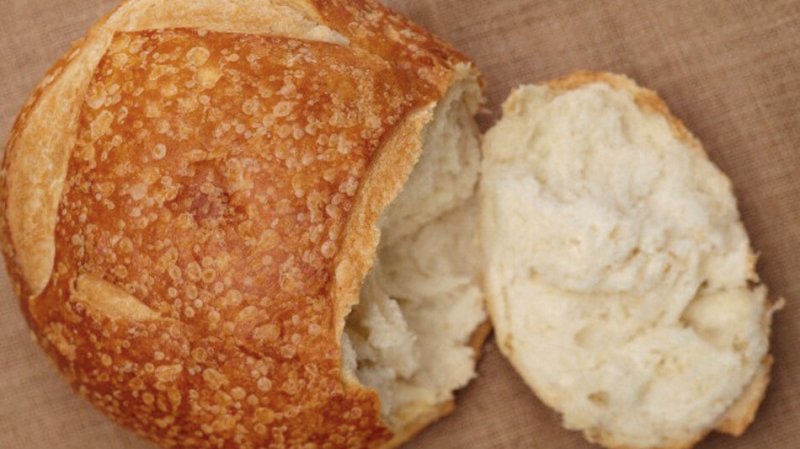
Small Loaf of Sourdough Bread with the End Broken Off --- Image by © Foodcollection/the food passionates/Corbis

The GLP aggregated and excerpted this blog/article to reflect the diversity of news, opinion and analysis.

A woman decided to try making sourdough using vaginal yeast after noticing that she had thrush.

The “little home baking project”, as Zoe Stavri called it in her blog post, started on Saturday morning when she noticed the “itchy, burny” symptoms of a vaginal yeast infection.

“I giggled to myself ‘maybe I could make bread with that’,” she wrote. “And that ticked into, ‘well, I’ve always wanted to try making my own sourdough anyway.”

BuzzFeed News spoke to Dr. Ian Roberts, curator of the National Collection of Yeast Cultures at the Institute of Food Research, about the project.

He said that in over 30 years of working with yeasts this is the first time he’s heard of anyone baking sourdough using yeast from their vagina. However, in theory “it is not impossible” to do.

“Sourdough cultures are generally made using microbes that fall in from the surrounding environment,” he said, “but there are many different species and strains of yeasts, not all of which can be used to make bread, and some of which cause diseases.”

He said the yeasts we would normally use for baking, Saccharomyces cerevisiae, are not likely to be found in our body’s cavities.

Read full, original post: It’s “Not Impossible” To Bake Sourdough Bread Using Vaginal Yeast, But You Probably Shouldn’t Eat It


{{ reviewsTotal }}{{ options.labels.singularReviewCountLabel }}
{{ reviewsTotal }}{{ options.labels.pluralReviewCountLabel }}
{{ options.labels.newReviewButton }}
{{ userData.canReview.message }}

Related Articles

Infographic: Global regulatory and health research agencies on whether glyphosate causes cancer

Infographic: Global regulatory and health research agencies on whether glyphosate causes cancer

Does glyphosate—the world's most heavily-used herbicide—pose serious harm to humans? Is it carcinogenic? Those issues are of both legal and ...

Most Popular

ChatGPT Image Jun 3, 2026, 03_14_43 PM
Viewpoint: How Earthjustice became the poster child for the abuse of special interest activist funding
ChatGPT-Image-Jun-11-2026-01_15_03-PM
Selective Pressure, Selective Silence
ChatGPT Image Jun 3, 2026, 03_54_37 PM
Viewpoint: “Turn on, tune in, drop out”—Kennedy embraces the Timothy Leary psychedelic revolution
Screenshot-2026-06-05-at-2.12.30-PM
Some plants can poison you. So how did humans figure out what is safe to eat?
ChatGPT-Image-Mar-10-2026-01_39_01-PM
Viewpoint—“Miracle molecule” debunked: Why acemannan supplements don’t work
Screenshot 2026-05-26 at 10.15
Viewpoint: Double standard—Why does the wellness industry get a free pass while Big Healthcare is treated as morally suspect?
Picture1
Sounds we can’t hear — the hidden planetary signals behind science, fear, and misinformation
ChatGPT-Image-May-26-2026-07_51_21-AM-2
Viewpoint: There are more than 1,000 chemicals in a cup of coffee—including many substances that can cause cancer. Why isn’t it banned?
ChatGPT Image May 28, 2026, 08_16_38 PM
Viewpoint: Why the EPA mismeasures cancer risk of chemicals and what should be done to fix it
Screenshot-2026-06-03-at-1.24.46-PM
Challenging anti-GMO disinformation: Why genetically-tweaked crops offer bushels of benefits
ChatGPT Image May 26, 2026, 08_42_17 AM (1)
Viewpoint: Greenpeace and poison: How environmental advocacy groups rely on compliant (and often ignorant) journalists to spread disinformation and spark litigation

Sorry. No data so far.

glp menu logo outlined

Get news on human & agricultural genetics and biotechnology delivered to your inbox.