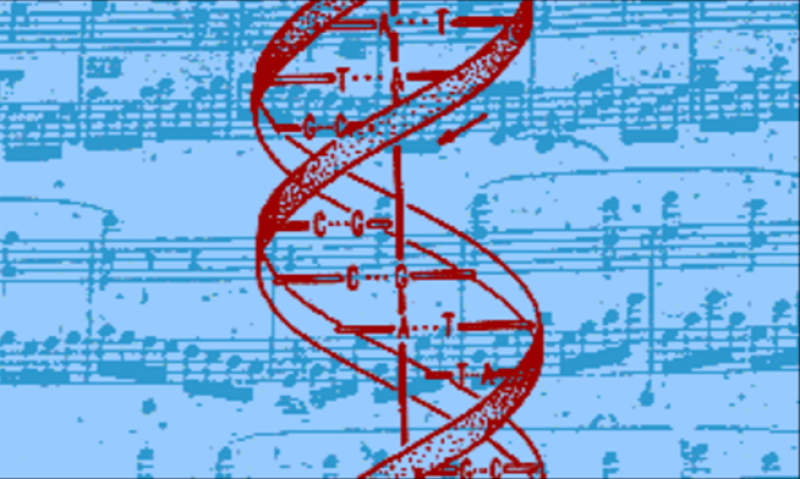
Is musical talent in your genes?

Screen Shot at AM

The GLP aggregated and excerpted this blog/article to reflect the diversity of news, opinion and analysis.

Creativity is a hard trait to explain – particularly when it comes to trying to figure out how much of it is determined by our environment, and how much is passed down by our parents. Now research has shown that up to 30 percent of a musician’s ability to compose and arrange music can be explained by genes – suggesting that the skills can, to a certain extent, be inherited.

That’s great news for everyone with musically gifted parents, but not terrible for the rest of us either, because the study suggests that 70 percent of composition talent is still in our hands. But what’s even more interesting is the research also isolated the genes involved in these skills, and discovered a specific biological pathway that could allow some people to write music like a second language, while the rest of us can barely hum a theme song.

To be clear, the study had its limitations – namely the fact that it only involved just under 300 individuals in Finland, who all self-reported their composition abilities (which is just asking for exaggeration).

But the chromosome regions that appeared to be linked to the ability to compose and arrange music are already known to be associated with musical appreciation and creativity, and they offer a solid starting point from which to study the biological basis of the skills further.

Read full, original post: Not everyone has the ability to compose music, and your genes could explain why

{{ reviewsTotal }}{{ options.labels.singularReviewCountLabel }}
{{ reviewsTotal }}{{ options.labels.pluralReviewCountLabel }}
{{ options.labels.newReviewButton }}
{{ userData.canReview.message }}

Related Articles

Infographic: Global regulatory and health research agencies on whether glyphosate causes cancer

Infographic: Global regulatory and health research agencies on whether glyphosate causes cancer

Does glyphosate—the world's most heavily-used herbicide—pose serious harm to humans? Is it carcinogenic? Those issues are of both legal and ...

Most Popular

newborn infant baby mother
Facts & Fallacies Podcast: The truth about vitamin K shots
ChatGPT-Image-Jun-9-2026-01_11_37-PM
Turmeric supplements: More risks than benefits
Screenshot-2026-06-16-at-10.02.22-PM
Viewpoint: ‘Industrial food’ primer—Challenging the dangerous delusions of the alternative food movement
ChatGPT Image Jun 16, 2026, 12_03_37 PM
Kennedy accused of trying to ‘bully’ science journal that retracted study linking vaccines to infant deaths
Screen Shot at AM
Facts & Fallacies Podcast: Right-wing politics bad for your health? Separating speculation from science
ChatGPT-Image-Jun-3-2026-04_29_13-PM
Viewpoint: While unvaccinated children are dying overseas, Congress challenges Trump and Kennedy’s block on aid
ChatGPT-Image-Jun-15-2026-11_00_13-AM-2
Glucosamine alert: Alzheimer’s progresses faster among those taking the popular supplement
Screenshot-2026-06-16-at-11.23.32-AM
In a rebuke to RFK, Jr.’s anti-vax crusade, journal retracts study claiming hepatitis B vaccine–autism link
Screenshot-2026-06-16-at-12.33.01-PM
Who’s responsible when AI lies? Google challenging court ruling that search results are not protected from legal liability
Screenshot-2026-06-05-at-2.12.30-PM
Some plants can poison you. So how did humans figure out what is safe to eat?
ChatGPT-Image-Mar-10-2026-01_39_01-PM
Viewpoint—“Miracle molecule” debunked: Why acemannan supplements don’t work
Screenshot-2026-06-14-at-9.53.54-AM
Is the World Cup a perfect storm for the spread of infectious diseases?
Screenshot-2026-06-16-at-12.46.54-PM
Viewpoint: “Dead Wrong”—Understanding healthcare’s misinformation epidemic
glp menu logo outlined

Get news on human & agricultural genetics and biotechnology delivered to your inbox.