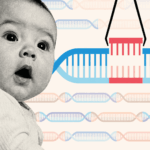
Genetics of height: It may be too complex for scientists to crack the code

dna sequencing genes
[W]hen the human genome was sequenced, scientists like [Joel Hirschhorn, a geneticist at Boston Children’s Hospital and the Broad Institute] thought they could plumb that data to track all the height genes….

That effort started slowly. But now, Hirschhorn says, “For height there are about 700 variants known to affect height, each of them usually with a pretty small effect on height, usually like a millimeter or less.”

Even so, the traits [Hirschhorn] found only explain about a quarter of the inherited height factors. And, frustratingly, for most of those variants scientists have no idea what they actually do.

Hirschhorn and his colleagues are expanding their already massive study of 700,000 subjects. That approach has drawn skepticism from some scientists, who think it’s a waste of effort.

David Goldstein, a professor of genetics at Columbia University, says an expanded effort could ultimately implicate every gene in existence, and that hardly helps scientists narrow down the biological factors that contribute to height.

It’s likely scientists will never be able to figure out what these hundreds of common variants do to influence height, Goldstein says. Instead, a much better strategy is [to look] for rare variants that pack a big punch.

[The study can be found here.]

The GLP aggregated and excerpted this blog/article to reflect the diversity of news, opinion, and analysis. Read full, original post: Genetics of Height is Way Complex, It Turns Out

{{ reviewsTotal }}{{ options.labels.singularReviewCountLabel }}
{{ reviewsTotal }}{{ options.labels.pluralReviewCountLabel }}
{{ options.labels.newReviewButton }}
{{ userData.canReview.message }}

Related Articles

Infographic: Global regulatory and health research agencies on whether glyphosate causes cancer

Infographic: Global regulatory and health research agencies on whether glyphosate causes cancer

Does glyphosate—the world's most heavily-used herbicide—pose serious harm to humans? Is it carcinogenic? Those issues are of both legal and ...

Most Popular

ChatGPT Image Jun 3, 2026, 03_54_37 PM
Viewpoint: “Turn on, tune in, drop out”—Kennedy embraces the Timothy Leary psychedelic revolution
ChatGPT-Image-Jun-11-2026-01_15_03-PM
Selective Pressure, Selective Silence
Screenshot-2026-06-05-at-2.12.30-PM
Some plants can poison you. So how did humans figure out what is safe to eat?
Screenshot-2026-06-11-at-3.40.06-PM
'Toxin' detox: A gastroenterologist weighs in on $71 billion health trend
Screenshot-2026-06-05-at-1.44.09-PM
Viewpoint: Scientists have scrapped the worst-case climate scenario. Is that proof that climate change is a hoax, as Trump claims?
Screenshot-2026-06-11-at-4.00.17-PM
Gen Z burned by sunscreen misinformation and tanning myths
Screenshot-2026-06-03-at-3.33.44-PM
Viewpoint: Vaccine deniers are attacking a life-saving Vitamin K shot for newborns that isn’t even a vaccine
ChatGPT-Image-Jun-11-2026-10_34_44-AM-2
Will hi-tech genetic fortune-telling really help parents make healthier children?
Screenshot 2026-05-26 at 10.15
Viewpoint: Double standard—Why does the wellness industry get a free pass while Big Healthcare is treated as morally suspect?
Screenshot-2026-06-08-at-1.35.30-PM
Viewpoint: Social media and fake natural health propaganda fuel surge in use of mostly useless supplements

Sorry. No data so far.

glp menu logo outlined

Get news on human & agricultural genetics and biotechnology delivered to your inbox.