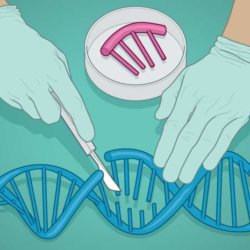
DIY home gene editing is all the rage: Here are the promises and pitfalls

DIY
Kian Sadeghi, Source: Wall Street Journal

Kian Sadeghi has postponed homework assignments, sports practice and all the other demands of being a 17-year-old high-school junior…On a Saturday afternoon, he is in a lab learning how to use Crispr-Cas9…

Scientific breakthroughs often raise big ethical questions…The public benefits from scientific advances, particularly in improving health. But some scientists say the power to alter the DNA of plants, animals or people, and the profound impact such changes may have on individuals and society, merits public discussion.

Crispr gene editing by amateurs and hobbyists brings an unusual set of challenges. Crispr-Cas9 is easier, faster and cheaper than previous gene-editing techniques. While that raises the prospect of people with nefarious intent gaining access, the greater concern with amateur enthusiasts is that someone might make a seemingly innocuous gene edit in a fungus, insect or plant that turns out to wreak havoc on the environment.

…
There are those who believe that given the importance of the ethical debate, the more people know about Crispr—including hands-on experience with it—the better. A do-it-yourself Crispr kit with enough material to perform five experiments gene-editing the bacteria included in the package is available online for $150. Genspace, the Brooklyn, N.Y., community lab where Mr. Sadeghi is learning how to use Crispr to edit a gene in brewer’s yeast, charges $400 for four intensive sessions. More than 80 people have taken the classes since the lab started offering them last year.

The GLP aggregated and excerpted this blog/article to reflect the diversity of news, opinion, and analysis. Read full, original post:  DIY Gene Editing: Fast, Cheap—and Worrisome

Related Articles

Infographic: Global regulatory and health research agencies on whether glyphosate causes cancer

Infographic: Global regulatory and health research agencies on whether glyphosate causes cancer

Does glyphosate—the world's most heavily-used herbicide—pose serious harm to humans? Is it carcinogenic? Those issues are of both legal and ...

Most Popular

Nurturing Care Beneath the Crunchy Moms Logo
Crunchy Moms disinformation flood: Zuckerberg's Facebook has opened floodgates on measles and vaccines
Screenshot-2026-11-16-at-2.37.32-PM
30 years of GMO farming: Is the boom in glyphosate and glufosinate use harming the environment? Data show they’re the most sustainable choice
Screenshot-2026-11-19-at-7.54.57-PM
European General Court sides with scientists, dismisses activist claims that glyphosate is toxically dangerous
Stormlit Portrait Over Golden Mountains
Searching for life where no one thought to look: A renowned astrophysicist’s seemingly quixotic quest to explore Venus’s clouds
Soybean Harvest in Cupped Hands
30 years of GMO farming: Defying cynics, we’ve had larger harvests, lower costs, and $385 billion in added global farmer income
Screenshot-2026-11-19-at-7.23.23-PM
Viewpoint: After a yearlong hiatus, the U.S. Preventive Services Task Force is back in business—gutted by RFK Jr. and promoting junk science
ChatGPT-Image-Mar-10-2026-01_39_01-PM
Viewpoint—“Miracle molecule” debunked: Why acemannan supplements don’t work
Screenshot-2026-11-18-at-2.44.24-PM
Why should thousands of Americans die every year waiting for a kidney transplant? There’s an easy fix to this morbid reality
Screenshot-2026-11-17-at-12.18.09-PM
Challenging glyphosate fear-mongering: Statewide Nebraska study finds no link between weedkiller use and non-Hodgkin lymphoma
glp menu logo outlined

Get news on human & agricultural genetics and biotechnology delivered to your inbox.