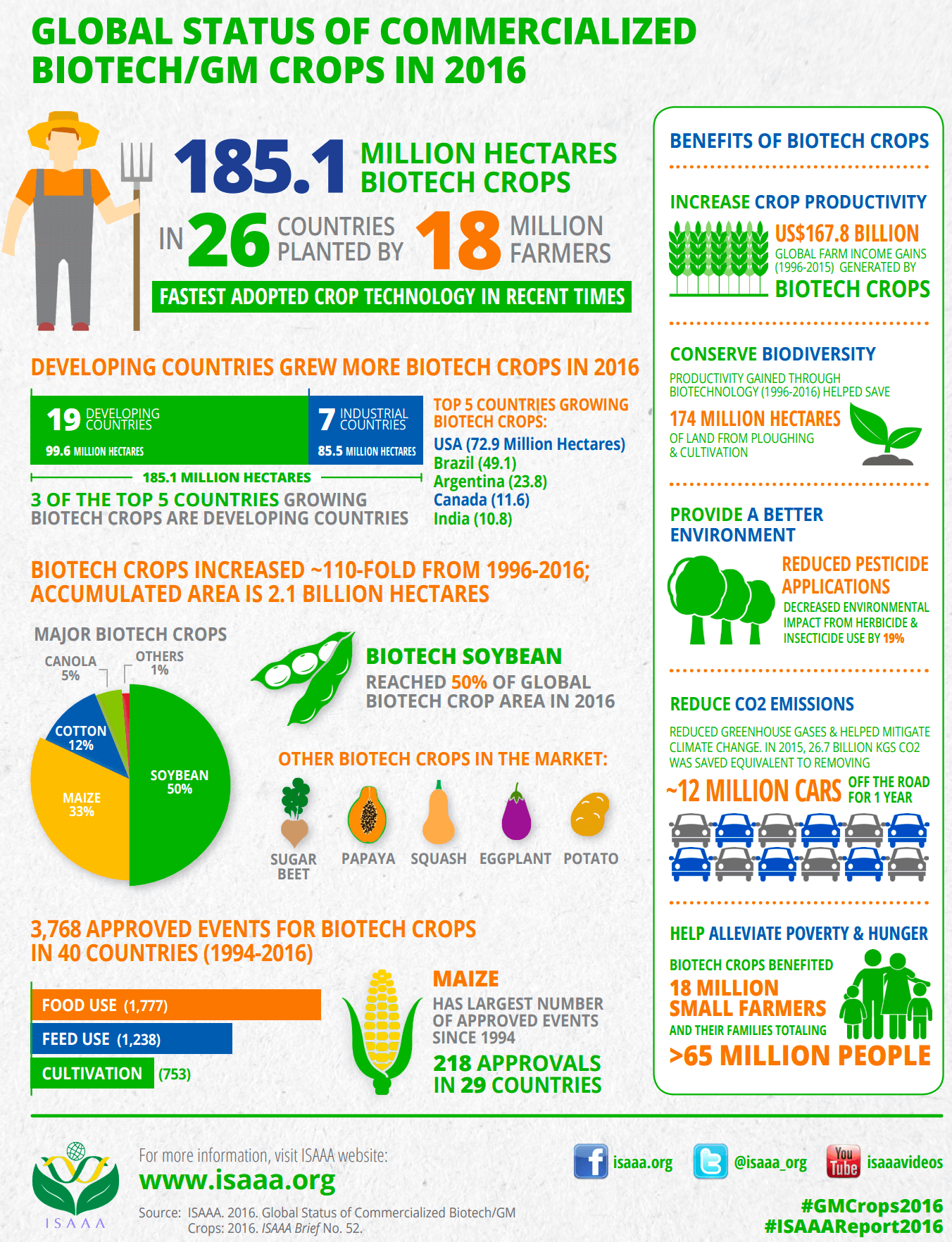
Infographic: Global GM crops reduced farm chemical usage and CO2 emissions in 2016 boom year

Picture
The pyramids of Sudan, Meroe. Credit: Wikimedia Commons
[T]he International Service for the Acquisition of Agri-biotech Applications (ISAAA) released its annual report showcasing the 110-fold increase in adoption rate of biotech crops globally in just 21 years of commercialization – growing from 1.7 million hectares in 1996 to 185.1 million hectares in 2016. ISAAA’s report, “Global Status of Commercialized Biotech/GM Crops: 2016,” continues to demonstrate the long-standing benefits of biotech crops for farmers in developing and industrialized countries, as well as consumer benefits of recently approved and commercialized varieties.

…

Examining other benefits of biotechnology, ISAAA reports that the adoption of biotech crops has reduced CO2 emissions equal to removing approximately 12 million cars from the road annually in recent years; conserved biodiversity by removing 19.4 million hectares of land from agriculture in 2015; and decreased the environmental impact with a 19% reduction in herbicide and insecticide use.1 Additionally, in developing countries, planting biotech crops has helped alleviate hunger by increasing the incomes for 18 million small farmers and their families, bringing improved financial stability to more than 65 million people.


Screen Shot at PM

The GLP aggregated and excerpted this blog/article to reflect the diversity of news, opinion, and analysis. Read full, original post: Biotech/GM Crops Surge to a New Peak of 185.1 Million Hectares in 2016

Related Articles

Infographic: Global regulatory and health research agencies on whether glyphosate causes cancer

Infographic: Global regulatory and health research agencies on whether glyphosate causes cancer

Does glyphosate—the world's most heavily-used herbicide—pose serious harm to humans? Is it carcinogenic? Those issues are of both legal and ...

Most Popular

ChatGPT-Image-Mar-10-2026-01_39_01-PM
Viewpoint—“Miracle molecule” debunked: Why acemannan supplements don’t work
ChatGPT-Image-Sep-2-2026-02_03_32-PM
How much of a problem is AI’s water use?
ChatGPT-Image-Sep-22-2026-10_32_46-AM
There has been a slew of recent reports of food recalls and foodborne outbreaks. Do we face an escalating problem?
ChatGPT-Image-Aug-26-2026-12_46_16-PM
Viewpoint: The fake controversy over whether combining childhood vaccines is dangerous— a debate science resolved 25 years ago
Screenshot-2026-09-17-at-1.07.08-PM
'We are dangerously addicted to antidepressants': Should we heed RFK Jr.’s sobering warning?
ChatGPT-Image-Sep-23-2026-01_52_03-PM
Viewpoint: 4 very real AI doomsday scenarios
Screenshot-2026-09-03-at-10.51.20-AM
Viewpoint: Why do online health lies outlive the evidence that debunks them? Read "Everyone Else Is Lying to You"
Screenshot-2026-09-23-at-11.55.01-AM
How can we know if social media bans actually help teens?
Screenshot-2026-09-17-at-12.00.30-PM
Investigative group ProPublica finds links between ectopic pregnancy deaths and abortion bans
Screenshot-2026-09-23-at-3.15.09-PM
Anti-GMO activists in Pakistan rev up their campaign of dire warnings
Screenshot-2026-09-22-at-11.40.28-AM
After Idaho criminalized abortion providers in 2022, one-third of obstetricians fled. Health care advocates are making rural health the case for repealing the ban
ChatGPT-Image-Sep-23-2026-11_47_32-AM
Facing pressure from Trump administration, fewer hospitals offer medical treatment for transgender minors
Screenshot-2026-09-16-at-2.26.42-PM
Viewpoint: How to ecologically damage America’s forests: Ban glyphosate
glp menu logo outlined

Get news on human & agricultural genetics and biotechnology delivered to your inbox.