DNA from mummies show ancient Egyptians had almost no sub-Saharan African genes

mummies

After trying repeatedly to extract it, many scientists were convinced that the hot desert climate and, perhaps, the chemicals used in mummification destroyed any genetic material long ago. Now, a team of ancient DNA specialists has successfully sequenced genomes from 90 ancient Egyptian mummies.

[Johannes Krause, a geneticist at the Max Planck Institute for the Science of Human History in Jena, Germany, and his] team compared the mummies’ mitochondrial and nuclear DNA to ancient and modern populations in the Near East and Africa. They discovered that ancient Egyptians closely resembled ancient and modern Near Eastern populations, especially those in the Levant. What’s more, the genetics of the mummies remained remarkably consistent even as different powers conquered the empire.
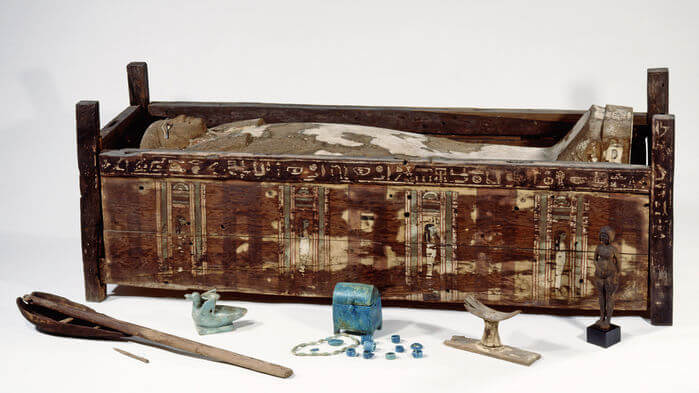
online Sarcophagus Tadja c Aegyptisches Museum Steiss Sandra jpg
Scientists successfully sequenced DNA from mummies from the site of Abusir el-Meleq, one of which was buried in this sarcophagus. Credit: SMB/Sandra Steiss.

Later, however, something did alter the genomes of Egyptians. Although the mummies contain almost no DNA from sub-Saharan Africa, some 15% to 20% of modern Egyptians’ mitochondrial DNA reflects sub-Saharan ancestry. “It’s really unexpected that we see this very late shift,” Krause says. He suspects increased trade along the Nile—including the slave trade—or the spread of Islam in the Middle Ages may have intensified contact between Northern and sub-Saharan Africa.
[Read the full study here]
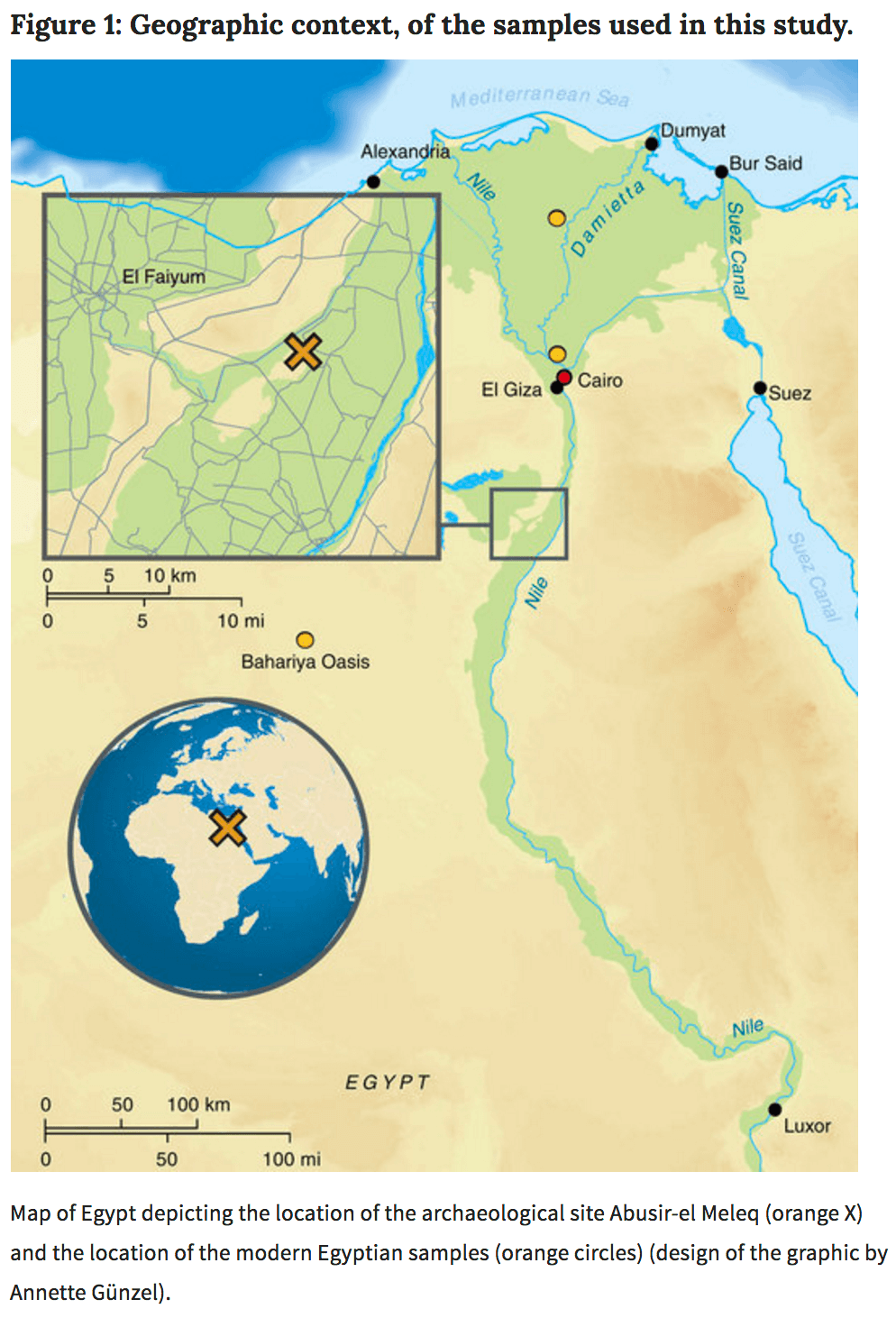
Screen Shot at AM

The GLP aggregated and excerpted this blog/article to reflect the diversity of news, opinion, and analysis. Read full, original post: Scientists thought ancient Egyptian mummies didn’t have any DNA left. They were wrong

{{ reviewsTotal }}{{ options.labels.singularReviewCountLabel }}
{{ reviewsTotal }}{{ options.labels.pluralReviewCountLabel }}
{{ options.labels.newReviewButton }}
{{ userData.canReview.message }}

Related Articles

Infographic: Global regulatory and health research agencies on whether glyphosate causes cancer

Infographic: Global regulatory and health research agencies on whether glyphosate causes cancer

Does glyphosate—the world's most heavily-used herbicide—pose serious harm to humans? Is it carcinogenic? Those issues are of both legal and ...

Most Popular

Picture1-5
Science Disinformation Gap: The transatlantic battle over social media and censorship
Screenshot-2026-04-23-at-11.00.36-AM
Regulators' dilemma: Thalidomide, Metformin, and the cost of getting drug approvals wrong
ChatGPT-Image-May-12-2026-08_39_41-PM
GLP podcast: Big Pharma, Big Ag, Big Food—health harming industries or life-saving innovators?
ChatGPT Image May 10, 2026, 08_16_59 PM 2
Overmedicalization? RFK Jr.’s antidepressant crackdown raises conflict questions over his fee stake in Wisner Baum, the tort firm built on suing drug makers
Screenshot-2026-05-12-at-9.58.31-PM
'He seems fine': Marty Makary out as FDA commissioner
Picture1-1
Cooling the planet with balloons: Could a geoengineering gamble slow global warming?
Screenshot-2026-05-12-at-10.05.11-AM
Pro-vaccine “hero” vs. an anti-vax “villain”: ‘Bad Vaxx’ video stirs MAHA backlash
Screenshot-2026-05-11-104424
Hantavirus outbreak research: Trump administration shut down study last year on rodent-to-human transmission
Screenshot-2026-05-01-at-1.29.41-PM
Viewpoint: What happens when whole grains meet modern food manufacturing? Labels don’t tell the whole story.
ChatGPT Image May 12, 2026, 10_19_00 AM 2
Viewpoint— 'Muscular governance': How authoritarianism is surging corporate-linked energy misinformation
Picture1-14
When superbugs threaten vulnerable children: Can AI help solve antibiotic resistance?
S
As vaccine rejectionism spreads, measles may be taking a more dangerous turn
ChatGPT-Image-Apr-13-2026-02_20_22-PM
Viewpoint: Misinformation infodemic? Why assessing evidence is so challenging 
glp menu logo outlined

Get news on human & agricultural genetics and biotechnology delivered to your inbox.