



Ancestry & Evolution

Looking back at ancient Greek and Roman aging experiences to understand origins of Alzheimer’s
Medical texts from 2,500 years ago suggesting today’s widespread dementia stems from modern environments and lifestyles ...

Is technology-driven ‘exponential change’ overwhelming humanity’s genetically-inherited ability to adapt?
Human civilization has always survived periods of change. Will our rapidly evolving technological era be an exception to the rule? ...

What do high-altitude Andean communities and deep-sea fish have in common? Genetic mutations that aid survival in low-oxygen environments
Researchers discovered an example of convergent evolution in the Peruvian and Tibetan highlander communities ...

Pinning down our ‘great leap forward’: When did ancient humans start to act behaviorally modern?
How are we different from ancient humans? Since our species first appeared, we’ve been on a wild ride from the ...
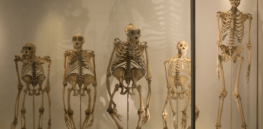
How did human ancestors go from walking on all fours to standing on two legs? Ancient eardrum fossils illuminate the likely evolutionary path
How did humans learn to walk? The inner ear of a 6-million-year-old fossil ape reveals clues about the evolution of ...
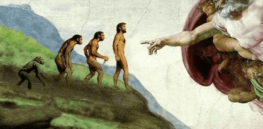
God question: Did Neanderthals practice religion or have ‘rich symbolic lives’?
As Rebecca Sykes notes, ”Neanderthals neither ignored corpses nor treated them like rubbish.” ...
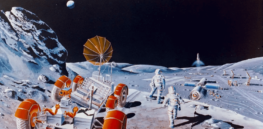
‘We could completely replace the human body with one that is ideal for space travel’ — Future space travel options come into focus
Perhaps the optimal way to most fully adapt humans to alien environments is to completely replace the human body with ...
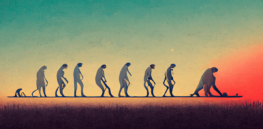
Viewpoint: Evolutionary trap — ‘Forces that encouraged our ancestors to compete for resources fueled early human success but now threaten to end it’
Evolution has led us into a dark corner, as the scale and impact of human groups has kept growing, and ...
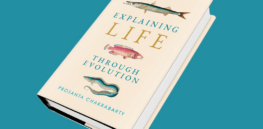
Darwin’s legacy: A popular new guide through the sometimes obtuse world of evolution
The study of Charles Darwin is a useful exercise in the history of science, as it teaches us that the ...
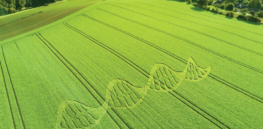
Challenging the anti-GMO ‘foreign gene’ Frankenfood myth: Crops ‘steal’ genes from other species to accelerate evolution
Research, led by the University of Sheffield, is the first to show that grasses can incorporate DNA from other species ...

Podcast: Why we ‘evolved not to lose weight’
The evolutionary reasons why it's hard to lose weight and keep it off: fat helped early humans stay alive ...

Humans, apes and monkeys: Parts of primate DNA have been stable over 65 million years of evolution
Scientists have found that 3% to 5% of the genes in the human genome, which descended from a common ancestor ...
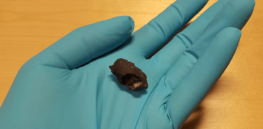
Humans have been chewing gum for nearly 10,000 years
A new study of the DNA in a chewing gum shows that one of the individuals had severe problems with ...
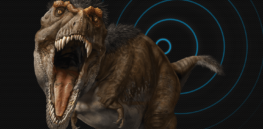
Video: Tyrannosaurus rex probably didn’t roar like a lion. Here’s how they might have sounded
Ask a researcher: Tyrannosaurus rex probably didn't roar like a lion. The sound it made might have been even scarier ...
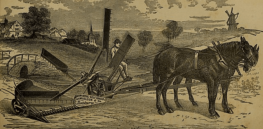
From the plow to GMOs, here are 8 innovations that radically transformed agriculture and human history
What are the agricultural inventions that have had the most impact? Here's a chronological list of some of the most ...
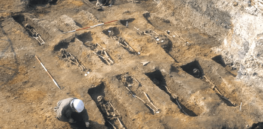
Maybe the Black Death did not reshape human evolution after all
An ancient-DNA study of medieval Cambridge found no sign of genes that helped people to survive the plague ...

Empathy and anticipation of desires: Children have it, but apes do not
Have you ever guessed what dish your significant other would order at a restaurant before they even picked up the ...

Culture, art and war: 15 biggest discoveries in 2023 that changed our understanding of human evolution
2023 could likely be viewed as a coming-of-age story for our Neanderthal cousins, as they further shed their brutish image ...

3 billion years ago, a rock four times the size of Mount Everest hit Earth. Here’s how this kickstarted evolution
When Earth first formed roughly 4.5 billion years ago, lava lakes sizzled under a thick greenhouse atmosphere during the Hadean ...

Here’s how and why early humans created our world of mostly dark-eyed dogs
Researchers suggest that human preferences for a friendly face may have steered the evolution of canine eye colour ...

‘Warning written in wood’: 200-year-old tree reveals silent climate distress signal sent by one of Earth’s longest-living organisms
Cutting-edge techniques are allowing researchers to observe how the rings from long-lived trees form in real time ...
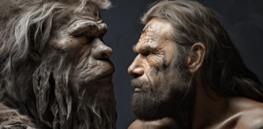
Close cousins: Just 400,000 years ago, modern humans and Neanderthal lineages split, 100,000 years more recently than previous estimates
More evidence suggests that our species may have diverged from Neanderthals just 408,000 years ago, which is later than previous ...
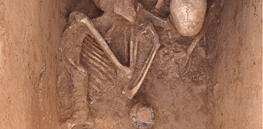
Viewpoint: The ‘culture wars’ infection of anthropology and archaeology grows
In 1941, at the height of World War 2, troops stationed on Hoy in the remote Scottish Orkney Islands made ...
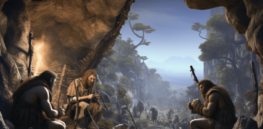
Human evolution roundup: Here are last year’s 13 most fascinating findings on human ancestry
Smithsonian paleoanthropologists reveal thirteen of the year’s most fascinating findings about human origins ...

Video: Stone ring structures found in Neanderthal cave in France continue to fuel reassessment of our once scorned hominid cousins
We haven’t been very kind to Neanderthals since their remains were first unearthed in the 19th century, often characterizing them ...

Night owls vs mourning doves: Neanderthal genes explain why some people find it easy to wake up early
Scientists find genes inherited from our prehistoric cousins increase tendency to rise early – useful in regions with short winter ...

Nether region science—What’s the allure for cats of fellow feline rear ends?
Anyone who lives with more than one member of Felis catus knows that our beloved felines love to smell each other’s ...
