


Ancestry & Evolution
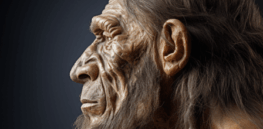
How a devout Muslim creationist missionary became an avowed evolutionist
Guiding us on the epic, mind-expanding journey is paleoanthropologist Ella Al-Shamahi, who has undergone her own radical evolution. As a ...
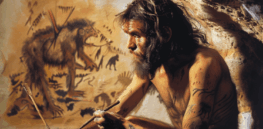
As recently as 40,000 years ago, as many as 5 ancient human species lived alongside us. Only we survived
We may be the only human species alive today, but just a few hundred thousand years ago there was a ...
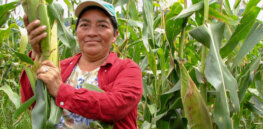
Viewpoint: What role can indigenous populations and agroecology play in promoting sustainable food
For millennia, Indigenous peoples have cultivated diverse, adaptive and evolving food systems, rooted in deep relationships with land, water and ...

Potato, tomato: Today’s French fries linked by evolution to tomatoes 9 million years ago
Ketchup and fries make a tasty pair. But the connection between tomatoes and potatoes may go beyond making a good ...

Directed evolution: We can now speed up evolution inside human cells by decades
Inspired by the generative abilities of AI, directed evolution, a biological system that works much like machine learning, can actually be ...
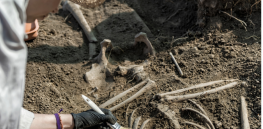
Some early ancient humans were cannibals and ate children
Archaeologists discovered new evidence of cannibalism among early human ancestors at the Gran Dolina cave site in northern Spain. The ...

Genes and sports: Europeans are far more likely than any other population group–especially Africans–to carry a Neanderthal mutation that limits their ability to become top athletes
Scientists have uncovered a genetic variant, inherited from Neanderthals, that may limit athletic performance. The mutation is thought to affect ...
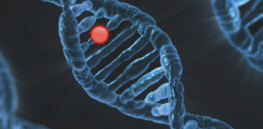
Human intelligence genes linked to cancer
A study led by Dr. LI Chuanyun from the Institute of Genetics and Developmental Biology of the Chinese Academy of ...

How farming spread globally in prehistoric times to supplant hunting and gathering
If you’ve ever wondered how farming spread far and wide, our research on past human societies offers one explanation: contact ...

Wombs vs. Eggs: Why humans and other mammals grow their offspring internally while most other animals don’t
Female mammals house the mechanisms over which eggs (and sperm) are used for reproduction inside their bodies, while amphibians, reptiles, ...

Hairless humans: We have all the genes to go full Chewbacca, but they’re just turned off. Here’s why
Have you ever wondered why you don’t have thick hair covering your whole body like a dog, cat or gorilla ...

6 (relatively) recent examples proving that humans are still evolving
[H]uman evolution hasn’t paused for a coffee break – it’s been running at full speed, reshaping our species in ways ...
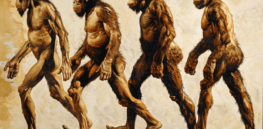
Viewpoint: Why people do not accept the scientific fact of evolution
If the theory of evolution is so profound and proven, why doesn’t everyone accept it as true? ... Evolution is ...

Stinky plants: The evolutionary explanation
Not all flowers emit odors that are enticing to humans. Three types of flowering plants – Asarum simile, Eurya japonica, and Symplocarpus ...

Broken smiles: Why have some humans evolved to have crooked teeth
While malocclusions—crowded or misaligned teeth—have been found among our hunter-gatherer ancestors, they appear to be more prevalent in modern populations ...

What did a woman in present-day Belgium look like 10,500 years ago? DNA draws us a picture
With DNA extracted from the body’s remains, researchers have reconstructed the face of a woman who lived approximately 10,500 years ...

Putting faces on the human tree of life: From Hobbit to 300,000 year old humans, here’s what we looked like
Now, scientists have revealed the most scientifically accurate reconstructions of what those ancient humans would have looked like. This includes ...
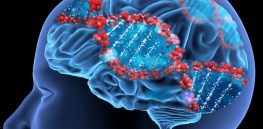
More evidence that intelligence is mostly genetic
Brain dynamics and cognition share genetic roots. Criticality may guide future brain health research. A recent study published on June ...

Why evolution hasn’t eliminated human susceptibility to depression as it has for other diseases
Depression feels weird compared to things like fear or anger, which help us survive by warning us of danger or pushing us into action ...

Hyper-communication: How our phones, emails and social media are reshaping evolution
Intuition says that the astonishing speed with which this era of hyper-communication has occurred must change us in some way or other, but ...

Does reverse evolution exist? Tomatoes grown on the Galapagos Islands appear to be de-evolving
Researchers argue that despite how controversial it might sound, tomatoes in the Galápagos actually seem to be going backwards, not ...

Changing theories on how the universe works
Intelligent life is extremely unlikely, and we pose the question only because we are the supremely rare exception. ...[A]n interdisciplinary ...

Here’s how creationists have creatively tried to undermine the teachings of evolution in America’s classrooms since the Scopes trial in 1925
Bans on teaching evolution prevailed ... until high school teacher Susan Epperson took on Arkansas’ version [in the 1960s] As Science News wryly ...
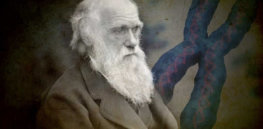
Viewpoint: Darwin’s ‘Descent of Man’ is both deeply disturbing and more relevant than ever
Charles Darwin’s Descent of Man is full of unexpected delights — such as the trio of hard drinking, chain-smoking koalas ...
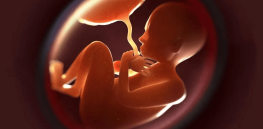
How testosterone and estrogen have driven human evolution
What makes us human? Most would say our minds. The ability to think, empathize, and build complex societies sets us ...

GLP podcast: Science of reproduction—what does evolution tell us about the ‘sex spectrum’?
Over the last decade, a growing chorus of scientists has declared that biological sex is not binary. Properly assessing human ...

Appreciating music: What are the evolutionary links between humans and other animals
Historically, many thought that humans were the only animals that could recognize an external beat and synchronously move to it ...
