


Ancestry & Evolution

Why we sleep less as we age
It’s a known fact that as we age, we sleep less. But the reasoning behind this phenomenon is poorly understood ...
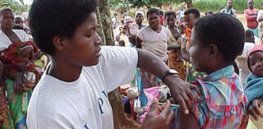
Precision medicine could revolutionize healthcare in Africa, but obstacles abound
Although scientists worldwide have been pushing for ways to improve health care by tailoring diagnostics and treatment to the environment, ...
Ancient skeleton offers proof of deep roots of Pacific Northwest tribes
The Native Americans of the Pacific Northwest have always claimed to have deep roots in the region. Now, an ancient ...

Epigenetics Around the Web: No, income inequality does not cause epigenetic changes, botching Lamarck, and more
A psychology professor claims that income inequality is causing epigenetic changes and a Huffington Post article on climate change and ...
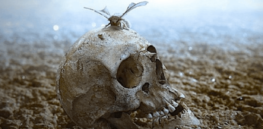
Human de-extinction: If we disappear from the planet, should our species be revived?
It's a tough call, but maybe not, according to a panel of five experts who debated "de-extinction" during the annual ...

Survival of humans and other complex life linked to natural gene transfer between ancient microorganisms
One of the most pivotal moments in Earth's history was the evolution of the photosynthetic life that suffused air with ...
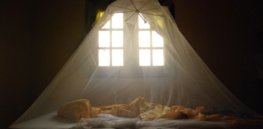
Mosquitoes evolving resistance to nets designed to quash spread of malaria
In the last ten years or so, more than a billion insecticide-treated bed nets have been distributed across the world ...

Friendly foxes? What domesticating this ‘incorrigibly wild’ animal tells us about domestication of dogs
Cultures across the globe consider foxes to be incorrigibly wild. In both ancient fables and big-budget movies, these fluffy mammals ...
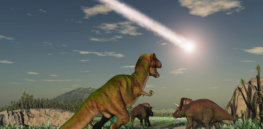
Life returned ‘surprisingly quickly’ after dinosaur-killing asteroid strike
Life came back surprisingly quickly to the site of the impact that killed the dinosaurs, new research found. When a ...
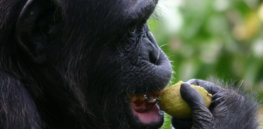
‘High quality diet’ likely source of primate brain growth — not social nature, study finds
In the past two million years, humans have experienced a massive increase in brain size, one not seen in any ...

How humans got smart: Rush of blood to the head
[Editor's note: Roger Seymour is professor emeritus of physiology at the University of Adelaide.] The blood flow to the cognitive part ...

Homo Evolutis: Will modern humans evolve even further?
[Editor's Note: Juan Enriquez is a researcher, and entrepreneur who has been studying the widespread implications of genomics and other ...

Could life on Earth have started without the ‘fundamental’ periodic elements?
Biologists have traditionally assumed that [carbon, hydrogen, nitrogen, oxygen, phosphorous, and sulfur] were prerequisites, as each one is found in ...

Evolutionary survival mechanism ‘gone-awry’ likely source of sleep walking
Recent research from Stanford University shows that up to 4 per cent of adults might have [walked in their sleep] ...
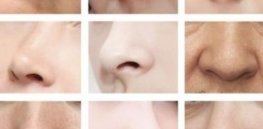
Ancestors’ climate shaped your nose — along with genetics
Though you undoubtedly inherited your distinctive nose from your parents, its shape was sculpted over time by adaptations to your ...

Love scent: Do humans use pheromones like other animals?
[A]necdotal evidence not withstanding, the scientific evidence for pheromones in humans is lacking. However, just because human pheromones have not been identified yet ...

Beta Israel reconsidered: Defending the Israelite ancestry of Ethiopian Jews
Ethiopian Jews are often portrayed in modern media and in some academic texts as having no true ancient ancestral connection ...

Video: Microfossil discovery dating back 3.77 billion years could be oldest evidence of life
[A] new study led by University College London PhD student Matthew Dodd describes evidence of what the researchers believe to ...
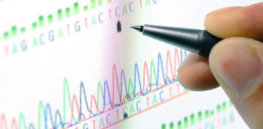
Casting a wider net: Expanded carrier screening recommended for cystic fibrosis, other genetic diseases
All prospective parents should have carrier screening for a range of genetic disorders, according to new recommendations by the American ...
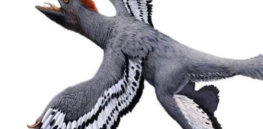
Origin of flight: Fossils of feathered dinosaurs reveal bird evolution
A dinosaur that lived 160 million years ago had drumstick-shaped legs much like living birds, according to paleontologists. ... "In ...
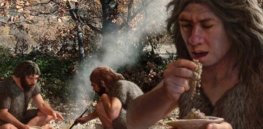
Vegetarian Neanderthals? Turns out they weren’t all meat eaters
Neanderthals living in prehistoric Belgium enjoyed their meat – but the Neanderthals who lived in what is now northern Spain ...
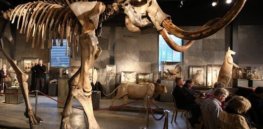
How the woolly mammoth met its end: DNA analysis reveals ‘genomic meltdown’
In an island north of the eastern tip of Siberia, a small group of woolly mammoths became the last survivors ...

Ignorance and the brain: Why people are so quick to believe falsehoods
How can so many people believe things that are demonstrably false? The question has taken on new urgency as the ...

Not so fast: Nature’s defenses may dampen effectiveness of gene drives targeting entire species
Rest easy, folks. Armies of genetically modified super-species are unlikely to conquer Earth anytime soon. In a paper recently appearing ...

Physical differences between men and women regulated by ‘doublesex’ gene
Physical differences between males and females in species are common, but there remains much to learn about the genetic mechanisms behind these ...

Cancer treatments could be guided by evolving ratio of mutated/normal driver genes
Choosing among cancer treatments increasingly involves determining whether tumor cells harbor specific, mutated “oncogenes” that drive abnormal growth and that ...

Life on Earth’s roof: Ancient interspecies mating with Denisovans helps Tibetans thrive at high altitudes
[A]fter looking more closely at the EPAS1 gene from the Tibetan genomes, [Rasmus Nielsen from University of California in Berkeley] ...
