


Ancestry & Evolution
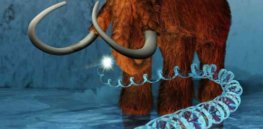
Return of the woolly mammoth and 3 other ways CRISPR could change the world
The woolly mammoth has been extinct for more than 4000 years. Now scientists are talking about bringing it back with ...

Epigenetics Around the Web: Oprah Magazine fumbles ‘inherited trauma’ story, and more
This week’s features: Writer for Oprah Magazine falls for classic epigenetics pitfalls; life insurance company is using methylation data to ...

Deep dive into dolphin genome may uncover drugs that protect human hearts, kidneys from damage
"Dolphins and humans are very, very similar creatures," said NIST's Ben Neely, a member of the Marine Biochemical Sciences Group ...

Evolutionary tradeoffs: Genes linked to autism may persist because they make us smarter
Autism genes may have been conserved during human evolution because they make us smarter, say scientists. More inherited genetic variants ...
Human brain could evolve to require very little sleep, study of tiny Mexican cavefish suggests
Neuroscientists at Florida Atlantic University have been studying Mexican cavefish to provide insight into the evolutionary mechanisms regulating sleep loss ...
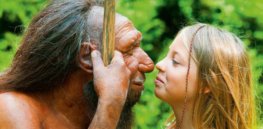
Neanderthals’ legacy genes: Some people taller, protect against schizophrenia
Neanderthals are still affecting what illnesses some people develop, how tall they are and how their immune systems work, despite ...

Should we worry about safety of gene drive when using it to fight malaria?
[Editor's Note: Excerpts are from a presentation by James Collins, an evolutionary ecologist from the Arizona State University in Tempe, ...

Autism, other brain disorders linked to network of 91 genes
Gene discovery research is uncovering similarities and differences underlying a variety of disorders affecting the developing brain, including autism, attention ...
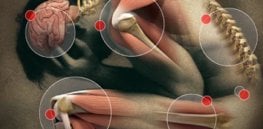
On/off switch? Chronic pain could be eased if we identify the right genes
[Editor's note: Blair Smith is a professor of population science at the University of Dundee in Scotland.] Two of the ...

Weird world of DNA: What’s the best way to help patients with genetic diseases that are not inherited?
The stories of two children, Millie and Hannah, highlight ways that genetic disease can seem to veer from the predictions ...

Racial biodiversity: Indigenous people offer opportunity to understand how genetic mutations evolve
[Editor's note: Keolu Fox is a biomedical researcher studying indigenous people.] Ninety-five percent of all drugs [are tested] only on ...
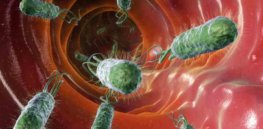
Evolving immunity: Controlling obesity, mood with designer gut bacteria faces obstacle
Beginning in 2012, scientists discovered they could use CRISPR proteins to precisely edit the genomes of not only bacteria but ...
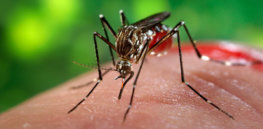
Avoiding the unexpected: Zika, malaria-fighting gene drive in mosquitoes has built-in safety net
Concerns about CRISPR gene drives and other CRISPR applications have to do with the possibility that something could go wrong ...
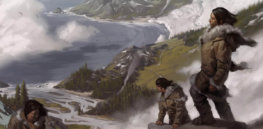
Did migration to America take long enough for humans to evolve?
The Bering land bridge plays a central role in our picture of how humans reached the Americas...Current estimates suggest that ...

ALS, motor neuron disease treatments could arise from study of finger, toe wiring
[Editor's note: Thomas Jessell, the study's co-author, co-directs Columbia University's Zuckerman Institute as a professor of biochemistry and molecular biophysics.] ...

Feeling blue? Depression may have offered evolutionary advantage to our ancestors
Depressive symptoms have been found in every culture on Earth and throughout history...Unlike other psychiatric disorders, which are rare, depression ...

Woolly mammoth 2.0 could be walking the Earth within 10 years
The woolly mammoth vanished from the Earth 4,000 years ago, but now scientists say they are on the brink of ...

Irish Travellers: Wanderers not genetically connected to ‘gypsies’, may provide clues to understanding genetic diseases
IRISH TRAVELLERS HAVE no connection to Roma gypsies, did not descend from the famine and are genetically as different to ...
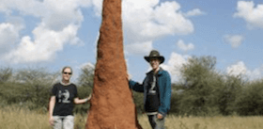
Evolution of the mind: How termite colonies are models of the human brain
[Editor's note: Excerpts from an interview with Daniel Dennett, cognitive scientist and philosopher at Tufts University, who recently wrote From Bacteria ...

Could life have emerged multiple times on Earth, in the universe?
If we discover that life forms on Mars or Europa do not share an origin with Earth life, we'll have ...

770,000 spit samples yield genetic map of America’s post-colonial migrations
Using more than 770,000 spit samples taken from their customers over the last five years, researchers [at the genealogy company ...

Races mingling, mixing faster than ever, and that makes us genetically stronger
Recent insights from the sequencing of hundreds of thousands of human genomes in the past decade have revealed that our ...

Random acts of kindness may be fueled by microbes
Why do people commonly go out of their way to do something nice for another person...and how could such altruistic ...

Modern East Asians, unlike Europeans, very genetically similar to their ancestors
For the first time, scientists have been able to extract DNA from ancient East Asian bones and compare it to ...

Talking Biotech: Why broccoli, collard greens, kale and other brassica are like dog breeds
University of Missouri biologist J. Chris Pires discusses the many vegetables that began as Brassica oleacea--wild cabbage ...
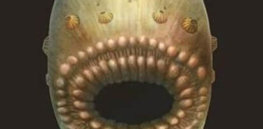
Earliest known ancestor of humans: 540-million-year-old fossil unearthed
Researchers have discovered the earliest known ancestor of humans - along with a vast range of other species. They say ...
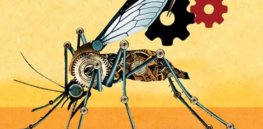
How evolution is dampening disease-fighting effectiveness of gene drives
[Gene drives] can quickly disseminate genetic modifications in wild populations through an organism’s offspring, prompting some activists to call for ...
