



Chemical Controversies

Understanding toxicity: Caffeine ’40 times more toxic’ than glyphosate herbicide
[Editor's note: Alison Bernstein is a neuroscientist who studies the role of epigenetics and environmental exposures in Parkinson’s disease.] LD50 ...

Activist-fueled ‘over-regulation’ of GMO research stymies potential to feed the world
[Editor's note: Dr. Amjad M. Husaini is a professor of biotechnology at the Sher-e-Kashmir University of Agricultural Sciences and Technology in India.] ...

Trump’s deregulation push could undermine trust in safety of our food system
Pro-agriculture conservatives seem to be welcoming Trump’s push for deregulation because they felt Obama-era policies on GMOs and school lunch ...
New EU independent herbicide glyphosate study shows no toxic effects or genetic changes
Results of a new animal study into possible health risks of the weedkiller glyphosate will be published in time to ...
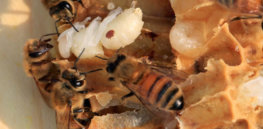
Urban ‘treatment-free’ beekeeping leads to explosion in killer Varroa mites
[Editor's note: Toni Burnham runs one of 10 hives at the National Arboretum in Washington, DC.] In this season of vitriol ...
Conventional (GMOs) vs organic farming: Which is better for animals and the environment?
[Editor's note: Iida Ruishalme is a writer and a science communicator from Sweden who holds a M.Sc. in Biology.] I ...

Has Big Ag funding corrupted Canadian chemical and pesticide safety research?
A Fellow of the Academy of Toxicological Sciences, [Len] Ritter is one of Canada’s leading experts on the effects of ...

How Cargill flubbed its non-GMO labeling partnership, angering farmers and consumers
As soon as Cargill announced that an outside group had certified more than a dozen of its ingredients as non-GMO, ...

EU Food Safety Authority: Risk from pesticide residue on foods low, unlikely to pose health risk
[Editor's note: The following is from the EFSA's 2015 European Union report on pesticide residues in food, published April 11, ...

Hawaii documentary claims presence of Big Ag GMO test facilities forces islands to import food
Did you know that the state of Hawaii imports between 80 and 90 percent of its food? This is, among ...

Is the US unwittingly funding anti-agriculture and anti-Monsanto conspiracy theories?
There is an organization that is using [US] tax dollars and they have replaced fact-based science with conspiracy theories and ...

Hobbyist beekeeping practices and rejection of chemical treatments major driver of bee-killing Varroa mites and disease
Hobby beekeeping is very common. A European Bee Health Report found that in many countries, the majority of beekeepers pursue the activity ...

Tomatoes resistant to fungus and blight developed by 94-year-old West Virginia scientist
Mannon Gallegly, West Virginia University professor emeritus of plant pathology, has made it his mission to develop a disease-free tomato ...
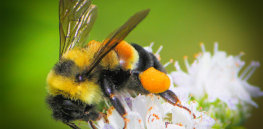
Will rusty patched bumble bee’s endangered listing become a legal weapon for anti-development activists?
[Editor's note: Paul Driessen is a policy adviser for the Committee For A Constructive Tomorrow.] Trump’s Interior Department opened a ...
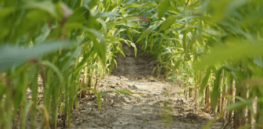
Biodiversity on the farm: It’s more complicated than you might think
[Editor's note: William Price is a statistician in the College of Agricultural and Life Sciences at the University of Idaho ...

Monsanto is changing the way people eat — Using traditional breeding to make better fruits and vegetables
Monsanto is no one-trick GMO pony. Founded in 1901, the agricultural biotech company has fueled innovations in herbicides, pesticides, and ...

Should Trump scrap USDA’s National Organic Program?
Federal subsidizing of organics has health as well as economic consequences. Many consumers now believe that organic food is healthier, ...

Will CRISPR plant breeding be used for good — Or mostly to drive corporate profit?
This rapid-fire timing [of agribusiness mergers] may have been a coincidence, but it also may be a sign of what’s ...
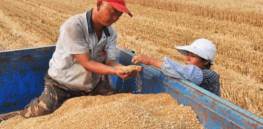
Will China relax GMO cultivation restrictions in wake of Syngenta takeover?
Although China imports preapproved GM foods, the agriculture ministry has never approved a biotech food crop—other than papaya, a minor ...

Herbicide use has increased more for non-GMO crops than genetically engineered varieties
[Editor's note: Andrew Kniss is a professor in the Department of Plant Sciences at the University of Wyoming.] Herbicide use is ...

Agriculture’s Big Data revolution increases efficiency, reduces food waste from farm to table
[A]bout a third of food produced is lost or wasted every year. Globally, that’s a $940 billion economic hit. Inefficiencies ...

After warning label victory, California activists push for a glyphosate herbicide ban
[A]fter a yearlong legal battle, California’s environmental health agency has announced that it will list it as a known carcinogen ...

Agricultural biotechnology regulations are a mess — Here’s how Trump can unshackle innovation
For ideological or political reasons unsupported by data, and drawing on risk paradigms decades out of date, the US imposes ...

‘Refuge planting’: How farmers could help slow developing insect resistance to GMO Bt crops
To date ... Bt crops have been remarkably successful. However, insect pests have shown the ability to evolve resistance to ...

Ayman Jallad: Mysterious Syrian-Lebanese businessman funds anti-GMO activist network in Europe
Ayman Jallad has two battles on his hands. The Syrian-Lebanese businessman is in the challenging business of selling imported Caterpillar ...
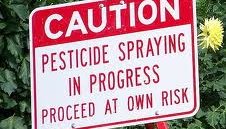
California v EPA: Legal challenge possible over Prop 65 labeling of herbicide glyphosate as carcinogenic
Monsanto officially lost its fight to avoid a Prop 65 warning label on its products containing glyphosate, a chemical used ...
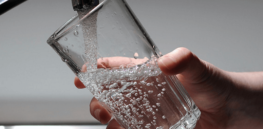
Neonicotinoid insecticides in trace level parts per trillion detected in drinking water in Iowa
[A] team of chemists and engineers at the [U.S. Geological Survey] and University of Iowa reported that they found neonicotinoids ...
