


Featured in Weekly Newsletter

Viewpoint: Many web-surfing gardeners are concerned about the scary claims they read online about the herbicide glyphosate. An independent university weed scientist addresses the controversy
I did a class for the Cypress Landing community a few weeks back and one of the questions was about ...

Could a cup of yogurt replace a colonoscopy? Engineered bacteria can detect and deliver treatment for some pre-cancerous colorectal polyps
A cup of yogurt — containing engineered bacteria that can detect and deliver a treatment for colorectal polyps or cancer ...

The Transcendent Brain: How spirituality and science can work together to explain the human experience
We may have mystical moments science can’t explain, but Alan Lightman still believes in a universe ruled by natural law ...

GLP podcast/video: Nutrition myths, debunked; Could ChatGPT spread vaccine misinfo? Treating mental illness with CRISPR might be a bad idea
The public accepts a lot of myths about nutrition. Let's examine 10 of the most common, but scientifically dubious ideas ...

With COVID cases rising, grand-standing legislators propose criminalizing mRNA vaccines or banning mask-wearing
It is not uncommon for legislators to introduce bills that they know won’t pass but that have symbolic value of ...

Insects are disappearing from UK farms. Why, and what can be done?
Insect populations are declining worldwide at a rate of almost 1% per year. This decline is alarming. Insects play a ...

Sweetness and bitterness: The evolutionary story of how our sense of taste evolved
The sweetness of sugar is one of life’s great pleasures. People’s love for sweet is so visceral, food companies lure ...
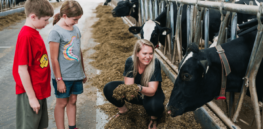
Greenwashing or greening agriculture? Food companies developing efforts to prevent carbon in soil from leaking into the atmosphere
Jason Johnson, Stonyfield Organic’s farmer relationship manager, fires up the AgriCORE soil sampling tool in a pasture with sweeping views ...

Genetic doppelgängers? Identical twins separated apart can be very much alike or very different. Here’s why
What do the lives of twins tell us about heritability, selfhood and the age-old debate between nature and nurture? ...

Pesticides and Food: It’s not a black or white issue — How do organic pesticides compare to synthetic pesticides?
Many consumers choose to buy higher-priced organic produce because they believe organic foods are not grown using pesticides and therefore ...
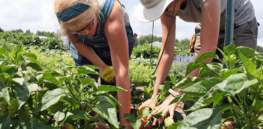
Viewpoint: Outdated organic technology? By rejecting gene editing, growers left with more disease-prone, pest-infested crops
East Yorks mixed farmer Paul Temple suggests that in closing its mind to new genetic technologies, the organic sector may ...
GLP podcast and video: Hawaii’s wildfires explained; Why more young people are getting cancer; Aspartame hysteria could boost sugar intake
Invasive grasses are the key to unraveling the cause of Hawaii's devastating wildfires, according to a local expert examining the ...

Mask up again? As COVID cases rise, look to science and not pundits
I can’t believe we’re having this discussion in September 2023, just as the fall respiratory virus season commences, but the ...

Social justice environmental activists move to block gene editing to control invasive species and promote biodiversity. Here’s why they’re misguided
Hawaii has emerged as ground zero for efforts to raise the awareness of the dangers of invasive species. Just last ...

Science vs spirituality: The case of the severed head
There’s a ghastly severed head in St Robert’s Roman Catholic church, just down the road from me in Catforth, northern ...

Viewpoint: ‘Garbage in, garbage out’ — How AI is already skewing news coverage of complicated science issues like the safety of glyphosate
Here's a great example of how bad reporting and the war on glyphosate play hand-in-hand. I don't know anything about ...

Viewpoint: ‘Public fixation on human extinction from AI could distract from AI’s more immediate harms’
A public fixation on extinction from AI could empower industry insiders and distract from AI’s more immediate harms ...
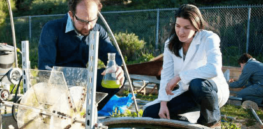
Reduce synthetic fertilizers and improve yields? The microbiome revolution comes to agriculture
If manipulated correctly, they can help us cure cancer, understand how we can adapt to rising temperatures, play a role ...

Viewpoint: AI is evolving too fast for existing regulatory frameworks to keep pace. Here’s a possible solution
AI is evolving too fast for existing regulatory frameworks to keep pace. Intellectual property law may hold a solution ...

Grasshoppers under siege: Here’s how climate change depletes insect populations and threatens the global food supply
It’s tough out there for a hungry grasshopper on the Kansas prairie. Oh, there’s plenty of grass to eat, but ...

Sequestering carbon on a gigaton scale: How gene editing can address climate change by reducing atmospheric emissions
Hardly a day goes by without another piece praising the potential for gene editing to help solve climate change. Nevertheless, the possible contributions of biology and biotechnology have been conspicuously ...
GLP podcast and video: Curing deadly diseases with mRNA; COVID killed more Republicans than Democrats? WaPo promotes ‘acupuncture pseudoscience’
The same technology behind the mRNA COVID shots could also yield groundbreaking treatments for wide-ranging diseases. A new study posits ...

First synthetic human embryo to live past 14 days was made from stem cells
A Cambridge University scientist says her research lab has used stem cells to create a human embryo that developed past ...

Viewpoint: From ‘Save the Whales’ to ‘Let Children Go Blind’ — Greenpeace’s descent into science rejectionism
From the early days of Greenpeace when its members were dodging harpoons and Japanese whalers in outboard motor boats – ...

Green transition: How agriculture can drive climate change solutions
It is widely recognized that we must transition our energy economies to a greener, more sustainable state. This will only happen ...

We could use CRISPR to cure mental illness. Should we?
Would you want to be cured of a disorder that most people consider debilitating if given the opportunity? Cancer? Sure ...

Insect-resistant Bt GMO crops have helped cut pesticide use. Now Nature is pushing back
In 2006, a small airplane started buzzing each cotton field in Arizona, a thin, dust-like cloud trailing behind it. The ...
