


Daily Food & Ag Digest
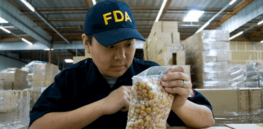
Eating technology: How the FDA failed us and why the future of food might rest in the laboratory
[LA Weekly:] What are the biggest myths of the FDA? [Ex-FDA Director for Social Science Richard Williams:] The FDA hasn’t ...

Could seaweed replace synthetic fertilizers?
When it comes to ocean health, the work of convincing farmers to ditch their synthetic fertilizers can’t happen fast enough ...
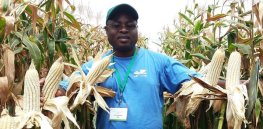
Insect- and drought-resistant genetically engineered corn approved for trials in Nigeria
The government of Nigeria has granted environmental approval for evaluation and open cultivation of TELA Maize, a new maize variety ...
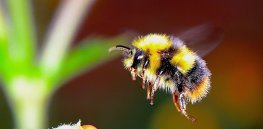
The American bumblebee species is in decline in the US. Here’s why
The [American bumblebee] species has vanished from at least eight states, mostly in the Northeast, according to the Center for ...

‘Protein expansion’: Modified wheat developed in England and Chile could increase yields by 12%
Wheat is one of the most important food crops in the world, providing 20 per cent of human calories; with ...
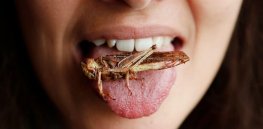
To feed billions more people in coming decades, bugs will likely be on the global menu
Filling in the gaps in the world’s food web requires unlearning some tastes and preferences. Consider the insect. Around 1,900 ...
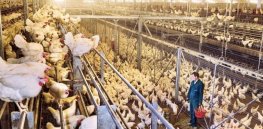
Switching from beef to chicken can have big environmental benefits — but it also means many more animals to miserable lives and death
We often talk about steak, lamb chops, bacon and chicken nuggets as if they’re on a level playing field. Just ...
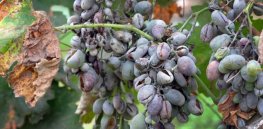
Viewpoint: By rejecting biotechnology and synthetic pesticides, France is ill prepared to address mildew and organic copper pollution crisis
2021 was a difficult year for the production of French farmers: tomatoes and potatoes were devastated by various pests. The ...

Pesticide residues ‘do not pose a concern for public health’ — FDA reaffirms safety of conventionally-grown fruits and vegetables
[On October 20,] the Federal Food and Drug Administration (FDA) released its Pesticide Residue Monitoring Program Report. According to FDA, ...
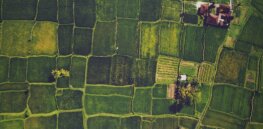
Study: ‘Land sparing’ — Farming has to be pragmatic, concentrated and as high-yield as possible to prevent an ecological catastrophe
Farming should be as high-yield as possible so it can be limited to relatively small areas, allowing much more land ...

Viewpoint: ‘There is nothing chemical-free’ — Organic foods and farming present numerous unacknowledged hazards
[Alexandra Correia:] What do you think when you hear “chemical free product”? [Nuno Maulide, Director of the Institute of Organic ...
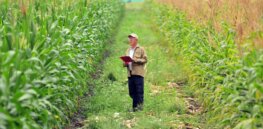
Wide gap between Canadians’ beliefs about biotech crop safety and the science
Consumer opinions, perspectives and views on food and its production do not necessarily reflect what is occurring. For instance, we ...
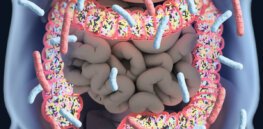
The gut microbiome charges a ‘processing fee’ — and this impacts how the body modulates weight
Whether the source is carbohydrates, protein, or fat, a calorie is a calorie. New dietary math based on the microbiome ...
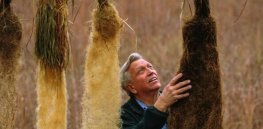
Meet Kernza, the climate change-fighting seed: Wheatgrass perfect for baking that sustainably grows back year after year
Most commercial crops are annual. They provide only one harvest and must be replanted every year. Growing these foods on ...

Viewpoint: UK’s ‘unreasoned ban pesticides approach’ must give way to an informed debate on which technologies best serve society and the environment
We stand at a real crossroads in our response to the challenge of developing new and better pesticides. The unreasoned ...

CRISPR making inroads in aquaculture — but commercial viability is still a ways off
The gene editing tool CRISPR is now being used to generate a range of traits in a variety of farmed ...

‘Farmers face anxiety, depression and grief’: How climate change is roiling American farmers’ lives
As climate change-fueled extreme weather events such as storms and droughts become more frequent and intense, farmers and others in ...

What’s on the menu in a climate-sensitive diet — and will we eat it?
What if people who shared the distaste for today’s food system could encourage the building, seed by seed and cell ...
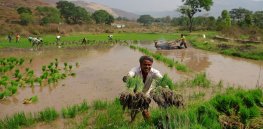
Two new herbicide-tolerant — but non-GMO — rice varieties released for sale in India
The Indian Agricultural Research Institute (IARI) has developed the country’s first-ever non-GM (genetically modified) herbicide-tolerant rice varieties that can be ...
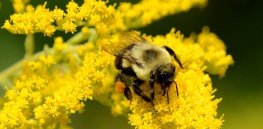
American bumblebee has declined in numbers by more than 90% in 8 states across the northern US
American bumblebees are a vital pollinator for wildflowers and crops, and their decline could have severe consequences for the environment ...
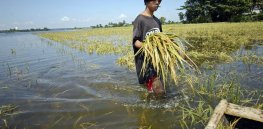
Climate change-induced droughts and floods put one of the world’s most important staples — rice — in peril
Farmers in China, India, Bangladesh, Indonesia, Vietnam — the biggest rice-growing countries — as well as in Nigeria, Africa’s largest ...

Genetics and chemistry could make cow meat and milk extinct
Henry Ford, an early industrialiser of plant-based milks as well as a carmaker, production-system innovator and anti-Semite, saw animals as ...
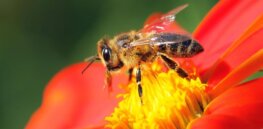
Honeybee losses in Canada hit 10-year low, raising doubts about need for neonicotinoid bans to protect pollinators
The percentage of Ontario honeybee colonies dying over the winter declined for a third straight year, as hive mortality fell ...

Do broccoli, kale or brussel sprouts taste bitter to your kids? Mouth microbiome could explain why many children dislike brassica vegetables
Brassica plants contain a compound called S-methyl-L-cysteine sulfoxide, that contributes to their distinctive smell. When this compound is mixed with ...

Nigerian farmers just can’t get enough of GMO cowpea seeds
Nigeria is witnessing a shortage of genetically modified cowpea seeds as farmer demand for the insect-resistant crop dramatically outstrips supply ...
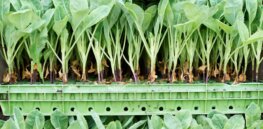
Vertical farming and sustainability: We can now grow fruits and vegetables in urban areas without soil or sunlight
Most vertical farms share a few attributes. One is a lack of soil. Their stacked rows of crops are grown ...
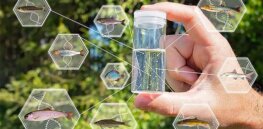
How monitoring environmental DNA (eDNA) can help us conserve forests, rivers and other ecosystems
Today, about 1 in 4 freshwater creatures face extinction. Wetlands are disappearing three times faster than forests. Across the globe, ...
