



Daily Food & Ag Digest

Saffron, the world’s most expensive spice, is under threat by climate change. Here’s how researchers are using genetic modification to build resilience
In order to address climate change impacts on saffron production, particularly the deficit of rainfall, new saffron varieties are needed ...

How do genes interact with culture to shape food preferences?
Two random humans from a single group tend indeed to be more genetically different from each other than two different ...

Viewpoint: A degree in regenerative organic agriculture at a ‘transcendental meditation’ university? What are students actually learning?
Maharishi International University offered to make me one of its referral partners for a new degree program: Regenerative Organic Agriculture. I’d ...
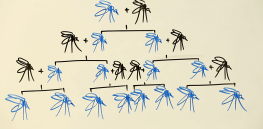
Mosquitoes genetically engineered to kill off their own kind reduce local populations by up to 96%, study shows
In the Brazilian city of Indaiatuba, an effort is underway to eliminate Aedes aegypti mosquitoes before they have a chance ...

Is the Biden administration politicizing agricultural pesticide policy? The GOP believes so, and plans offensive
Republicans plan to use their razor-thin House majority and the committee control it gives them to investigate the Biden administration’s ...

How corruption jeopardizes food security in Nigeria, Africa’s most populous nation
Today, data shows 7 out of every 10 Nigerians are food insecure. According to a 2021 report by Onyenekenwa Cyprian ...

EU ‘Green Deal’ softens hard-line proposals for extensive restrictions on pesticides as food security concerns escalate
EU countries are pushing back against the European Commission’s plans to radically slash the use of pesticides in the bloc, ...

Viewpoint: Could GMOs that use less pesticides be the ultimate ‘clean’ food that consumers expect?
Can genetic modification and clean label co-exist? ...
An alternative to harvesting environmentally-destructive palm oil? Here’s a biotech solution using soybeans
Plant-based synthetic biology continues to play a role in novel ingredient discovery, which ultimately helps alleviate global food chains from ...

Reversal: As Kenyans face escalating threats of hunger, country’s High Court temporarily suspends import of GM corn
The High Court in Kenya has temporarily suspended the government’s plan to allow importation and distribution of genetically modified organisms ...
Beyond the ‘yuck factor’: Precision fermentation of bacteria could dramatically soften environmental footprint of livestock-linked food production
Precision fermentation is a refined form of brewing, a means of multiplying microbes to create specific products. It has been ...
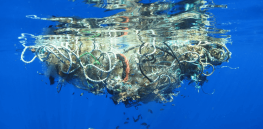
With demand for plastic expected to triple by 2050, here’s how biotechnology can reduce its environmental impacts
In theory, many commonly used plastics can be recycled. But only about one-tenth of the plastics that have ever been ...

Spanish biologist: ‘No evidence that organic diet better for health or organic farming better for the environment’
Do foods with an organic seal have benefits? The only thing they guarantee is that they have been grown according ...

‘We can’t simply innovate our way out of danger’: Can biotechnology and other innovations help soften the blow of climate change?
Can technology save us from the worst effects of climate change? Probably not, reports a new study, “Does Directed Innovation ...

How eating ‘ultra-processed’ foods affects your mental health
Ultra-processed foods are popular because they’re convenient, ready to eat, and usually less expensive than other foods. However, they tend ...

How can US farmers adapt to climate change? Environmental Defense Fund offers five key options
Farmers have a long history of steadily increasing crop yields through technological innovation and improvements in management practices. However, as ...

India’s highest court weighs approval of GM mustard, its first biotech food crop
The row over transgenic crops in India is back. On 18 October, India’s Genetic Engineering Appraisal Committee (GEAC) approved the ...

Viewpoint: Farmer protests in Europe challenges misguided restrictions on biotechnology innovation
Over the summer, farmers in the Netherlands vehemently protested against the government's new environmental rules. Over multiple weeks, thousands of ...

Viewpoint: ‘Farming is always unnatural’ — German farmers on why the EU needs to stop romanticizing agriculture and start embracing ‘intensive’ farming
We get too romantic about farming: “Nature is not gentle. Farming is always against nature. If you don’t do anything, ...

Agrivoltaics: With farm land scarce, solar panels can work in tandem with agriculture
Farmers installing solar panels on their land traditionally have kept their paneled acres separate from those containing their crops. But this ...

How to scale up lab-grown meat? Scientists ‘zap animal cells with a magnet’
Scientists from the National University of Singapore (NUS) have found a novel way of growing cell-based meat by zapping animal ...

Climate change: Gene editing can help create resilient crops
Experts say enhanced access to gene editing can help create resilient crops that respond appropriately to climate change. Some agricultural ...

‘I like my carp well done please’: Human ancestors 780,000 years ago were catching and barbecuing fish
Heaps of fish teeth found at a waterlogged prehistoric site in today’s northern Israel have revealed an important new piece ...

Do trees ‘talk’ to each other through their roots? It’s become a highly-contested belief
Few recent scientific discoveries have captured the public’s imagination quite like the wood-wide web — a wispy network of fungal ...

Podcast: Genetically-engineered houseplants can scrub household toxins from the air
Indoor air contains a variety of harmful compounds. We invite many of these compounds into our homes in electronics, and ...

One-fifth of media stories on GMOs published in Africa contain misinformation, study finds
One-fifth of African media coverage of genetically modified foods contains misinformation, a new scientific study published by the Alliance for Science has ...
UN World Food Program Director: If we want to beat world hunger by 2030, we need ‘Big Ag’ and biotechnology
Ertharin Cousin has spent her entire life providing people with food: as a child of a restaurant owner couple in ...
