


Food & Ag Features
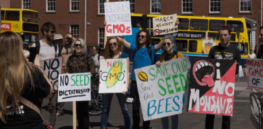
Viewpoint: How tort lawyers came to fund environmental activist fundamentalist attacks on science and agriculture
Since the period of stakeholder dialogue in the 1990s and early 2000s, environmental activists engaged in the policy process to ...

Viewpoint: How Environmental—Social—Governance (ESG) screens can be manipulated to promote misleading science and damage sustainability efforts
While the Environmental, Social and Governance (ESG) investor point system has had a bit of a rough time over the ...

GLP podcast and video: EWG’s ‘Dirty Dozen,’ debunked; On pesticides, trust experts, not ideologues; Ukraine war derails EU’s Farm-To-Fork proposal
It's the time of year when Environmental Working Group (EWG) puts out its much-ballyhooed "dirty dozen" list of fruits and ...

Viewpoint: Challenging myths — Organic farming fleeces consumers and does not significantly promote sustainability
As I discussed in Part 1, many Americans have begun to seek “authenticity” in many aspects of their lives. There’s ...

Scientists rebuke Environmental Working Group’s Dirty Dozen list of ‘pesticide-soaked’ vegetables and fruits
The safety and nutritional benefits of fruits and vegetables is verified by decades of science. Toxicology studies and analyses confirm ...
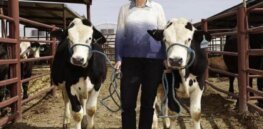
Viewpoint: No, DNA is NOT a drug—Why the FDA’s continued insistence to regulate gene edited research animals as drugs blocks US-based innovation
Investigational research animals that have been genome edited CANNOT enter the food supply in the United States irrespective of the ...
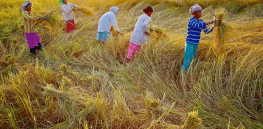
Viewpoint: ‘Only 60 harvests remaining on Earth’? Environmentalist exaggerations obscure dramatic advances in biotechnology-boosted agriculture
A little over 200 years ago, one of the noted economists and philosophers of the day, Thomas Malthus published an essay ...
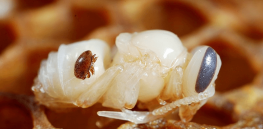
Honeybee health: Driving problem is not climate or pesticides but the deadly Varroa mite
Some food grown in the US, especially high-cost luxuries like almonds, are pollinated using bees. Since bees are most often ...

Changing negative perceptions about GMOs? Gene-edited purple tomato with great taste, longer shelf life and as much anthocyanin as blueberries is one of many new GM foods
The first genetically modified (GM) food ever made commercially available to the public was a tomato, invented in the US ...

How the war in Ukraine has derailed the European Union Farm to Fork initiative — and sparked debate about what constitutes sustainable agriculture
In March 2020, the EU, unveiled its Farm to Fork (F2F) strategy, an ambitious policy designed to reduce agriculture’s carbon ...

Viewpoint: Before you blindly endorse a ‘meatless future’ to limit greenhouse gasses and protect the environment, read this
Many activists and reporters claim we should eat little or no meat to prevent climate change. But instead of presenting ...

Viewpoint: Innovation vs. extreme precaution — What should drive science regulation and policy in Europe?
People like me often claim we need science-based policy. Regulations have to follow the best available evidence and European agencies ...
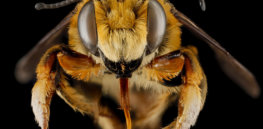
Beepocalypse Myth Handbook: Assessing claims of pollinator collapse
After a decade of debate, the causes of the mid-2000s spike in bee deaths is coming into focus. Culprits are ...

Viewpoint: ‘Intransigent regulation’ — Genetic modification solution to limit crop frost damage waits for government green light
The EPA's intransigent regulation of genetically engineered bacteria that could mitigate frost damage to crops prevented their commercialization. Especially when ...

Concerned about pesticide levels in food? Environmental Working Group’s Dirty Dozen list ignores organic pesticides while misrepresenting conventional trace chemical dangers
The Environmental Working Group wants to insure allied journalists like Sheila Kaplan that their new "dirty dozen" list is almost ready ...
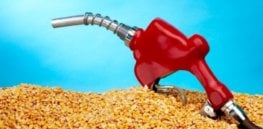
How green are biofuels? Does corn-derived ethanol promote sustainability?
Tyler Lark, a geographer at the University of Wisconsin-Madison, grew up among farms, working on a neighbor’s dairy, vaguely aware ...

Regulatory inconsistency and the precautionary principle: Why the European Court ruling limiting neonicotinoid pesticide use is misguided
Important questions loom, now that European sugar beet and oilseed rape farmers face a potential ban on the use of ...

Viewpoint: The Guardian cites ‘shocking’ statistics from environmental lobby groups claiming increasing dangers from pesticide poisonings. Here’s why they are wrong, yet again
The evidence is quite clear at this point. Properly used, pesticides do not pose a serious risk to human health ...

How biotechnology over-regulation harms farmers, boosts food costs and fuels inflation
Recent months have been hellish for many American farmers and consumers who buy the food they produce. Many farms have ...

With Kenya’s tentative embrace of growing GM products, Uganda faces a resurgent anti-GMO movement. Here’s the havoc it’s causing and the activists behind it
Agro-technologies, including CRISPR gene-editing to tweak crops to tolerate the challenges of climate change, including the control of plant bacterial ...

Using cost-benefit analysis: Crop biotechnology offers sizable yield and sustainability benefits when compared to non-GM farming
What are the costs of not adopting the best food producing technologies? The ability to quantify a choice that is ...

Rethinking artificial sweeteners? Fake sugars may not cause cancer but they’re not great for losing weight either
Let’s start by noting that the World Health Organization (WHO) recently warned against using artificial sweeteners for weight control. What? ...

Viewpoint: What role should industry have in refashioning Europe’s food system?
I feel like Brussels is a puzzle where the pieces keep changing. The best way to start a puzzle is ...

Viewpoint: Global crop biotechnology revolution — 2022 saw dramatic advances in agricultural innovation
Conquest, war, famine, and death: Looking back on 2022 as the COVID-19 plague roars into its fourth year, the Four Horsemen ...

50+ scientists challenge Boston College, Florida International for hosting philosopher Vandana Shiva, disseminator of science disinformation on vaccines and crop biotechnology
We are scholars and journalists of life sciences and social sciences from around the world who have published hundreds of ...
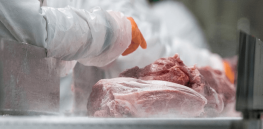
Here’s a primer on the technology behind lab-grown meat
Between population growth and rising economic status, global demand for food protein is expected to continue to increase for a ...

As seafood demand soars and the ocean is denuded of fish, plant-based salmon offers sustainable path forward
It is estimated that by 2050 demand for food overall will increase by 70% , while seafood demand will increase ...
