


Daily Human Digest
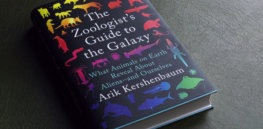
If we ever encounter extraterrestrial life, here’s why they might not seem so alien
[University of Cambridge Professor Arik Kershenbaum] argues that evolution is a universal law of nature, like gravity — and that ...
Why do humans suffer from more diseases than other animals?
[C]ompared to chimpanzees, what makes us special is apparently our outsized capacity for serious mental illnesses and weird facial shapes, ...
Generous apes: What explains the evolution of human kindness?
With chimpanzees, the prospect of food can lead to aggression. But bonobos take a different approach, says Suzy Kwetuenda, a ...
What’s your biological age? There’s a genetic clock that could tell you
Biological age isn’t as simple as counting the number of birthday candles you’ve blown out like your chronological age. Rather, ...

Neil deGrasse Tyson on our distrust of scientists: Why do we love our smartphones but reject science when it comes to COVID?
We have apparently passed through a portal where pseudoscience, anti-science, fear-of-science and science-denial all thrive in our culture. Where systems ...

Here is the consensus theory of why Neanderthals went extinct
Noting over “a dozen serious hypotheses'' about the enigmatic disappearance of our nearest cousins [the neanderthals, researchers] conducted a poll ...
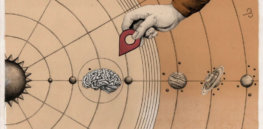
Exploring the mystery of consciousness: Is it everywhere in nature?
Accounting for the nature of consciousness appears elusive, with many claiming that it cannot be defined at all, yet defining ...
Anorexia nervosa, bulimia nervosa and binge-eating disorder are all in part genetically hard-wired
To understand the similarities and differences between the genetic patterns of anorexia nervosa, bulimia nervosa and binge-eating disorder, the research ...
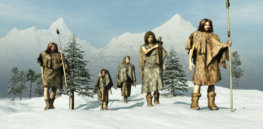
Early humans endured bitter cold without fire during the Plesitocene era
The Middle Pleistocene (125,000-780,000 years ago) was marked by periodic oscillations between a climate similar to today's and much cooler ...
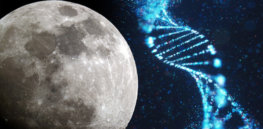
Lunar DNA ark? Scientists want to cryogenically store the genes of 6.7 million species on the moon, just in case
[A “lunar ark” gene bank, could] be safely hidden in [the moon's] hollowed-out tunnels and caves sculpted by lava more ...
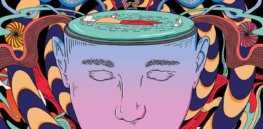
Is psychedelic-assisted group therapy the wave of the future?
Researchers are beginning to investigate psychedelic-assisted group therapy as a way to let patients connect more deeply, exploring the inner ...
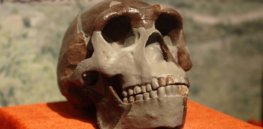
Survival of the brainiacs: Controversial new thesis says humans evolved smarter to capture smaller prey
As the largest animals on the landscape disappeared, the scientists propose, human brains had to grow to enable the hunting ...
Twin peak: Global twin rates at historic highs, and here’s why
Researchers analysed records from more than 100 countries and found a substantial rise in twin birthrates since the 1980s, with ...

Some animals engage in heinous behaviors — cannibalism, eating offspring, torture and rape. Why did evolution make that happen?
While it is true that rape, torture and murder are more commonplace in the animal kingdom than they are in ...

Can training make you a premier long distance runner — or are your abilities determined at birth?
All of our skeletal muscles are made up of a combination of two types of fibre: slow-twitch muscle fibres and ...
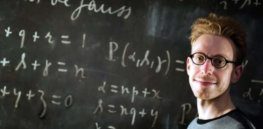
Author Simon Baron-Cohen on how autism has driven human innovation
In [cognitive neuroscientist Simon] Baron-Cohen's new book [The Pattern Seekers: How Autism Drives Human Invention], he argues that humans became ...
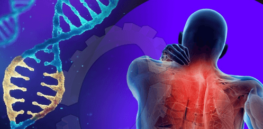
‘What we have right now does not work’: Gene editing aims to relieve chronic pain
In experiments on laboratory mice, researchers found that temporarily repressing a gene involved in sensing pain increases pain tolerance, lowers ...
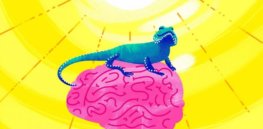
Pop psychology and the myth of the ‘lizard brain’
“As a neuroscientist, I see scientific myths about the brain repeated regularly in the media and corners of academic research,” ...
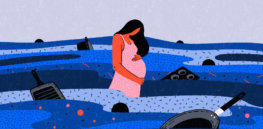
More than 50 environmental chemicals found in pregnant women and their newborns
Researchers have detected more than 50 new environmental chemicals lurking in people's bodies, the vast majority of which are little ...

Prehistoric men hunted and women gathered? New evidence suggests that’s too simple
Archeological evidence from Peru has revealed that some ancient big-game hunters were, in fact, women, challenging what science writer James ...
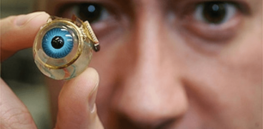
Bionic eyes: Generating visual perceptions and hope for those who cannot see
In the 1970s, [biomedical engineer William] Dobelle had shown that electrically stimulating visual brain areas (the visual cortex) caused people ...

Are humans wired by evolution to be couch potatoes? This evolutionary biologist believes so
A professor at Harvard and a keen marathoner – sometimes barefoot – [Daniel Liberman’s] life’s work in evolutionary biology makes ...

Video: What the lungs of newborns look like when they take their first breaths
[U]sing a delicate sensor-belt wrapped around the chests of full-term newborns moments after their delivery, a team of researchers from ...

Our ‘evolutionary superhighway’: How the brain connects smells and memories
Whereas other sensory systems are thought to have been re-routed during human evolution, [a new] study suggests that olfactory-hippocampal functional ...

While teenage medical claims fell during COVID lockdowns, mental health claims jumped by more than 20%
[T]he New York nonprofit [Fair Health’s] seventh [report] in a series on the pandemic is the result of analysis of ...
The placebo effect and pain reduction: Brain imaging helps explain how it works
Does the placebo [effect] change the way a person constructs the experience of pain, or is it changing the way ...
Jennifer Doudna on how CRISPR is moving out of the lab to transform medicine and revolutionize disease treatments
In 2021, we will see increased use of CRISPR-Cas enzymes to underpin a new generation of cost-effective, individualised therapies. With ...
