


Daily Food & Ag Digest

Viewpoint: European Commission must prioritize agricultural biotechnology or ‘the 2050 zero carbon emissions target will remain a mirage’
"Without further investments and simplification of procedures, the zero emissions target will remain a mirage. To achieve this, the European Commission must ...
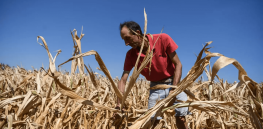
Viewpoint: Facing unprecedented drought, Europe debates embracing sustainable, climate-flexible, insecticide-reducing genetically modified crops
Europe’s summer of drought has been impossible to ignore. Rivers dried up, exposing the skeletons of warships and ancient buildings. Images captured by ...

EU bans food imports with neonic pesticide residues starting in 2026
The European Commission announced [September 27] that imports of products containing residues of harmful insecticides known as neonicotinoids will be ...

Environmental Protection Agency denies Center for Food Safety petition to ban neonicotinoid pesticides
The Environmental Protection Agency denied a petition September 28 that asked the federal agency to more closely regulate a group ...

Viewpoint: Splenda scare? Should we be concerned about reports linking artificial sweeteners to strokes?
I’ve learned to allow my patients to have strange tastes in beverages. Should I be tolerant towards their drive to ...

China’s Syngenta pushes the edge: Can technology-driven agriculture promote a new view of sustainable farming to a world still wary of biotechnology?
China has very small farms; there hasn’t been a lot of infrastructure put in place in terms of knowledge or ...

Viewpoint: Media hypocrisy — ‘What makes oil companies’ climate change disinformation different from ‘backward progressives’ GMO rejectionist campaigns?’
The media often has difficulty deciding what counts as obvious disinformation or falsehoods. But supposed disinformation about climate change is ...

Case study: What happens if Europe bans glyphosate? Increased tillage, higher greenhouse gas emissions, less biodiversity — and billions in losses for farmers
Following the introduction of glyphosate in 1974, its efficacy against a vast range of weeds and its low price has ...

As climate dislocations accelerate, here’s how genetically modified mosquitoes could offer lifeline to controlling dengue, Zika and other mosquito-vectored diseases
With insecticide resistance increasing and climate change priming the environment for longer breeding seasons and a wider geographic range, the ...

Viewpoint: Europe’s energy crisis and Farm-to-fork organic-promoting policy is fueling food insecurity — a ‘glaring oversight’ in EU State of the Union address
EU solidarity with Ukraine was the overwhelming focus of European Commission head Ursula von der Leyen’s State of the Union ...

Canada relaxes rules governing gene-edited crops
Canadian health regulator Health Canada has published a fresh set of guidelines on gene-edited crops. The new instructions cover gene-edited crops that ...
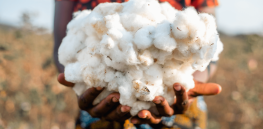
Suffering from devastating pest infestations, Ethiopian cotton farmers resort to using illegally smuggled GMO seeds that have controlled the same problem in Brazil
Cotton growers in Ethiopia resort to unauthorized GMO cotton illegally smuggled from Sudan. Bt-RR cotton seed is currently being cultivated ...

Viewpoint: Government funding and clearer regulatory guidelines critical if China hopes to grow its lab meat sector
China has been increasingly voicing its support for the development of plant- and cell-based proteins, and Chinese scientists have declared cultured ...

Nestle, General Mills, PepsiCo and other food companies have pledged support for regenerative agriculture. Is this a greenwashing campaign?
According to a new report by the non-profit Forum for the Future, the regenerative agriculture movement in the U.S. has ...

Find it hard to control your appetite and keep your weight in check? Bigger breakfasts maximize metabolism, research suggests
Eating a big breakfast and a smaller dinner could aid weight loss by making you feel less hungry, say researchers ...

Viewpoint: With Europe suffering unprecedented drought, EU politicians are seriously debating the use of sustainable, drought-tolerant, low-insecticide use genetically modified crops
Europe’s summer of drought has been impossible to ignore. Rivers dried up, exposing the skeletons of warships and ancient buildings. Images captured by ...

Viewpoint: ‘He overlooks complexity’ — Will King Charles promote his cult organic farming views and reject agricultural biotechnology?
King Charles didn’t discover his penchant for sustainability all by himself. After Charles met the Indian anti-globalization activist and environmental ...

Viewpoint: Ideologically-based beliefs are preventing New Zealand consumers from experiencing the benefits that gene editing in agriculture can bring
It is over two decades since the Royal Commission on genetic modification (GM) responded to the task of evaluating the ...

Can ginger, chili peppers or green tea keep you full for longer? Scientist fact-checks common diet claims
It's likely that your weekly shop is packed with packaging promising that the food inside will taste great, stay fresh ...

Microbe milk: We’ve used precision fermentation to make cheese for decades — lab-made dairy may be the next technological leap
Although plant-based analogs have never managed to fully capture the taste and texture of the real thing, a new crop ...
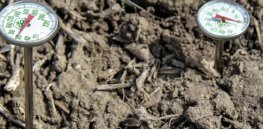
‘Canary in the coal mine for agriculture’: Simple soil temperature test can predict and prevent spread of corn-ravaging worms without pesticides
Soil temperature can effectively monitor and predict the spread of the corn earworm, a pest that ravages corn, cotton, soybeans, ...

Climate panel predicts massive dislocations in agriculture and billions of dollars wasted unless drastic mitigation measures taken
According to a landmark report issued by the Intergovernmental Panel on Climate Change (IIPC), approximately nine years remain to limit ...

EPA reaffirms conclusion that herbicide glyphosate is safe for humans and environment but pledges updated review by 2026
EPA walked away from a legal battle on its interim determination that glyphosate is likely not carcinogenic to people, telling ...

Not The Onion: California Supreme Court rules bumbles are fish — but justices say state species protection act is poorly worded
The state Supreme Court agreed September 21 to allow dwindling species of bumblebees to be considered for protection as endangered ...

Viewpoint: Moderating agricultural pesticide use is a good idea — but only if it helps balance environmental and economic realities and is not just an ideological exercise
The EU is going too far in its control of pesticides. The Commission is updating the 2009 Sustainable Use Directive ...

TikTok fact check: No, malaria-fighting GMO mosquitoes released in Florida are not a vector for ‘Bill Gates’ next planned pandemic’
Claims that the Bill Gates-funded company Oxitec is responsible for a paralyzing mosquito-borne virus spreading through Florida have recently circulated ...
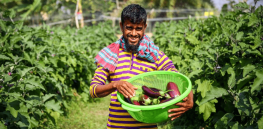
Bangladesh looks to agricultural technologies to address climate change impacts and food insecurity
There has been a revolution in agriculture in Bangladesh in the last three decades with the application of various modern ...
