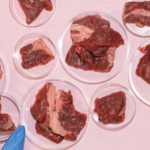
The Guardian’s anti-GMO columnist George Monbiot reports organic, pasture fed beef and lamb are ‘some of the world’s most damaging food products’

If, as many chefs and foodies and some environmentalists propose, meat were to come only from regenerative farms, it would be so scarce that only millionaires would eat it. Credit: ISS via NASA
George Monbiot. Credit: Tank Magazine

What are the world’s most damaging farm products? You might be amazed by the answer: organic, pasture-fed beef and lamb. I realise this is a shocking claim. Of all the statements in my new book, Regenesis, it has triggered the greatest rage. But I’m not trying to wind people up. I’m trying to represent the facts. Let me explain.

Arable crops, some of which are fed to farm animals, occupy 12% of the planet’s land surface. But far more land (about 26%) is used for grazing: in other words, for pasture-fed meat and milk. Yet, across this vast area, farm animals that are entirely pasture-fed produce just 1% of the world’s protein.

Follow the latest news and policy debates on sustainable agriculture, biomedicine, and other ‘disruptive’ innovations. Subscribe to our newsletter.

Many livestock farmers now claim to practise “regenerative grazing”. The minimum definition of ecological regeneration is permitting trees to return to formerly wooded lands. In the uplands of Britain, to judge by the experience of deer managers, this means a maximum of about one sheep for every 20 hectares (50 acres). They might as well not be kept at all.

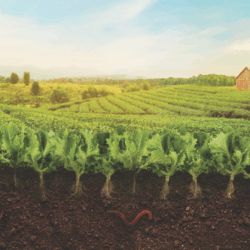
In the lowlands, the Knepp rewilding project in Sussex shows how far production has to fall to permit the return of trees and other wildlife: it generates just 54kg of meat a hectare. If, as many chefs and foodies and some environmentalists propose, meat were to come only from regenerative farms, it would be so scarce that only millionaires would eat it.


This is an excerpt. Read the original post here

Related Articles

Infographic: Global regulatory and health research agencies on whether glyphosate causes cancer

Infographic: Global regulatory and health research agencies on whether glyphosate causes cancer

Does glyphosate—the world's most heavily-used herbicide—pose serious harm to humans? Is it carcinogenic? Those issues are of both legal and ...

Most Popular

ChatGPT-Image-Mar-10-2026-01_39_01-PM
Viewpoint—“Miracle molecule” debunked: Why acemannan supplements don’t work
Screenshot-2026-09-16-at-12.07.47-PM
The heated debate over trans athletes in the WNBA
Screenshot-2026-09-10-at-11.50.46-AM
Did COVID vaccines kill 2,500 service members? RFK Jr. hires an investigator who compares vaccine promoters to Nazi doctors
Screenshot-2026-09-10-at-12.20.19-PM
'Jet fuel didn't melt the steel': 9/11 conspiracy theories debunked
ChatGPT-Image-Sep-9-2026-02_48_24-PM
Viewpoint: Trump-RFK Jr. report on “Gender Ideology & Left-wing Ideology’ targets LGBTQ community—and science
Screenshot-2026-09-11-at-2.26.23-PM
Newly approved GMO chestnut trees planted across from the White House are stirring debate
Screenshot-2026-09-15-at-11.04.54-AM
Viewpoint: Childhood deaths in dispute: Why the CDC vs Pennsylvania conflict over measles vaccines matters
ChatGPT-Image-Sep-15-2026-12_15_00-PM
Viewpoint: Women, depression and empathy: Explaining the gender gap in views about child-murderer Lindsay Clancy
ChatGPT-Image-Sep-15-2026-11_36_23-AM
Doomsday cult? Why we should be suspicious of end-of-the-world claims
Screenshot-2026-09-14-at-4.31.14-PM
Viewpoint: What’s the likely impact when the EPA loosens rules limiting methane pollution from oil and gas wells?
Screenshot 2026-09-10 at 11.28
A meaty problem: How to make cell-grown protein taste like steak, chicken, and seafood
ChatGPT-Image-Sep-15-2026-05_59_18-PM
RFK Jr. spent two years distancing himself from Children’s Health Defense. Now he’s keynoting its anti-vaccine DC conference.
glp menu logo outlined

Get news on human & agricultural genetics and biotechnology delivered to your inbox.