


Daily Human Digest

Feeling a bit stir crazy during the pandemic lockdown? Blame it on human evolution
Humans are intensely social creatures. We all need company and social contact. But for many of us, being at home ...

A CRISPR fix for diabetes? Success using stem cells in mice offers promise for humans
[Researchers] recently used the gene-editing technology CRISPR to correct stem cells from diabetic patients and turn them into fully functioning ...

Video: What makes opioids so addictive
In the 1980s and 90s, pharmaceutical companies began to market opioid painkillers aggressively, while actively downplaying their addictive potential. The ...

False memories: Why marijuana users may not be the best eye witnesses
When Lilian Kloft stumbled across a 2015 study showing a connection between cannabis use and susceptibility to false memories, she ...

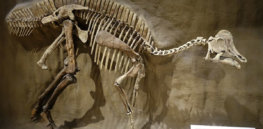
‘From pipsqueaks to titans’: The complicated evolution of dinosaurs
For tens of millions of years, even as other dinosaur species grew to huge sizes, 40-foot carnivores weren't around. How, ...
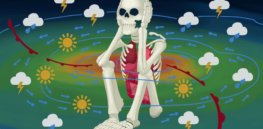
Climate change won’t ‘invariably’ cause social collapse—it’s a lot more complicated than that
Currently, global planning bodies are working on their responses to climate and environmental change and public health concerns. Unfortunately, these ...

What’s holding up gene therapy? Making drugs on a large scale
As interest in gene therapy grows, manufacturers face physical, biological, and engineering challenges to developing and producing drugs on a ...

We’re still searching for a key piece of our evolutionary tree—our most recent ancestor
Humans’ most recent ancestor, the species that predated our kind, remains shrouded in mystery. Anthropologists still don’t know what species ...

Does smoking pot lower your IQ? New study challenges current thinking
As access to marijuana increases—and while acceptance of the drug grows and perception of its harmfulness diminishes—it is important to ...

A right to know? Should children be told when a parent’s genetic test reveals hereditary risks?
What are the legal, professional and ethical, duties or responsibilities of researchers and clinicians in handling genetic testing and the ...

Invading armies not to blame for fall of ancient Andean cultures, genetic analysis shows
An international team has conducted what it says is the first in-depth, wide-scale study of the genomic history of ancient ...
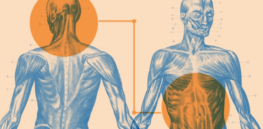
‘Psychobiotics’: Can we control the way we think by altering gut bacteria?
The allure is simple: Drug development for neuropsychiatric disorders has lagged for decades, and many existing drugs don’t work for ...

Is IVF an essential medical procedure during a pandemic?
The pandemic confronts patients and health-care providers with new ethical dilemmas. Is it too risky to pursue a fertility procedure ...
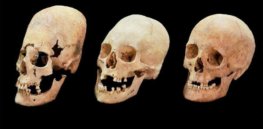
Why were these 1,000-year-old skulls shaped like ‘sci-fi aliens’?
Tight wrapping in childhood produced deliberately deformed skulls ...

‘Skin hunger’: That burning desire for human contact supercharged by the coronavirus pandemic
Once a week, Alice, who lives alone, walks to the end of her garden to meet her best friend Lucy ...
Capturing ‘nuance’: Studying single cells—rather than millions—is changing our understanding of biology
There are roughly 37 trillion cells in the human body, and each keeps us alive in some small way. There ...

Skeletons of Africans enslaved in Mexico reveal extreme hardships of the Atlantic slave trade
In a study published [April 30] in the journal Current Biology, scientists tell the stories of three 16th-century enslaved Africans ...

‘A radical idea’: Could a single factor be responsible for all mental illnesses?
What are the roots of mental illness? In the hope of finding an answer, scientists have piled up an enormous ...
Dinosaur DNA discovered?
The tiny fossil is unassuming, as dinosaur remains go. ... But it may contain something never before seen from the ...

A different approach to finding alien life: What if ET breathes hydrogen instead of oxygen?
The first time we find evidence of life on a planet orbiting another star (an exoplanet), it is probably going ...

Menopause might be a tipping point for Alzheimer’s for millions of women
Estrogen is the master regulator of metabolism in the youthful female brain, orchestrating everything from glucose transport and uptake to ...
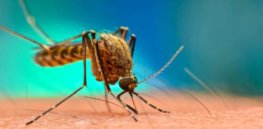
‘Enormous potential’: Recently discovered microbe could protect mosquitoes from malaria
Scientists have discovered a microbe that completely protects mosquitoes from being infected with malaria. The team in Kenya and the ...

Overcoming fear: Understanding DNA ‘flexibility’ could lead to better treatments for phobias and PTSD
Fear is an important survival mechanism and so too is the ability to inhibit fear when it’s no longer needed ...
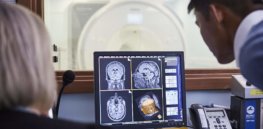
Diagnosing Alzheimer’s with artificial intelligence and brain scans
In recent years, scientists and clinicians have focused their attention toward machine-learning artificial intelligence (AI) tools to help them diagnose ...
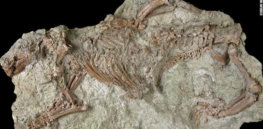
‘Crazy beast’ fossil shows how weird evolution can get
Researchers have uncovered the fossil of an early mammal named the "crazy beast" that lived 66 million years ago on ...
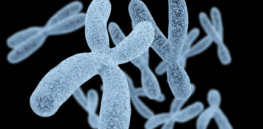
‘Female genetic superiority’? How two X chromosomes give women an edge against coronavirus
It was noticeable from the initial outbreak in Wuhan that Covid-19 was killing more men than women. By February, data ...
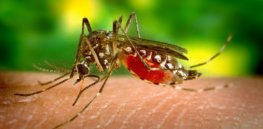
EPA approves GM mosquito trial in Florida Keys to combat zika virus and dengue fever
A plan to test genetically modified mosquitoes in the Florida Keys has received approval from the federal government. For more ...
