


Daily Human Digest

Viewpoint: Artificial intelligence ‘without guard rails’ is growing global threat
Technology is bestowing wonderful opportunities and benefits to the world, but the acceleration of development, and lack of global regulatory ...

Humans are ‘biologically built’ to seek out friends
We humans are biologically built to seek friends, and we can see suggestions of our evolutionary past in the social ...

These women are missing the ‘scent region’ of the brain. How do they still smell?
When Tali Weiss and her colleagues at the Weizmann Institute of Science found a patient that had an otherwise normal ...
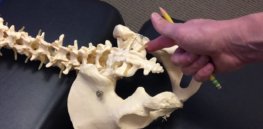
Why do humans have tailbones?
Though it’s currently useless, the human coccyx—commonly referred to as the tailbone—remains nestled at the bottom of the spine, a ...

Genetic mutations may provide natural defense against Alzheimer’s
A set of genetic mutations may protect against Alzheimer’s, research suggests. The memory-robbing disease is poorly understood, with few known ...

3 modern adaptations that prove humans are still evolving
Genetic mutations lead to new traits — and with the world population now above 7 billion and rising, the chances ...

Immunotherapy breakthrough? CRISPR-edited immune cells proven safe for use in cancer patients in early stage trial
Now for the first time in the U.S., researchers say they’ve shown that CRISPR-edited immune cells can be safely given ...

Why consumers are losing interest in genetic testing
At-home DNA testing companies 23andMe and Ancestry each laid off about 100 employees over the past month, cutting around 14 and 6 percent of ...
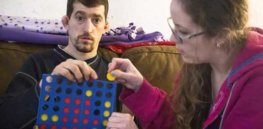
People with autism show significant increases in IQ as they mature, but development issues remain
People with autism show significant improvements in cognitive ability from age 12 to 23 years, but their autism traits remain ...

Can artificial intelligence diagnose diseases? Promising apps in development but kinks remain
An algorithm that can spot cause and effect could supercharge medical AI. The technique, inspired by quantum cryptography, would allow ...

Gwyneth Paltrow’s Goop under fire again for ‘exploiting health issues in order to make money’
Gwyneth Paltrow’s contextual commerce company Goop is still making more than a dozen false and misleading health claims about the ...

Smartphone as a ‘mood predictor’? This study wants to know if phone-captured data can predict depression
With digital health, anyone with a wrist wearable or smartphone could potentially contribute in the largest studies ever attempted by ...
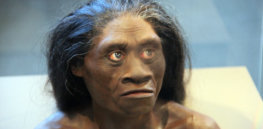
Were the mythical ‘ebu gogo’ creatures of Indonesia distant human relatives?
An ancient legend from the Indonesian island of Flores speaks of a mysterious, wild grandmother of the forest who eats ...
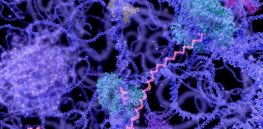
‘Excitement is finally catching on’: Why RNA editing may be more promising than CRISPR
CRISPR editing — at least as a therapeutic technique in people — has turned out to be more difficult than ...

How repetitive movements help autistic people cope with anxiety
Typical infants and toddlers may kick their legs repeatedly, rock back and forth while playing or flap their hands in ...

‘Topographical disorientation’: What it’s like to live without a sense of direction
We all know people who say they have “no sense of direction,” and our tendency is almost always to minimize ...

Viewpoint: AI has one glaring weakness in health care: There’s no human touch
It might be that, as physicians who work in a public health care system that relies on fax machines, carbon ...
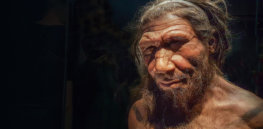
Modern Africans have more Neanderthal ancestry than previously thought, study says
Modern Africans have an average of 17 megabases of Neanderthal DNA in their genomes, according to an analysis published [January ...
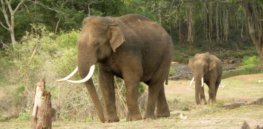
‘Serious trouble’ for the natural world. Can synthetic biology protect it by redesigning insects and saving threatened species?
A paper in the journal PLOS Pathogens described how they synthetically engineered mosquitoes to stop the spread of dengue fever, a viral tropical disease ...

Alzheimer’s research is stuck on a ‘single, unproven hypothesis’. It’s time to explore new theories
Over the past decade we’ve seen failure after failure in clinical trials for neurodegenerative disease. Despite over 200 clinical trials, ...

Is your personality shaped by your gut bacteria? Study suggests sociable people have more diverse microbiome
A new study from Oxford University, published in the journal Human Microbiome, has linked gut bacteria strains and diversity with people’s personalities. That ...
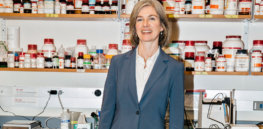
CRISPR pioneer Jennifer Doudna opposes germline-editing moratorium: ‘We’re going to have to figure it out’
Jennifer Doudna wears her responsibility lightly. The scientist who co-discovered Crispr does not appear to be weighed down by the ...
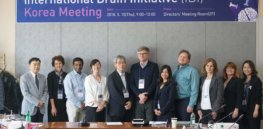
‘It takes a world’: Initiative urges global collaboration to help us understand the human brain
First envisioned in 2016 through a series of discussions on the “grand challenges” in neuroscience at Johns Hopkins University, the International ...
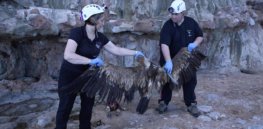
‘They weren’t just surviving’: Gibraltar caves give unprecedented peek into daily lives of last Neanderthals
Neanderthals were a resilient group. They existed for about 200,000 years longer than we modern humans (Homo sapiens) have been ...

Why are older parents more likely to have children with autism?
Older men and women are more likely than young ones to have a child with autism, according to multiple studies ...
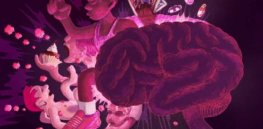
How sex, money and food motivate the brain
Researchers from HSE University, Skoltech and the University of Toronto analyzed data from 190 fMRI studies and found out that food, sex ...

‘Politics and war’: Why life on other planets would look a lot like our own
If other beings do populate the universe, what are they doing out there? Are the possible inhabitants of Teegarden b, ...
