


Daily Human Digest

Can we cure baldness with stem cell-based ‘hair farms’?
The physiology of balding has long vexed even the most entrepreneurial of scientists. Despite a rare confluence of commercial forces ...

Does testosterone impact moral decisions? Not according to this research.
The Trolley Problem is a staple of ethics courses and has even made its way into prime-time television. It's a ...
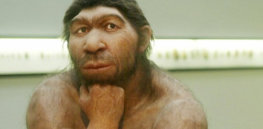
Reconstructing the Neanderthal throat—did they have their own language?
At the very least, in order for spoken language to be a possibility, a species has to have the right ...

Heart monitoring by Fitbit, other wearables, may be less accurate for people with dark skin
Nearly all of the largest manufacturers of wearable heart rate trackers rely on technology that could be less reliable for ...

Another mystery of our brains: ‘Why are we not hallucinating all the time?’
It’s a question they might have asked for different reasons in the ’60s, but neuroscientists from Stanford University in the ...

First attempt at using CRISPR to edit genes inside the body targets inherited form of blindness
Patients are about to be enrolled in the first study to test a gene-editing technique known as CRISPR inside the ...

About all those vitamins and nutritional supplements we’re taking: Most may be ‘a big waste of money’, researchers say
More than half of Americans take at least one vitamin or nutritional supplement every day, according to the study, amounting ...

Video: Targeting glioblastoma and other deadly cancers with nanoparticles, chemotherapy
Nanoparticles are capable of carrying chemotherapy to areas of the body afflicted by cancer. However, what if these nanoparticles were ...

Using CRISPR to cure the sting of the venomous box jellyfish with a ‘simple’ spray
In May, the Sydney-based scientist [Greg Neely] and his team of 22 announced they had potentially cured the sting of ...
10 years ago, the Human Brain Project promised to simulate a human brain. What went wrong?
On July 22, 2009, the neuroscientist Henry Markram walked onstage at the TEDGlobal conference in Oxford, England, and told the ...

Do humans have free will? Neuroscientists seek solution to this ‘philosophical puzzle’
Clinical neuroscientists and neurologists have identified the brain networks responsible for this sense of free will. There seems to be ...

How fragile egg shells could help us repair, grow new bones
We think of eggshells as fragile. Yet these thin, easily breakable shells may be the key to making better, stronger ...

Do bilinguals have a lower risk of developing dementia?
If the benefits of being bilingual spill over to other aspects of cognition, then we would expect to see a ...

2 million years ago, we lost this gene. That may be why humans are so prone to heart attacks
One-third of global deaths are due to cardiovascular disease caused by atherosclerosis, when arteries are clogged with fat deposits. Although ...

‘Genetic factors’ account for 81 percent of autism risk, suggests large multinational study
About 81 percent of autism risk comes from inherited genetic factors, according to an analysis of more than 2 million ...

LGBT people may have higher risk for Alzheimer’s, dementia. Are social stressors to blame?
LGBT Americans report increased rates of memory loss and confusion — two early signs of dementia — compared to their ...

Inaccuracies in consumer genetic tests for BRCA mutations prompt call for crackdown from UK doctors
Senior doctors have called for a crackdown on consumer genetic tests, following an influx of patients who have been wrongly ...
Viewpoint: We need to recognize autism as a medical disability, not just a different way of being
Advocating for medical research, former president of Autism Speaks Liz Feld has stated that one third of people with autism ...

Chasing a brain boost through psychedelic microdosing? Scientific support is ‘patchy, lacking’, review says
The practice of taking small, regular doses of psychedelic drugs to enhance mood, creativity, or productivity lacks robust scientific evidence ...

Improving artificial intelligence by teaching our machines to reason
Deep learning, the category of AI algorithms that kick-started the field’s most recent revolution, has made immense strides in giving ...

Are we as smart as we’ll ever be? Why we may be getting dumber.
You may not have noticed, but we are living in an intellectual golden age. Since the intelligence test was invented ...

Dementia warning signs: Unpaid bills, inappropriate comments, weight changes, reminders for simple tasks
What is attributable to normal aging as opposed to cognitive decline associated with dementia? It is common to misplace keys ...

Walking trees and swimming spiders: Why evolution on Earth could travel ‘some truly mind-boggling paths’
What creatures could develop in, say, 100 million years, given what we know about life on Earth and the principles ...

Genetic variants may explain why women are more prone to Alzheimer’s
New research gives some biological clues to why women may be more likely than men to develop Alzheimer’s disease and ...

Battling anti-vaccine fears, myths as US measles outbreak rages on
[Blima] Marcus, part of the Orthodox Jewish community in Brooklyn, helped form a volunteer group of health-care professionals this year ...

Infographic: Separating hype from reality on the benefits of intermittent fasting
Scientists are further detailing both the underlying metabolic dynamics and interesting physiological phenomena aside from weight loss as they study ...

Anorexia linked to metabolism in DNA study, opening new treatment avenues
The way we treat anorexia may be changing, thanks to a new study linking the illness to metabolism. The study, ...
