


Daily Human Digest

Does our gut bacteria alter the effectiveness of drug treatments?
Prescribing the best medication may require going with a patient’s gut — or at least, the bacteria that live there ...
Brain simulations could reveal how ‘self’ emerges from ‘seemingly random chattering among millions of neurons’
“Do we have a chance of ever understanding brain function without brain simulations?” So asked the Human Brain Project (HBP), the brainchild ...

Electronic paternity tests and other bad ideas before the dawn of the DNA era
In the first decades of the 20th century, scientists around the world proposed a fantastic array of new methods to ...

Viewpoint: Trump’s fetal-tissue research ban ‘ignores and defies the facts’
The Trump administration is halting fetal tissue research by government scientists and placing new restrictions on how the National Institutes ...

Dinosaur hike: How a Montana family found a ‘nearly complete’ T. rex
“It was right over there, just a bit of it sticking from the earth that caught my eye,” [Kathy] Wankel ...

Are we fighting diseases wrong? Researcher suggests a better approach is building tolerance to infection
[Researcher Janelle] Ayres was running the experiment to determine what causes genetically identical mice to respond differently to the same ...

Infographic: Understanding autism’s origins and prevalence
More than 3.5 million Americans live with autism spectrum disorder — a developmental disability that has no blood test, no ...
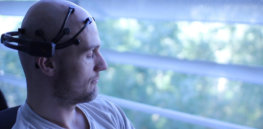
Why we need to be skeptical of claims about the benefits of brain wearables
[Brain] wearables are touted as ways to curb stress, sleep better, boost creativity or athleticism, or even address serious medical ...

How augmented reality and avatars could change the way we interact
According to researchers at Stanford University, layering computer-generated content, like someone's avatar, onto a real-world environment will influence people's behavior ...

Sperm counts are falling. Here are 5 ways to boost male fertility
The concentration of sperm in semen, also known as sperm count, has halved in the West since the 1970s. The ...

Gut bacteria transfers could help relieve autism symptoms, research shows
What causes ASD has baffled psychiatrists and neurologists since the syndrome was first described, in the mid-20th century, by Hans Asperger and ...

Viewpoint: ‘Greed and profit’ will drive human gene editing unless we develop strong regulations
We may now be on the verge of adding germline engineering to the menu of available reproductive services, that will, ...

Boutique startups give fertility treatments a ‘luxury’ makeover
[There’s a] growing world of boutique egg-freezing operations Instagrammable enough for their majority-millennial clientele. Take Trellis, a “women’s fertility studio,” ...

How the study of ‘affective touch’ could offer a better understanding of autism and its causes
Strong reactions to touch are remarkably widespread among people who have autism, despite the condition’s famed heterogeneity. “The touch thing ...

CRISPR babies with ‘protective’ HIV mutation could have shorter life span
When the Chinese scientist He Jiankui created the first gene-edited children, he dreamed of improving the world. He believed the ...

Why we have to look for early signs of psychosis in people with autism
Most young autistic people do not and will not have psychosis or schizophrenia. As a class, psychotic disorders are relatively rare ...

Olympian Caster Semenya cleared to compete as a woman without taking testosterone-reducing drugs
Runner Caster Semenya will be allowed to compete without having to take testosterone-reducing medication after a Swiss court ordered the ...

Inside the brains of Neanderthals: Were they capable of ‘symbolic and abstract thinking’?
We know from the archaeological record that much of Neanderthal hunting, foraging, and toolmaking behavior was quite similar to that ...

Environmental DNA offers glimpses of the ‘ancient world in a few grains of sand’
Somewhere in a remote cave in western Georgia, a few dozen miles east of the Black Sea shore, scientists on ...

‘Testes in overdrive’: Male efforts to improve attractiveness can damage ability to have children
Scientists have uncovered an evolutionary paradox where men damage their ability to have children during efforts to make themselves look ...

AI discovers new autism-linked mutations in ‘junk’ DNA
Many mutations in DNA that contribute to disease are not in actual genes but instead lie in the 99% of ...

‘Illogical and inappropriate’: How anti-vaxxers use 23andMe genetic tests to avoid vaccines
San Francisco’s city attorney subpoenaed a doctor accused of giving illegal medical exemptions from vaccination, based on “two 30-minute visits ...

Rapid mutation: Why future Mars’ colonists could evolve into a ‘completely different species’
In a new interview with Inverse, evolutionary biologist and Rice University professor Scott Solomon thinks it’s worth asking what will happen to Mars colonists in ...

Is there any point in living longer if we can’t stay young?
Aging, like bankruptcy in Hemingway’s description, happens two ways, slowly and then all at once. ... "...Over the past century, ...

Video: Alzheimer’s and the disappointing history of amyloid research
The idea that sticky brain plaques cause Alzheimer’s disease began as an interesting hypothesis and eventually became drug industry dogma. Now, ...

Why the results of your genetic ancestry test will change over time
23andMe caused Leonard Kim not one identity crisis but two. The first came in 2016, when Kim, who was raised ...

How the right diet could slow cancer growth through ‘metabolic therapy’
Doctors are starting to think more about specific nutrients that feed tumor cells. That is, how what we eat affects ...
