


Daily Human Digest
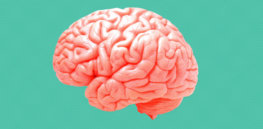
Viewpoint: Psychiatry still hindered by all the things we don’t understand about the brain
The heart is not a mystery. We know a great deal (not everything) about how it pumps blood around the ...

Is it time for us to stop obsessing over extending the human life span?
In 2019, more people than ever before get to see their grandkids grow up. They get to enjoy a lengthy ...
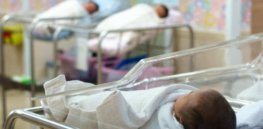
Scientific, social and ethical barriers must be overcome before the world is ready for CRISPR babies, researchers say
Nature asked researchers and other stakeholders what hurdles remain before heritable gene editing could become acceptable as a clinical tool ...

Interactive Infographic: Human body of the future with artificial organs, bionic eyes, lab-printed bones and more
Technology has changed the game for medical professionals across the past few decades. It’s hard to imagine where we’d be ...

Not a morning person? Maybe it’s because of your genes
I'm not a morning person because I'm lazy, but because it's coded into my genes. I've learned this thanks to ...

How your personality is influenced by your physical appearance
Known as “facultative personality calibration”, this is the idea that our personalities develop in a way that best suits the ...

Viewpoint: Fake autism treatments driven by fear and ignorance
NBC News recently published an exposé on the dangerous and all-too-common practice of orally and anally administering bleach-based treatments to ...

UB-311: Could this vaccine protect against Alzheimer’s?
Most vaccines prepare our body’s immune system to fight off so-called exogenous disease, such as measles or flu, caused by ...

How consumer genetic testing is ending paternal secrecy—for better or worse
When Nara Milanich wrote Paternity: The Elusive Quest for the Father—a history of the scientific, legal, and social conceptions of ...

Video: Tech guru and author Rob Reid on synthetic biology’s power to help or destroy us
In 2011, two separate research teams—one in Holland, the other in Wisconsin—set out to repair this "defect" in H5N1. By ...

Women are more likely to get autoimmune diseases. Is the placenta to blame?
In the United States alone, women represent 80 percent of all cases of autoimmune disease. ... Some scientists now think ...
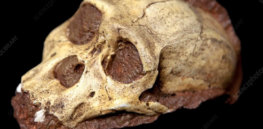
Remembering that fossils once had lives—long before we discovered their ancient bones
Fossils are the only remaining traces of once-living beings, and their collective and individual lived experiences simply cannot be known ...

Fasting as a treatment for Alzheimer’s? Preliminary research indicates benefits
[Neuroscientist Mark] Mattson has spent decades researching calorie intake and Alzheimer’s disease. In several studies of mice genetically altered to ...

Drugs used for depression, epilepsy may increase risk of dementia, study shows
Scientists have long found a possible link between anticholinergic drugs and an increased risk of dementia. A study published in ...

DNA testing companies launch privacy ‘coalition’ to protect consumer data
Genetic testing companies are forming a new coalition on best practices for handling DNA information and to promote the industry ...
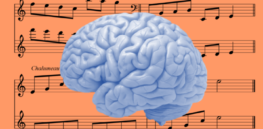
Human brains are drawn to the sound of music
In the eternal search for understanding what makes us human, scientists found that our brains are more sensitive to pitch, ...
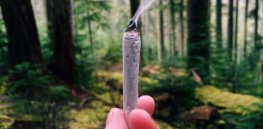
Can you become addicted to pot? This gene increases your risk.
Danish researchers have for the first time identified a gene that increases the risk for cannabis use disorder. About 10 ...

Why we can’t do anything about a Russian scientist’s plans to create more CRISPR babies
Two influential leaders in science for the first time publicly condemned a Russian biologist who said he plans to produce ...
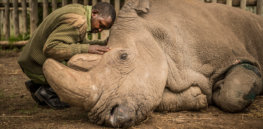
Why scientists are hesitant to declare a species extinct
If so many species are going extinct, why don’t we hear about new extinctions every day? The answer to that ...
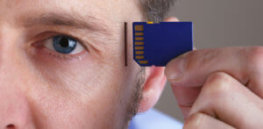
Surgically implanted chips could boost memory for people with traumatic brain injuries
Over the past five years, the U.S. Defense Advanced Research Projects Agency (Darpa) has invested $77 million to develop devices ...

Startup wants to combine DNA, machine learning for earlier autism diagnosis
Probably Genetic, which recently graduated from the startup accelerator Y Combinator, wants to test the DNA of children with autism ...
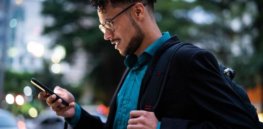
Viewpoint: No, cell phones aren’t causing people to grow horns
You might have heard recently, from publications like the Washington Post, NBC, and of course, Newsweek, that some people are ...
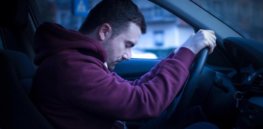
Microsleep: What happens to our brains when we’re both awake and asleep?
During microsleep, parts of the brain go offline for a few seconds while the rest of the brain stays awake ...
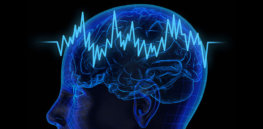
Electrical ‘brain ripples’ could boost memory for the elderly, Alzheimer’s patients
Specific patterns of brain activity are thought to underlie specific processes or computations important for various mental faculties, such as ...

Scammers set sights on booming genetic testing market
The cost of genetic testing for disease assessment can be as high as $10,000. With that kind of money in ...

Cell phones may be causing horns to grow on our skulls
Mobile technology has transformed the way we live — how we read, work, communicate, shop and date. But we already ...

Viewpoint: ‘Astrology-style answers’ show the darker side of consumer genetic tests
[T]he same thing that drives some people toward astrology drives others toward mail-in test kits: People want to learn more ...
