Surgically implanted chips could boost memory for people with traumatic brain injuries

memory boosting brain implant x
Image: Shutterstock

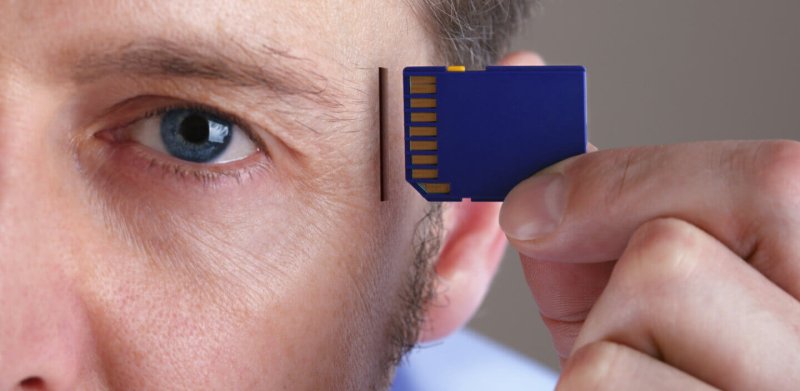
Over the past five years, the U.S. Defense Advanced Research Projects Agency (Darpa) has invested $77 million to develop devices intended to restore the memory-generation capacity of people with traumatic brain injuries. Last year two groups conducting tests on humans published compelling results.

The Mayo Clinic device was created by Michael Kahana, a professor of psychology at the University of Pennsylvania, and the medical technology company Medtronic Plc. Connected to the left temporal cortex, it monitors the brain’s electrical activity and forecasts whether a lasting memory will be created. “Just like meteorologists predict the weather by putting sensors in the environment that measure humidity and wind speed and temperature, we put sensors in the brain and measure electrical signals,” Kahana says. If brain activity is suboptimal, the device provides a small zap, undetectable to the patient, to strengthen the signal and increase the chance of memory formation. In two separate studies, researchers found the prototype consistently boosted memory 15% to 18%.

…

[E]ach implant requires clunky external hardware that won’t fit in somebody’s skull. The next steps will be building smaller implants and getting approval from the U.S. Food and Drug Administration to bring the devices to market.

Read full, original post: Upgrade Your Memory With a Surgically Implanted Chip

Related Articles

Infographic: Global regulatory and health research agencies on whether glyphosate causes cancer

Infographic: Global regulatory and health research agencies on whether glyphosate causes cancer

Does glyphosate—the world's most heavily-used herbicide—pose serious harm to humans? Is it carcinogenic? Those issues are of both legal and ...

Most Popular

ChatGPT-Image-Mar-10-2026-01_39_01-PM
Viewpoint—“Miracle molecule” debunked: Why acemannan supplements don’t work
Screenshot-2026-10-02-at-9.11.36-AM
The genetics of personality
strand of dna genetics
No, GMO foods do not “damage genes, natural disposition and hormones, or decrease physical health and intelligence”
Radioactive-Americana-Collage-2
The kooky logic behind the raft of spurious cancer claims from Harvard’s T.H. Chan School of Public Health
Screenshot-2026-09-28-at-11.26.17-AM
Viewpoint: Wellness movement activists reposition nicotine from a killer addictive drug into a cure-all for brain ills
Supreme-Court-Amid-Climate-Crisis
Should fossil fuel companies be shielded from lawsuits over climate change damage? The Supreme Court takes up the question
Screenshot-2026-10-02-at-8.56.38-AM
Trump finalizes Medicare drug price cuts, drawing Big Pharma’s fury and a legal challenge
Screenshot-2026-10-02-at-11.12.24-AM
‘Why do we keep falling for this stuff?’ America’s love affair with snake oil salesmen and scams
Screenshot 2025-09-17 at 12.41
Jump-starting global warming: Rising temperatures are driving up emissions from wildfires, fermenting wetlands, and melting permafrost
Screenshot-2026-10-06-at-2.36.47-PM
Is organic farming really more sustainable? 100 recent studies say ‘no’
AI-Force-Leadership-Portrait
Jay Clayton controversy: The divisive history of Trump’s newly-appointed AI czar
glp menu logo outlined

Get news on human & agricultural genetics and biotechnology delivered to your inbox.