


Daily Human Digest

Testing human intelligence by putting our brain genes in monkeys
Human intelligence is one of evolution’s most consequential inventions. It is the result of a sprint that started millions of ...
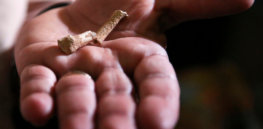
Philippines cave yields mysterious new human ancestor: Homo luzonensis
Ancient bones and teeth found in Callao Cave in the Philippines have led to the discovery of a previously unknown ...

Treating OCD and other anxiety disorders with brief, intensive therapy
For nearly 20 years [Thomas] Ollendick has been testing briefer, more intensive forms of [cognitive-behavioral therapy] for childhood anxiety disorders ...

Viewpoint: DNA data ‘rat race’ bringing down costs of precision medicine but perils of security risks escalate
It is said that this is the best of times for direct to consumer (DTC) genetic testing companies, human disease ...

‘Wildly popular’ and unproven probiotics may interfere with some treatments
Probiotics are wildly popular. After all, the microbial cocktails are available over the counter and have been shown to be ...

Restoring sense of smell with a brain implant
After a concussion left [Scott] Moorehead without a sense of smell six years ago, these losses were all he could ...

Viewpoint: Gene-edited kids are no riskier than the non-edited variety
"The introduction of genetic modifications into future generations could have permanent and possibly harmful effects on the species," a group ...

North Dakota fossil site may be ‘most sensational’ glimpse of final minutes of dinosaur reign
Sixty-six million years ago, an immense asteroid smacked into what is now the Yucatán Peninsula of Mexico, triggering global devastation ...

Can genetic tests predict our cancer risk?
The [UK] health secretary, Matt Hancock, [recently] shared his shock at discovering that he is at greater than average risk for ...

Headache or brain tumor: How can we tell the difference?
A news report out [April 1] highlights an unfortunate situation of a young woman in the United Kingdom who claims repeated doctor ...

How mass shootings and other traumas could impact mental health, suicide risk
Two teenagers who survived the 2018 shooting at Marjory Stoneman Douglas High School in Parkland, Fla., took their own lives ...

Can CAR-T cell therapy tackle solid tumors too?
Last summer, [Cecelia] Barron’s cancer went from stage 2 to stage 3 oligodendroglioma. Behnam Badie, her surgeon at City of Hope, ...

After another failed clinical trial, new Alzheimer’s treatment attacks disease from ‘different angle’
The field of Alzheimer’s research is one filled with disappointment. [Recently], yet another drug failed its Phase 3 clinical trial, ...

We face a host of new ethical questions including: Who actually owns your DNA?
DNA is one of the greatest medical discoveries ever. Using the tools of contemporary genetics, physicians and scientists can explore ...

FamilyTreeDNA launches effort to help FBI crack cold cases with its consumer DNA database
A private genetic testing company who agreed earlier this year to work with the FBI in an effort to solve crimes like ...

Why Microsoft wants to design a system that stores data in DNA
DNA is emerging as an ultra-compact way of storing it all, and now researchers supported by Microsoft have created the first ...

Patients react after failure of promising Alzheimer drug trial: ‘Like the rug was pulled out from under us’
When Biogen and its partner Eisai announced that they were stopping two phase 3 trials of the Alzheimer’s treatment aducanumab because the ...

Technological ‘leap forward’ moves artificial wombs closer to reality
In 2017, a team of Australian and Japanese scientists announced a breakthrough that could someday save the lives of countless babies. They ...

Do men and women feel pain differently?
Pain researchers are opening their eyes to the spectrum of responses across sexes. Results are starting to trickle out, and ...

Can genetic testing pinpoint the right antidepressant, or is it just ‘a shot in the dark’?
For patients who weren’t responding well after trying one or two different antidepressants, [physician Jeremy Bruce] started sending samples of ...

CRISPR’s challenge: It’s still easier to subtract genes than it is to add them
Almost always, building something is harder than tearing it down. Similarly, knocking in genes poses a greater challenge than knocking ...

Genetic tests by Inova draw warning letter from FDA, citing potential for ‘serious health consequences’
A suite of genetic tests used to predict a person’s response to specific medications is being marketed illegally by its ...

Are we on the verge of extending human life with ‘regenerative superpowers’?
The excessive demand for donated organs will only intensify as technologies like self-driving cars make the world safer, given that ...

‘Glioblastoma-on-a-chip’ could boost efforts to treat deadliest human cancer
The most common form of malignant brain cancer—called a glioblastoma—is notoriously wily and considered the deadliest human cancer. … [R]esearchers ...

Chasing the origin of hallucinations in the brain
People under the influence of hallucinogenic drugs like LSD often experience vivid visual hallucinations. But exactly what is happening within ...
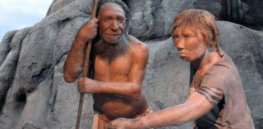
Neanderthals may have been driven to cannibalism by rapid climate change
New research published [April 2019] in the Journal of Archaeological Science suggests the crushing impact of the Last Interglacial Period, also ...

Why Nobel laureate David Baltimore doesn’t support moratorium on CRISPR babies
Some scientists have recently proposed a temporary moratorium on editing that would result in babies that carry heritable changes. … Science ...
