


Daily Human Digest

Video: Understanding the mystery of hidden or ‘dark DNA’
Scientists are beginning to understand mysterious parts of our DNA. Here’s what they’ve found so far. Read full, original post: “Dark ...

66 million years ago a deadly asteroid struck Earth. Scientists just found a fish killed by the impact
At one of the most important ancient graveyards on Earth in North Dakota, paleontologists unearthed the fossilized remains of fish ...

Can artificial intelligence improve IVF success rates?
In theory, an AI application would be able to pick out the single best embryo to use for IVF to ...

Better understanding of how genes work together could be key to personalized medicine
Tens of thousands of people have had their genomes sequenced yet it remains a major challenge to infer future health ...

Low intelligence in autistic children predicts ‘poor life skills and challenging behavior’
Without timely intervention, intellectual disability in autistic children can worsen over time, contributing to poor life skills and challenging behavior, ...

DNA testing uncovers fertility doctor’s decades-old dark secret
The first Facebook message arrived when Heather Woock was packing for vacation, in August 2017. It was from a stranger claiming to ...

A jury decided glyphosate caused cancer. Is this society’s ‘search for a scapegoat’ for the deadly disease?
A San Francisco jury decided last month that a plaintiff’s case of non-Hodgkin lymphoma was caused by Bayer’s Roundup weedkiller ...

Maybe cats do recognize their own names
Dogs are amazing at recognizing their own names, but scientists are less certain about whether cats have this ability. New ...

Can traumatic memories be ‘erased’ with anesthesia medications?
Erasing memories has always been the stuff of science fiction and wishful thinking. After all, what happened, happened—your experiences are solidified in your ...

This woman feels almost no pain. Could her genes lead to new treatment for chronic sufferers?
Doctors in Scotland were amazed when a 66-year-old woman underwent what is normally a very painful operation on her hand ...
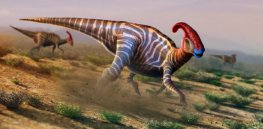
Hues of the past: How we determine the colors of prehistoric animals
[Paleontologist Maria McNamara] studies tissues from insects and vertebrates in order to envision what these critters looked like and how ...

Video: CRISPR pioneer Jennifer Doudna explains Cas-9 gene editing
Prof Jennifer Doudna, one the pioneers of Crispr-Cas9 gene editing, explains how this revolutionary discovery enables precise changes to our ...

How synthetic biology could fight athletic doping with ‘biosensors’
It’s no secret that sports suffer from doping, the use of banned substances that enhance athletic performance. From Lance Armstrong ...

Podcast: How AI is boosting treatment of PTSD
Only about 10% of the individuals with mental health issues in the US are getting any sort of treatment that ...

Is there such a thing as too much prenatal genetic information?
[P]renatal whole-genome sequencing is [not] commercially available yet (though it’s definitely coming). But what is available is something called noninvasive ...

Birth control pill for men: Why is it taking so long?
A birth control pill for men has passed initial human safety tests, experts at a leading medical conference have heard ...
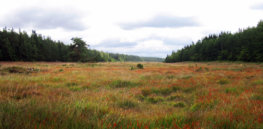
How modern farming may be distorting our analysis of ancient human migration
One of the most widely used tools archaeologists have at their disposal to decipher where prehistoric humans lived and traveled ...

Exercise can fight depression, but it doesn’t work for everyone
Is there evidence to support the idea that exercise can have an effect on depression? And if so, how much ...

Viewpoint: Blood tests for cancer would be ‘less invasive, less expensive, less traumatic’
Eleven years ago, I was shocked to be diagnosed with advanced lymphoma. To offer an informed second opinion, an oncologist ...

Viewpoint: No, we don’t need a moratorium on germline gene editing
Should researchers put the brakes on genetically engineering babies? Leading scientists and ethicists recently called for a moratorium on clinical applications of germline ...

Do our brains hamper our response to climate change’s growing threat?
In early phases of human existence we faced an onslaught of daily challenges to our survival and ability to reproduce ...

Can ‘flashing light and pulsing sounds’ counter the effects of Alzheimer’s?
Bathing patients in flashing light and pulsing sounds both tuned to a frequency of 40 hertz might reverse key signs ...

DNA ‘hot spots’ may explain why we are different from one another
What makes one person different from one another, and how did these differences evolve? A study by University at Buffalo ...

Can the RNA editing race challenge the potential of CRISPR’s DNA editing?
RNA, a short-lived cousin to its better-known partner DNA, is the blueprint for protein production in cells. [Biotech entrepreneur Joshua] ...

Women’s fertility is a ‘black box’. This biotech company wants to help crack it open
Fertility is like most aspects of medicine — it’s rarely discussed until a problem arises. But as women wait longer to start ...

Hypersensitivity, hearing problems could lead to early autism diagnosis
Many individuals with autism have hearing problems. In fact, Leo Kanner included this trait in his original description of autism. The type ...

Viewpoint: Precision medicine plagued by an ’embarrassing’ human reference genome
The human reference genome, largely completed in 2001, has achieved near-mythic status. It is “the book of life,” the “operating ...
